WATCH | Rajasthan Dy CM performs at Ghoomar beats as 6,100 women create history in Ghoomar Festival 2025

&imwidth=600&imheight=450&format=webp&quality=medium "WATCH | Rajasthan Dy CM performs at Ghoomar beats as 6,100 women create history in Ghoomar Festival 2025")
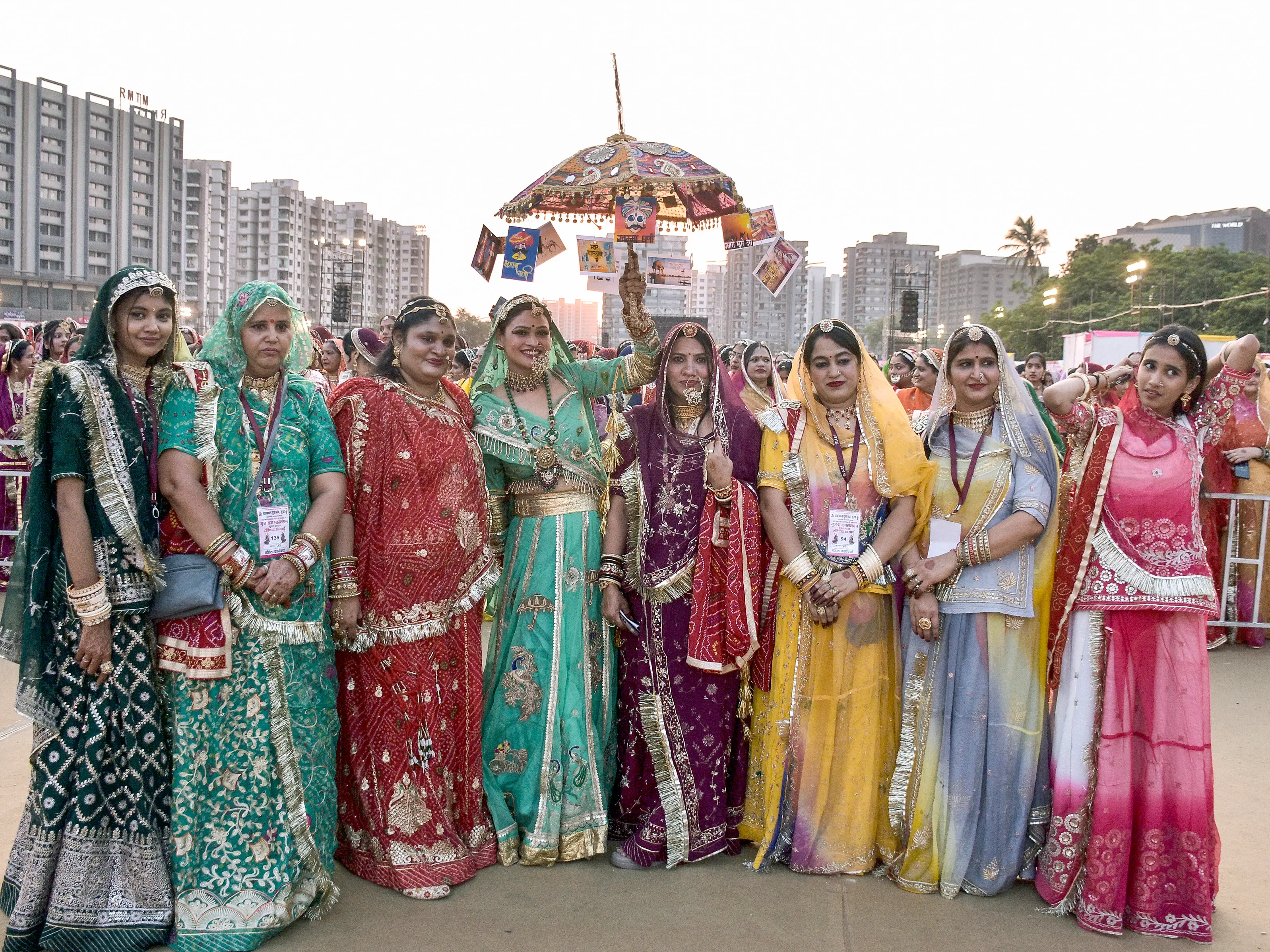
Women dressed in traditional pose for a picture as Rajasthan Yuva Sangh organizes an event on the occasion of Chaitra Navratri in which 11000 women are to perform 'Ghoomar' dance, at Marudhar Maidan in Surat on Monday. Photograph: (ANI)
Rajasthan Deputy CM Diya Kumari inaugurated the first state-level Ghoomar Festival 2025, where 6,100 women performed the traditional dance, earning a place in the Asia Book of Records. Learn about the cultural significance and tribal origins of the iconic Ghoomar dance.
Deputy Chief Minister and Tourism and Arts & Culture Minister of Rajasthan, Diya Kumari, joined the performance along with the dancers, celebrating the rich culture and tradition of the state. The first state-level Ghoomar Festival-2025 was inaugurated by Diya Kumari and witnessed history as 6,100 women performed the traditional dance across all the divisions of the state. The feat has been recognised by the Asia Book of Records.
“Ghoomar is the identity of Rajasthan. This festival will give new energy to our folk culture,” said Diya Kumari. She added that the festival will also add to the state’s traditional art and culture at a global level.
Ghoomar Dance
Originating with the Bhill Tribe, Ghoomar is the traditional dance form of the state of Rajasthan. Bheels and Rajputs were always at war with each other for a period of time. In due course, they interacted and settled down. The tribal culture was first adopted by the local Rajputs, and then it found its way to the elites. The term Ghoomar is a kind of derivation of 'swirl'. Operating within a conservative cultural framework, the dance form served as a form of expression or agency for women in a deeply patriarchal society of Rajasthan. Earlier, women used to perform ghoomar with a ghoonghat, covering their faces; over time, however, some of the repressive practices have assimilated into the popular culture.