Explained | What is the row over India's new parliament building inauguration?

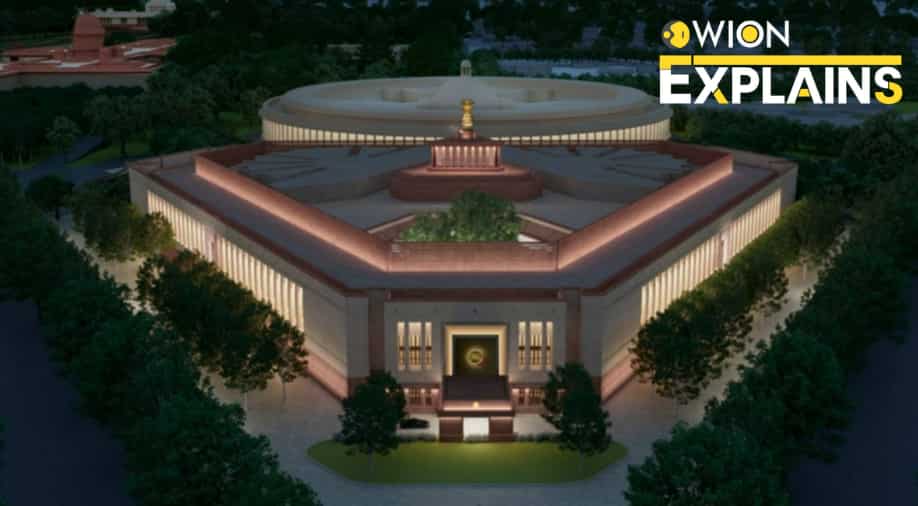
New parliament building explainer
Indian Prime Minister Narendra Modi is set to inaugurate new parliament building on May 28. The new building will soon be the seat of the highest legislative body of largest democracy in the world. The government headed by PM Modi intends for the new parliament building to be centre of legislative activity rather thanthe current colonial-era building. However,apolitical row has erupted as the inauguration date for the new building draws closer.
The new parliament building
The new parliament building is'just next door' to the existing building. The old building is almost 100 years old. It is a Heritage Grade-1 building.
Government of India's website on the Central Vista project underlines the need for a new parliament building.
"Over the years, the parliamentary activities and the number of people working therein and visitors have increased manifold...the new constructions and modifications have been done in an ad-hoc manner. For example, two new storeys constructed in 1956 over the outer circular part of the building hid the dome of the Central Hall and changed the facade of the original building. Further, the coverings of Jaali windows have reduced the natural light in the halls of two houses of the Parliament. Therefore, it is showing signs of distress and over-utilization and is not able to meet the current requirements in terms of space, amenities and technology," says the website
The new parliament building is in the shape of a triangle as opposed to the current building which is circular in shape. This, says Indian Government, ensures 'optimum space utilization'.

(Image: Government of India)
"The present building was never designed to accommodate a bicameral legislature for a full-fledged democracy," says the government website.
The number of MPs is unaltered from 545. The freeze on the maximum number of MPs is only till 2026. If the number of MPs increases, more space would be needed for seating arrangements.
If new building solves issues, what's the problem?
Opposition parties in India have been alleging that there was no need to hastily spend millions to construct the new building when the country had other pressing matters. BBC reports that the cost of constructing the new building has come to 9.7 billion rupees ($117.1 million, £94.2 million).
PM Modi has lauded the project many times and has said that this would be the first parliament building 'built by Indians'. The opposition has been arguing that instead of constructing a new structure altogether, it was still possible to make improvements in current building to address the issues faced.
There have also been allegations from the Opposition that the new building was an attempt to diminish the symbolism of the current one in which independent India's constitution was adopted. The BJP government is often perceived by many in political circles as following a religious agenda, something Indian constitution scoffs at as it maintains that religion and governance should be separate. BJP denies all such allegations.
Also Read | New Parliament building: Centre releases pics, check opening date, cost & all you need to know
The inauguration date of the new parliament is May 28. It is also the birth anniversary of VD Savarkar, a figure connected with India's freedom struggle but one who elicits mixed opinions across the country's political spectrum.
Another point raised by the opposition is that the President of India Droupadi Murmu should be inaugurating the new parliament building. They argue as the President of India is a constitutionalpost that outranks a prime minister, she should be inaugurating the parliament, the highest lawmaking body in the land. Inauguration by PM Modi is being seen by the opposition as his attempt to make a political statement. India will have its general elections next year.
Congress president Mallikarjun Kharge has voiced the party's displeasure.
"The parliament of India is the supreme legislative body of the Republic of India, and the President of India is its highest constitutional authority. She alone represents government, opposition, and every citizen alike," Congress President Mallikarjun Kharge wrote on Twitter.
"Inauguration of the new parliament building by her will symbolise [the] government's commitment to democratic values and constitutional propriety," his tweet read.
At the time of publishing the story, nineteen opposition parties had decided to boycott the inauguration of the new parliament building. This may mean that on the inauguration day, there would be near-zero participation from the Opposition.
Some of the parties whichhave decided to boycott the event are the Congress, Aam Aadmi Party (AAP), Rashtriya Janata Dal (RJD), the Left, Dravida Munnetra Kazhagam (DMK), Janata Dal-United (JDU), Nationalist Congress Party (NCP), Samajwadi Party, Uddhav Thackeray's Shiv Sena faction.
'They can decide'
Amit Shah, India's Home Minister and powerful allyofPM Modi reportedly declined to comment on the backlash from the opposition and has said that decision to attend the ceremony was their own.
"We have invited everyone. They can decide according to their wisdom," said Shah. He was quoted by news outlet NDTV.
However, the opposition has received criticism from the government ranks. Union Minister Hardeep Singh Puri on Tuesday accused the Congres lacked "national spirit and sense of pride" in India's progress. He drew attention to former PMs from the Congress party inauguratingthe annexe building and layingthe foundation of the parliament library.
"If your head of government can inaugurate the Parliament annexe and library, then why can't the head of the government of this time do? It's as simple as that," he said as quoted by NDTV.
You can now write for wionews.com and be a part of the community. Share your stories and opinions with us here.
WATCH WION LIVE HERE