

&imwidth=800&imheight=600&format=webp&quality=medium "Borders vs frontiers: CDS Chauhan re-evaluates Nehru’s 1954 Panchsheel Agreement")
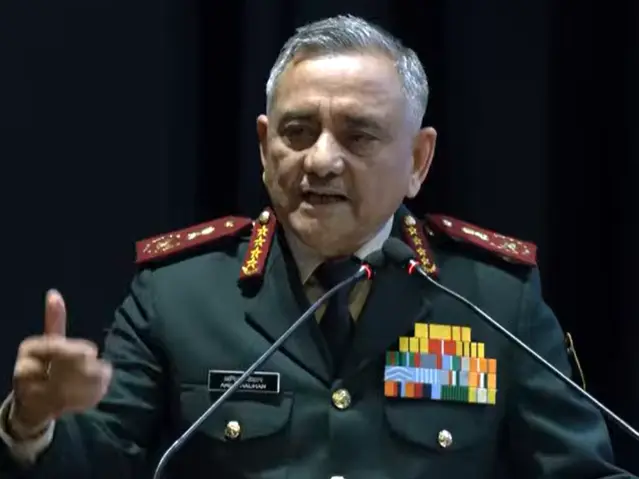
On Friday (Feb 13),Chief of Defence Staff General Anil Chauhan, while speaking at the Bharat Himalayan Strategy Forum (BHISM) in Dehradun, spoke of India’s borders and distinguished between a border and a frontier. In his address, he laid emphasis on India-China relations post-independence from colonial rule. CDS Chauhan noted that the Panchsheel Agreement of 1954 included the country’s recognition of Tibet as part of China. It was a move initiated by Nehru to maintain a stable and cooperative relationship with the neighbouring nation.
“On independence, the British left, and it was for India actually to decide where a front is. Nehru probably knew that we had something, such as the McMahon Line in the east, and we had some kind of a claim in the Ladakh area, but it was not here. So that's why he wanted to go in for a Panchsheel agreement, probably," the CDS said.
He went on to explain that a border is a concept that separates two nation-states, and frontiers are broader, rugged zones shaped by customs, traditions, and historical interactions among civilisations. "So this area assumed some kind of priority. So they wanted stability, probably in this particular region... Independent India was keen to build a good relationship with China... In 1954, India recognised Tibet as part of China. Both countries signed the Panchsheel Agreement," he continued.
Talking about Uttarakhand and its significance, he said, “Sometimes we forget this particular aspect because the border over here is peaceful as compared to what is there in say Ladakh, in say Sikkim, or in Arunachal Pradesh. But then I think most of us forget that the initial dispute between us and China on the border actually germinated over here. That was even before we signed the Panchsheel agreement and immediately after the Panchsheel agreement. So this particular border is as important as other borders."

