Explained | 5th anniversary of Pulwama attack: What happened on that day, and since?

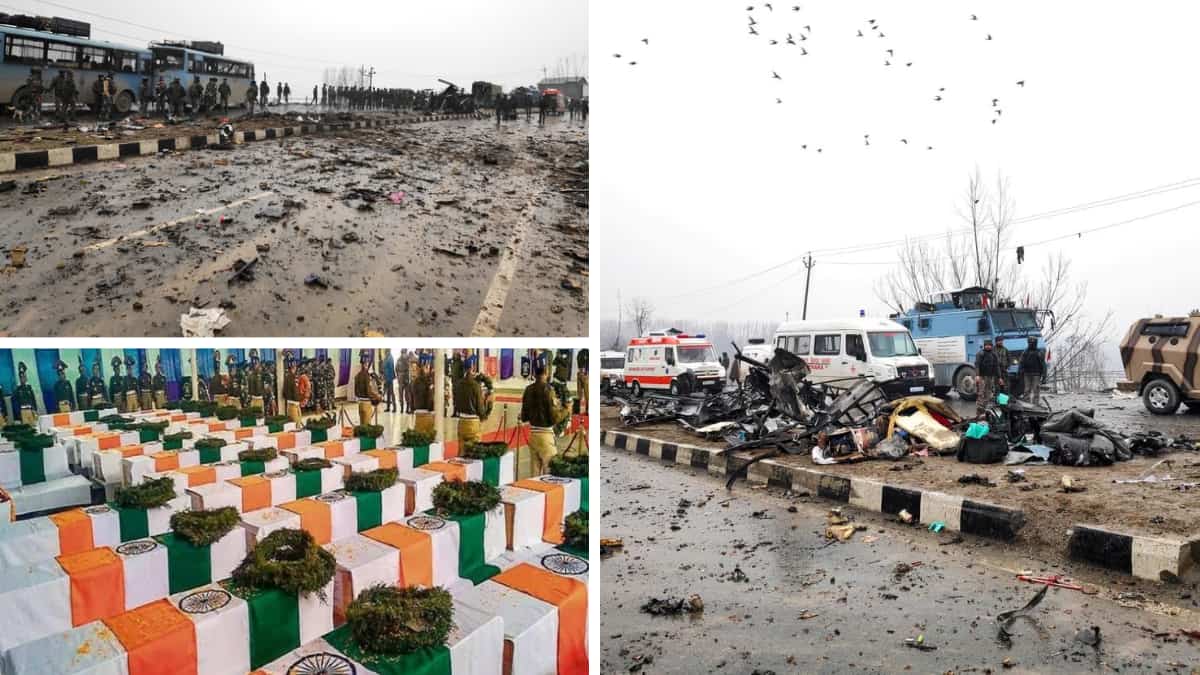
4th anniversary of the Pulwama attack
On this day, India marks the 5thanniversary of one of the deadliest terror attacks carried out on its security forces, which took place in the Pulwama district of Jammu and Kashmir where at least 40 Central Reserve Police Force (CRPF) personnel lost their lives. India also considers February 14 as ‘Black Day’ due to the attack which brought the country to a standstill after a suicide bomber from Jaish-e-Mohammed (JeM) rammed a vehicle full of explosives into a CRPF convoy. After a few days, the Indian Air Force bombed the JeM camps in Pakistan’s Balakot sector, and as per reports, hundreds ofterrorists were said to have been killed during the attack.
What happened that day in Pulwama?
On February 14, 2019, a suicide bomber attacked a convoy which comprised a total of 78 buses in which around 2,500 paramilitary personnel were travelling from Jammu to Srinagar. Theexplosive-laden vehicle rammed into a bus killing 40 members of the CRPF. The attacktook place on Jammu-Kashmir National Highway (NH) 44 at around 3:15 pm (local time).
Also Read|Pulwama attack 4th anniversary: When India raided birthplace of jihad in South Asia | Explained
Subsequently, the JeM released a video and claimed responsibility for the attack and the suicide bomber was later identified as 22-year-old, Adil Ahmad Dar who was reportedly a resident of the Pulwama district of south Kashmir.
India’s reaction to the attack
The attack evoked a sharp reaction from across the nation and the next day the Ministry of External Affairs (MEA) while condemning the incident accused Pakistan of giving “full freedom” to Masood Azhar, leader of the JeM to operate in its country. At the time, the MEA, in a statement said, “JeM is led by global terrorist Masood Azhar, who is given full freedom by Pakistan to operate and expand his terror infrastructure.”
It added, “India condemns Pulwama terror attack; heinous, despicable act perpetrated by Pak-based Jaish-e-Mohammed. We demand Pakistan should stop supporting terrorists and terror groups operating from its territory and dismantle terror infrastructure.” However, Pakistan had once againdenied these claims. Subsequently, political parties in India unanimously passed a resolution to support the security forces and the government.
After the attack, customs duty on all Pakistani goods was increased to 200 per cent and India also stripped Pakistan’s status as the Most Favoured Nation (MFN). Indian Prime Minister Narendra Modi had also said that security forces have been given “full freedom” to choose a “time and place” for the “future course of action”. He also said that terrorists have “made a big mistake” and “will have to pay a very heavy price” for their actions.
Balakot airstrike
Indian security forces launched a counter-attack named ‘Operation Bandar’ and carried out airstrikes on February 26, 2019, in the Balakot region at JeM camps in Khyber Pakhtunkhwa province of Pakistan. The province in question is some 50 km from the Line of Control (LoC) where the Indian Air Force (IAF) sent Israel-made “smart bombs” and 12 Mirage 2000 fighter jets and reportedly killed hundreds of terrorists. The targeted terror camp in the region was said to be an important training centre for the JeM and other terror organisations. Notably, this was the first aerial assault carried out by India in Pakistan since the war between the two nations in 1971.
Pakistan retaliates
A day after the Balakot airstrikes by India, Pakistan Air Force retaliated and several F-16s entered Indian airspace on February 27, 2019, and were said to have attempted to target Indian military installations in Jammu and Kashmir, but the attackwas foiled by the IAF. According to reports, one F-16 aircraft and two Indian MiG-21 Bisons were destroyed.
Additionally, Pakistan claimed to have taken two IAF pilots and later changed its statement to say only one IAF pilot was in custody which was later confirmed by the MEA. The next day, the now-former PM Imran Khan announced that he would release the captured IAF WingCommander Abhinandan Varthaman on March 1. The MIG-21 fighter jet pilot had shot down PAF’s F-16 but lost his aircraft also and landed in Pakistani territory, as per reports he was detained and interrogated. The IAF commander was later conferred with India’s third-highest wartime gallantry medal, the Vir Chakra.
PM Modi pays homage to brave heroes
PM Modi took to X, earlier on Wednesday (Feb 14), and paid tribute to the 40 CRPF personnel killed in the Pulwama terror attack and wrote, “I pay homage to the brave heroes who were martyred in Pulwama. Their service and sacrifice for our nation will always be remembered”.
This year, India'ssecurity forces, including the CRPF,have plannedeventsto commemorate the fifth anniversary of the attack. Additionally,various institutes andorganisations across Indiahave also planned events to paytribute to theCRPF personnel killed in the Pulwama terror attack.
(With inputs from agencies)