Personalised treatments pave way for 'leap forward' in curing cancer

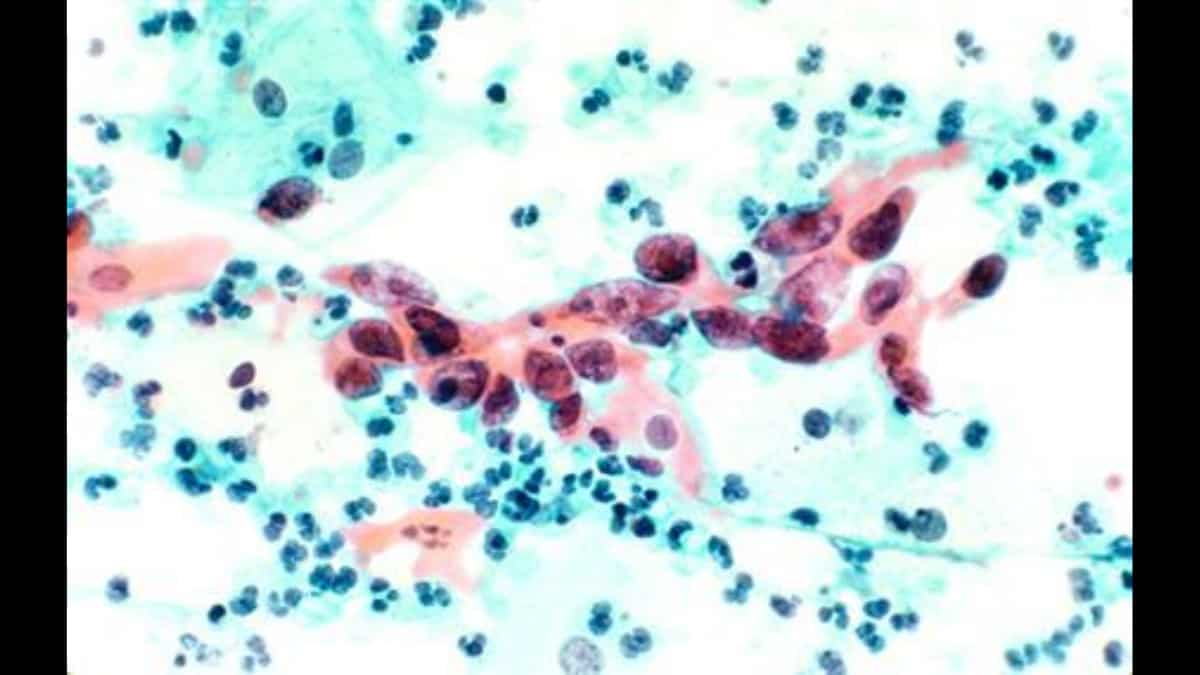
Cervical cancer cells
In the world of chronic life-threatening diseases, cancer is a leading cause of death worldwide. According to World Health Organisation (WHO), up to 50 per cent of cancers can be treated successfully. Rest are designated as incurable ones.
But a recent experimental study done on 16 cancer patients by a California-based Pact Pharma may have given a silver lining as far as the treatment of incurable cancer is concerned. This small clinical trial has shown that researchers can use Nobel Prize-winning CRISPR gene editing technologyto alter immune cells so that they will recognise proteins attached to a person’s tumorous cells,to get rid of them successfully. Thesecells can then be safely set loose in the body to find and destroy their targeted tumourous developments in the body.
In the study, people with untreatable cancers had their immune systems redesigned to attack their own tumours. The results have been called a "leap forward" and a "powerful" demonstration of the potential of such technology.
The experiment involved individual-specific treatment
Each patient had a treatment developed just for them, which targeted the specific weak spots in their tumour.
However, the treatment has been deemed 'expensive and time-consuming'.
The treatment involves boosted levels of T-cells
The work focuses on parts of the human immune system called T-cells. They may be understood as the soldiers that remain always on guard to combat the pathogens or disease-causing particles present in the body.
Often, cancers can be tricky for the T-cells to spot and hunt down because they are the body's own corrupted cells, not alien cells or particles from outside.
The therapy experimented upon 16 cancer patients boosted the level of these cancer-spotting T-cells. They were tailored to each patient since each cancerous development of body cells is different from one another.
The researchers edited the genetic composition of these T-cells by using the gene-editing technology CRISPR. After putting these edited T-cells into the patient, the tumourous cells were hunted down by the body's own T-cells, a landmark development in itself.
The trial involved people with colon, breast or lung cancers that had failed to respond to other treatments.
The study was designed to test the safety and feasibility of the technology and showed the modified cells were finding their way into the tumour.
The disease continued to get worse in 11 patients but stabilised in the other five. However, it will take larger studies to work out the correct dose and how effective it really is.
WATCH |Gravitas: Medical miracle: Clinical trial manages to free 14 patients of cancer
"This is a leap forward in developing a personalised treatment for cancer," said Dr Antoni Ribas, one of the researchers at the University of California, Los Angeles, who tested the approach.
The results of the study were presented at a meeting of the Society for Immunotherapy of Cancer and published simultaneously in the journal 'Nature'.
WATCH WION LIVE HERE
You can now write for wionews.com and be a part of the community. Share your stories and opinions with us here.