Reinventing Bharatnatyam, one film at a time: Savitha Sastry and her vision for the classical art form

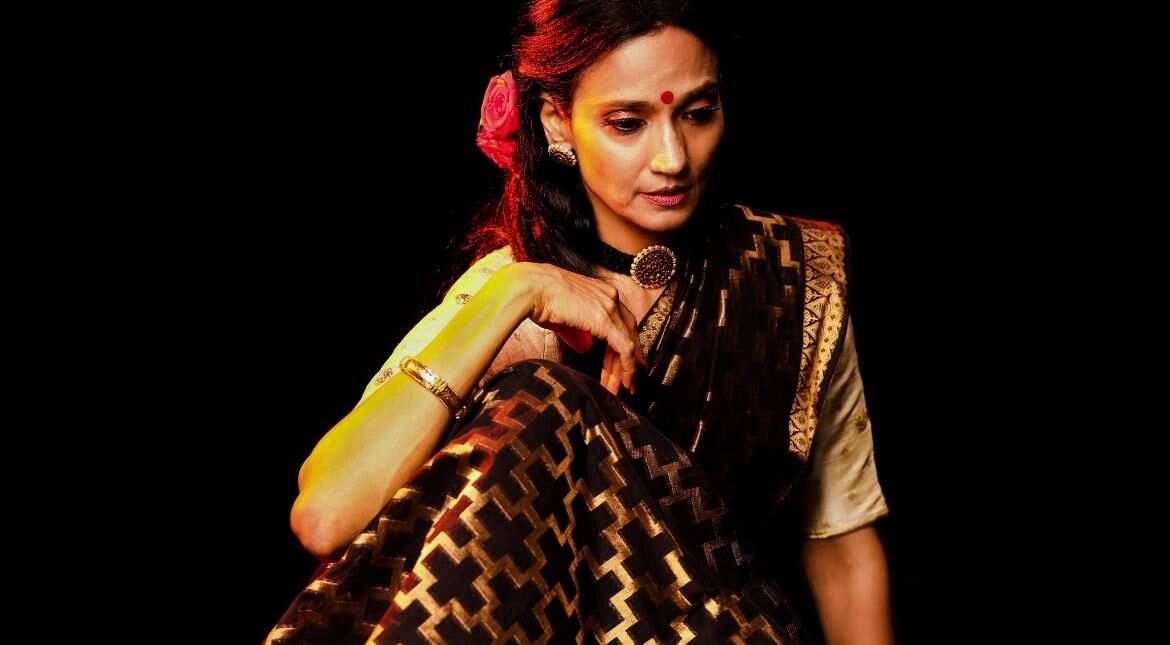
Savitha Sastry in her element.
Innovation is key in keeping traditions alive and Savitha Sastry is doing just that. A classical dancer, precisely a Bharatnatyam dance exponent alongwith partner AK Srikanth have been working towards keeping the charm of the classical form of dance alive in spirit, much beyond those who actively learn the art form. With their new Bharatnatyam dance production ‘Beyond the Rains’, the film, written like a Japanese poem, portrays the emotion of love as understood by a retired old dancer struck by senility, who lives in her memories, and a young girl who is looking to the future alone.
Choreographed by Savitha, Beyond the Rains helps us understand the state of the popular Indian classical dance form in a simpleton manner. Speaking about her vision, Savitha tells WION about bridging the gap between the youth and traditions that make up India’s rich cultural heritage.
Read the excerpts of the chat here:
WION: What is ‘Beyond the Rains’?
Savitha: ‘Beyond the Rains’ is based on a short story by AK Srikanth (also the Director of the film), titled ‘The Girl in the Bubble’. The theme behind the story is to juxtapose the concept of love as seen and understood by someone from an older generation, and someone from today’s youth. It also goes in depth on the concept of living a life that has experienced unrequited love – and how that love can be held as a beautiful memory rather than something to be bitter about. Director Srikanth wanted a film that has the sensitivity of ‘a dew drop about to fall from a leaf’, and it is this vision that translates into a sensitive and quiet film that nevertheless has an impact on the viewer that is unforgettable.
WION: How does rain feature in the production language? What is its relevance?
Savitha: On one level, the film draws its inspiration from a Haiku – a Japanese poetry format that often uses nature to deliver a gentle effect on its readers. This story is structured like a Haiku, in that it has three parts, and the rains add to the beautiful and yet wistful atmosphere of the protagonist’s state of mind. The story keeps fluctuating between the past and the present – the past where the protagonist meets with the love of her life in the season of rains, and the present where an old lady now on a wheelchair, holds onto the memories from many rains ago.

WION: You dance on relatable stories. Are the stories inspired from your life?
Savitha: All the stories that I have performed are the works of my husband AK Srikanth. And yes, the stories he writes are usually drawn from his own experiences in life, though dramatised for effect in our films. While it may be almost impossible to figure out who he refers to, as he mixes up events and people in his stories, the core of it is always based on a true occurrence, and I think that is what makes his stories relatable.
WION: What has your experience been like being one of the first movers to the digital arena in
the classical dance industry?
Savitha: The primary goal of my stage productions, and later my short films, was to popularise Indian classical arts amongst those uninitiated or disinterested in the art. Until 2017, I mostly did stage performances, but given the limitation of an auditorium capacity and the number of shows I could do, it still meant my reach was restricted. The decision to go digital came about because of the undeniable reach of the medium – the audiences that could watch my show in a year, that number I now get in the first hour of my film’s release.
On the flip side, given the easy access of digital – I now see semi-trained young people put up short dance clips to gain short term fame by counting likes on their video and assuming that to be the measure of their prowess. Therefore to unearth some truly good content, one has to mine hours of uploads that do not do justice to what classical arts is truly about. There is no substitute to diligence in the classical arena and it takes decades to become a good dancer. The ease of filming something and putting it up online distracts students from concentrating on their technique. So in a nutshell, I think the digital arena can be a powerful tool of reach, but can also lend a fake sense of achievement. The power of digital, just as the power of any technology, lies in the hands of an intelligent user.

WION: Since you have tasted success with the birth of a new medium – the OTT, how do you feel about the rise of such digital platforms as an artist?
Savitha: I think it is wonderful seeing these multitudes of entertainment options blossoming. We are seeing some wonderful and innovative content being made for these platforms, perhaps far higher in quality than the serials we were accustomed to in the past. Some wonderful filmmakers and artists have come to the public eye because of these platforms. Yes, certain films are best enjoyed on big screen and by that logic I think both OTT and big screens will coexist to give the viewers a treat in all formats. This is an exciting time to be in the entertainment industry!
WION: But how relevant is the classical dance form in today’s age when the youth is easily distracted with a lot more?
Savitha: Classical art can never lose its relevance but yes, multitudes of options can distract the youth. However, the youth is intelligent enough to understand and appreciate the beauty of classical dance if it is presented to them in a format that does not bore them and that onus is on us, the classical dancers.
WION: Since you agree that there’s no dearth of exposure to the youth, how have the classical dance forms evangelised for greater acceptance. Have you been successful for one?
Savitha: Traditionally, classical dance tends to be performed based on stories from mythology and religion. Repetitive content and unfamiliarity with the codification that goes into the dance makes it a difficult option for those that are not truly into the art form. Evangelising the art form would mean presenting different content in an interesting format, without compromising on the techniques of the dance form. This has been my endeavour since 2008 when I experimented with my first such production – ‘Music Within’ – which presented the history of music through a deaf and dumb protagonist. Whether I have been successful is not for me to say, but 12 productions, 14 countries, 100 plus shows, and millions of views later, I would like to think that I have been able to put forward a point!

WION: Great, so what’s next in the pipeline?
Savitha: Our next project is titled ‘Dvija: The Story of the Twice-Born’, which is currently under production. I am also occupied with the Gurukula, the immersive in-person learning program I have devised for the handful of students that are able to live with us, and learn the art form in all its dimensions.

