From shoyu to chicken curry: How Nissin localised Japanese ramen for Indian palate

&imwidth=600&imheight=450&format=webp&quality=medium "From shoyu to chicken curry: How Nissin localised Japanese ramen for Indian palate")
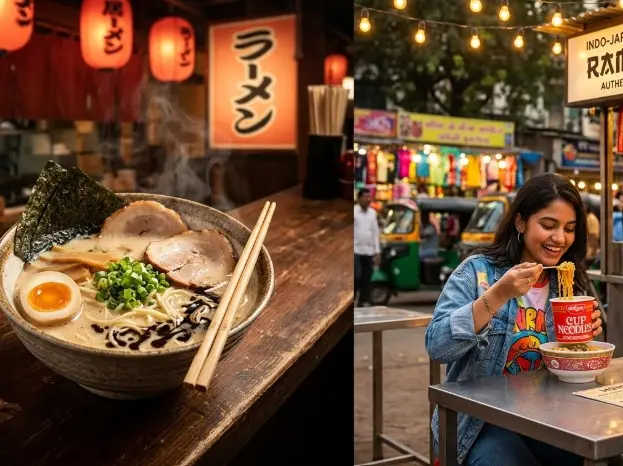
Ai generated image of Ramen Photograph: (X)
Ramen has evolved and has become Japanese culinary icon, but its journey in India is a story of localisation. As the India-Japan Summit shines a spotlight on ties between the two nations, here's a look at how Japanese food giant Nissin transformed ramen for Indian audience.
When you think of Japan, the first things that come to mind are ramen and noodles. While it’s one of the most famous delicacies in the country, it has also become incredibly popular with Gen Z. Trying ramen has turned into a trend, but it’s also cheap and one of the easiest options.
While noodles and ramen have long been staples in East Asia, in India, where spice levels are typically moderate, they have become a major phenomenon. Once just street food, ramen is now a humble dish you can find anywhere. This is the story of ramen’s journey from noodle soup to a localised international cuisine. As the India-Japan summit gets underway in the capital, here we tell the story of ramen, not just in Japan, but also how this Japanese instant-noodle empire localised in India.
What exactly is ramen and it's history
This noodle dish originated in Japan, but its roots actually trace back to China. Setting that history aside, we’re talking about a dish that started as Chinese-style noodles, which Japan adapted and transformed. Ramen is simplicity and style in one bowl, and that’s what has appealed to foodies worldwide. In India, it has not only become Gen Z’s go-to food, but much of the credit also goes to how Nissin Foods has customised instant noodles for the Indian palate.
But what exactly is ramen? In simple terms, ramen is freshly cooked noodles served with broth, the most important part, along with toppings of your choice.
The origin of instant noodles and how Nissin won the market.
In 1958, Momofuku Ando, who invented the world’s first instant noodles, Chicken Ramen, founded Nissin. In 1971, he introduced Cup Noodles, revolutionising convenience food globally.
While Japanese food is sometimes seen as elite cuisine that comes with a huge price tag, at least in India, that is not the case for ramen. By introducing it at cheaper rates, Nissin made ramen easily accessible. If we talk about ramen in India, it’s available everywhere, from supermarkets to 15-minute delivery apps. But in the Indian market, Nissin cracked the code by launching flavours tailored to Indian tastes instead of simply selling the same noodles available in Japan.
Entering India, selling authentic Japanese ramen without changes would have limited its appeal. So Nissin localised it and faced a unique challenge: coming up with tastes that had stronger spices, regional flavours, vegetarian options, and masala-based seasonings rather than subtle broths. Instead of expecting Indians to adapt to Japanese flavours, Nissin adapted to India. Over time, the brand released a range of options, from saucy curry noodles to healthy atta noodles. There’s Masala, there’s Fiery Chilli, there’s Atta Masala Noodles and Curry Noodles.
What was the boon was the affordable pricing and the advertising that focused on Indian families, children, and quick home meals rather than how it is presented in Japan.

