Red chilli pepper prices surge on crop damage in top exporter India

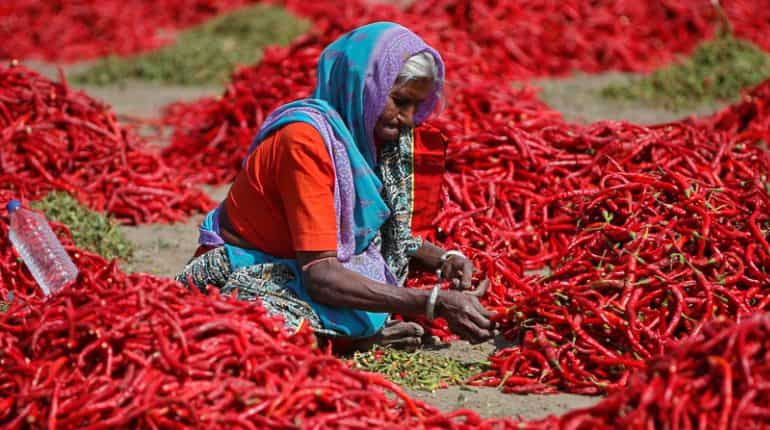
Red chilli pepper prices
Thepricesofredchillipeppers are surging as output intopexporterIndiais set to drop by a fifth from a year ago, hit by an invasive pest attack anddamagefrom unseasonal rain in key southern producing states.
Lower production has boostedpricesby 80% in four months to a record high andpricesare likely to stay high through the year, forcing overseas buyers to shell out more at a time when thepricesof fuel and other food ingredients are also soaring.
"The pest attack was widespread," said D. Kanungo, a trader from the biggest producing state of Andhra Pradesh. "In many areas, it forced farmers to uproot plants during the flowering stage."
As a result, farmers fear an output drop of at least 20%, he added.
India, the world's biggestexporterofredchillis, shipped out 578,800 tonnes in 2021, up nearly 8% from a year ago.
Bangladesh, China, Indonesia, Malaysia, Nepal, Sri Lanka, Thailand and the United States accounted for the bulk of its exports of $1.3 billion in 2021.
Chilliplants were badly hit by thrips and the infestation spread despite heavy use of pesticide, said Mahankal Rao, a 46-year-old farmer, who planted thecropon his two-acre farm at Guntur in Andhra Pradesh.
"For me, yields were lower, despite heavy use of pesticides, but some farmers gave up and didn't use pesticides," said Rao, who has been plantingchillies for nearly three decades.
The invasive pest species Thrips parvispinus must be tackled quickly but many farmers abandoned affected fields, allowing it to spread, said a senior agronomist at theIndian Council of Agricultural Research.
Farmers have now been reporting lower yields as the pest caused large-scale shedding of flowers, malformation of fruit and fruit drops, he said.
SPIRALINGPRICES
Farmers have completed harvesting but are going slow on releasing thecropinto the market, said Alepata Srinivas Rao, a trader based in Guntur.
"Farmers know supplies are limited and they are anticipating further price rises, so they are delaying sales," Rao said.
WholesalepricesinIndia's biggest spot market of Guntur have risen to 18,000 rupees ($234) per 100 kg from about 10,000 rupees in November.
Indian spices companies worried about supplies have been making aggressive purchases in the past few months, which also aidedprices, said A.P.J. Arun, anexporterin Guntur.
But export demand will determine the price trend in coming months, said Arun, adding, "We need to see how buyers react to higherprices."
Thoughpricesare high, overseas buyers cannot replaceIndianchillis with those from any other origin, said trader Kanungo.
"No one has a massive surplus to replaceIndian supplies," he said. "And for buyers, taste is also important. Other origins don't offer the same flavour."
Chilliproduction in Pakistan, anotherexporter, has also fallen because of erratic weather, traders said.