Oil falls more than 2% on US-China trade deal doubts, stronger dollar

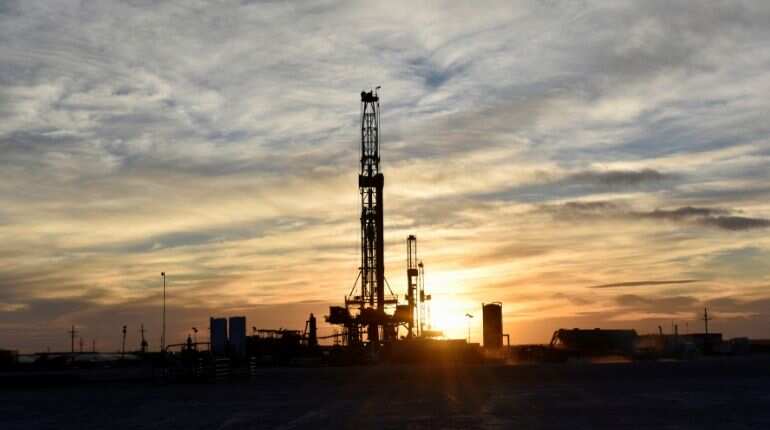
Oil drilling rigs
Oilprices lost about2 per centon Monday on worries that global crude demand could stay under pressure as few details about the first phase of aU.S.-Chinatradedealdid little to assure a quick resolution to the tariff fight.
Oilprices also felt pressure as theUSdollar, which has an inverse relationship with crude prices, gained as waningtradedealhopes and ongoing concerns over Britain's exit from the European Union attracted safe-haven investments.
Brent crudesettled at $59.35 a barrel, shedding $1.16, or 1.92 per cent, whileUSWest Texas Intermediate (WTI) crudesettled at $53.59 a barrel, losing $1.11, or 2.03 per cent.
"The complex is in (the) process of relinquishing a major portion of the late weektradeinspired gains as conflicting indications out of theU.S. andChinaregardingtradeprogress is reducing risk appetite," said Jim Ritterbusch of Ritterbusch and Associates.
Late on Friday, Washington and Beijing outlined the first stage of atradedealand suspended this week's scheduledUStariff hikes. Brent and WTI rosemorethan3 per centlast week, their first weekly increase since the week starting September20, on signs of progress toward atradedealthat would boost crude demand.
But optimism that thetradenegotiations would prove successful faded, asChinaindicated further discussions were needed andUSTreasury Secretary Steven Mnuchin said the next round of tariffs on Chinese imports are still set to take effect on December15 if adealhas not been reached by then.
But existing tariffs remain in place and officials on both sides said muchmorework was needed before an accord could be agreed.
A good portion of the gains last week came after the United States announced on Friday it was deployingmoretroops to Saudi Arabia, and after an Iranianoiltanker was attacked in the Red Sea.
Oilprices had drawn some support from worries that further escalation along the Syrian and Turkish border could affect output or exports from Iraq. Syrian troops entered a northeastern town on Monday.
The Saudi energy minister, Prince Abdulaziz bin Salman, saidoilexporters were showing serious commitment to global output cutsin adealbetween OPEC and its allies, a grouping known as OPEC+.
Russian Energy Minister Alexander Novak said there were no talks underway to change the OPEC+deal.
Kuwait'soilminister said it was too early to discussa possible buildup inoilinventories in 2020. Khaled al-Fadhel said a price range of $50 to $70 per barrel would be acceptable.
The compliance of OPEC+ producers with the supply-reduction agreement was seen at above 200 per centin September, sources familiar with the matter said.
Bin Salman also said on Monday that Saudi Arabia'soilproduction will recover in October and November to levels above those seen before attacks on its energy installations in September, which weighed onoilprices.