Samsung to outsource production to China to fend off rivals

Avoid moisture to enter your phone
Samsung's plan tooutsource a fifth of its smartphone production toChinanext year may help it compete with low-costrivalssuch as Huawei and Xiaomi but it's a strategy fraught with risks, people with familiar with the move said.
SamsungElectronics, which shut its last in-house Chinese smartphone factory in October, is quietly moving production of some Galaxy A models to contractors such as Wingtech, which are little knownoutsideChina.
Samsunghas been coy aboutthe volumes involved but sources said the South Korean tech giant plans to ship some 60 millionphonesmadeinChinaby so-called original design manufacturers (ODMs) next yearoutof a total of about300 million devices.
Wingtech and other ODMs makephonesfor multiple brands - including Huawei, Xiaomi and Oppo - giving them the economies of scale to keep costs down, and the nimble contractors can develop and produce new budgetphonesquickly.
Critics ofSamsung's strategy say it risks losing control of quality and undermining its manufacturing expertise byoutsourcing, and may even helprivalsby giving contractors the extra volume they need to lowers costs further for all.
Samsungcan ill afford another quality crisis. It scrapped its flagship Galaxy Note 7 in 2016 after reports the expensivephoneswere catching fire and delayed the launch of its folding phone this year after screen defects were identified.
But with margins razor-thin for budget smartphones, people familiar withSamsung's strategy say it has little choice but to followrivalsand use Chinese ODMs to shave costs.
"This is an inevitable strategy rather than a good strategy," a source with knowledge ofSamsung's Chinese operations said.
Samsungsaid in a statement to Reuters that it has been making limited lines of smartphonesoutside its own plants to broaden its existing portfolio and "ensure efficient management in the market". It declined to say how manySamsungphonesaremadeby ODMs and said future volumes had yet to be determined.
Wingtech did not respond to a request for comment.
Research firm Counterpoint says ODMs can procure all the components needed for $100-$250 smartphonesfor 10 per centto 15per cent less than major brands with their own factories inChina.
One supply chain source said Wingtech can get some parts for up to 30 per cent less thanSamsungElectronics pays in Vietnam, where it has three factories churningoutsmartphones, TVs and home appliances.
Wingtech started making tablets andphonesforSamsungin 2017, accounting for 3per centof its smartphones. That's expected to hit 8 per cent, or 24 million units, this year, according to IHS Markit.
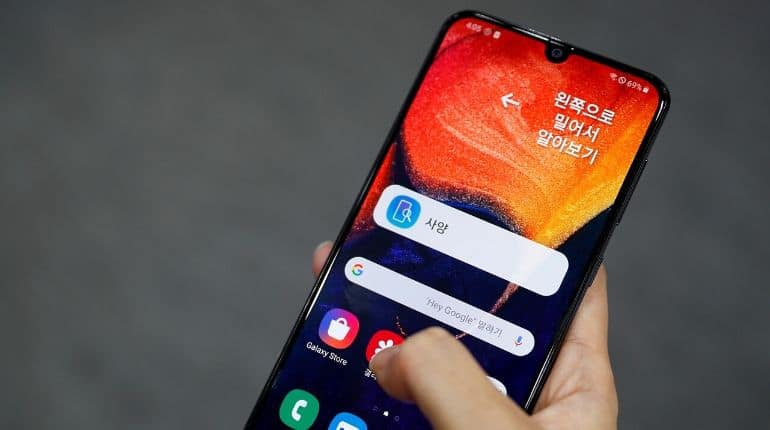
Samsung'soutsourcing plans involve its lower and mid-range Galaxy A series, with Wingtech having a hand in both design and production, sources said. The A6S, one of the models to beoutsourced, costs from 1,299 yuan ($185) inChina.
The Wingtechphoneswill mainly go to Southeast Asia and South America, one source said.Samsungis gaining share in both at the expense of Huawei, which is suffering from U.S. sanctions that bar it from putting all Google's services on newphones.
WhileSamsungis anxious to remain global smartphone market leader, some analysts worry it might not be worth the risk is given that profits in the budget phone business are scarce for all.
"Low-endphonesare a headache forSamsung," said CW Chung, head of research at Nomura in Korea.
Chung said they were now commodity products and it was "nonsense" to make them in-house. But he and other experts said ifSamsunggave ODMsmorevolume, that could cut contractors' costs further and boost their experience and knowledge.
"If ODM firms becomemorecompetitive,rivalswill bemorecompetitive," Tom Kang, an analyst at Counterpoint said, adding that once a company loses its expertise in making low-endphonesbyoutsourcing, it is difficult to regain the know-how.
Chung saidSamsung's strategic shift signalled the declining manufacturing prowess of the company, once a low-cost Asian manufacturer and now the world's top producer of high-end electrical consumer goods.
US rival Appleoutsources production to Taiwan's Foxconn Technology, which has factories inChina, but Apple still designs itsphonesin California.
Samsungsaid in an emailed response to Reuters that it will be involved in the oversight of the design and development of smartphonesproduced by ODMs.
One person familiar withSamsungand Chinese ODMs said contractors save money by cutting some stepsoutof the manufacturing process, potentially raising quality issues. He declined to go into details.
With that in mind,Samsunghas been pairing South Korean component suppliers with Chinese contractors to keep closer tabs on quality control, the person said.
"We understand the logic of increasing the production volume with Chinese contractors is a strategic business decision but that doesn't mean all of us are happy aboutit," an executive at a Korean component supplier said.
Samsungtold Reuters it has applied the same quality checks and standards it does with all its devices, adding that it was committed to delivering high-quality products.
Historically,Samsunghas designed and produced almost all itsphonesin-house in vast factories in Vietnam and,morerecently, India while winding down production in South Korea andChinawhere labour costsmore.
But Roh Tae-moon, the youngest executive to become a president atSamsungElectronics, is championing the new ODM strategy in his role as number two at the mobile division, two people familiar with the matter said.
"It is crucial to cut costs to maintain competitiveness with Huawei and other Chinese handset makers," said aSamsunginsider who declined to be named.
Other Korean firms have also embracedoutsourcing. LG Electronics, whose smartphoneshave been losing money for several years, has said it plans to expand its ODMoutput from budget models to mid-pricedphones.
"Smartphoneshave come down to a battle over costs.It's a game of survival now," said Kim Yong-serk, a formerSamsungmobile executive who is a professor at South Korea's Sungkyunkwan University.