Wild boar hybrids take over 2011 Fukushima nuclear disaster site

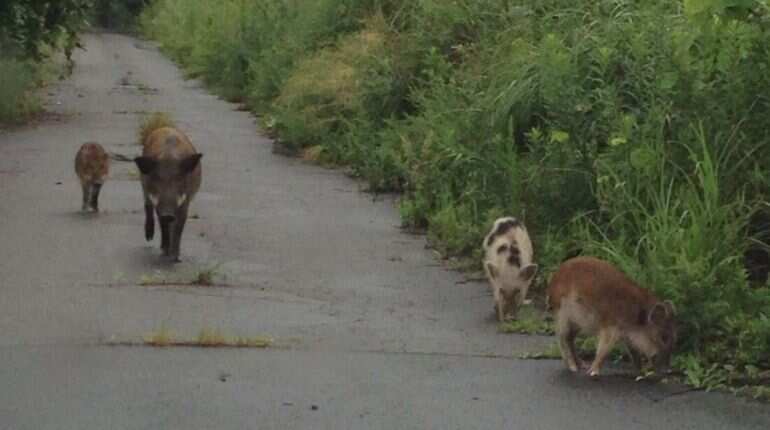
"Once people were gone, the boar took over," this is how a researcher at Fukushima University in Japan explains it.
Donovan Anderson’s genetic studies on the wild boar that now roam the location of the 2011 nuclear disaster reveal how the species has thrived since then.
According to his findings, the area is inhabited by a wild pig-boar hybrid. Using DNA samples, Anderson discovered that wild boar have bred with domestic pigs that escaped from farmsto create this hybrid species.
"While the radiation hasn't caused a genetic effect, the invasive domestic pig species has," explains Anderson.
The biggest earthquake to hit Japan was behind this 2011 nuclear disaster at Fukushima's nuclear power plant.
An area similar to that of Chernobyl’s exclusion zone was evacuated after a gigantic wave surged over defences and flooded the nuclear reactors.
These findings have been published in a journal Proceedings B. Using DNA to track the legacy of a nuclear event, thestudy attempts to discover what happens to wild animals in a radiation-contaminated area, that was invaded by livestock as humans abandon it.
Examination of the DNA of this wild boar revealed what was termed as a "biological invasion" present in the boar's genes and a “dilution” over time in domestic pig genes.
Donovan Anderson says that "I think the pigs were not able to survive in the wild, but the boar thrived in the abandoned towns - because they're so robust,".
As he puts it, while the evacuation of the area was the origin of this cross-breeding, the hybrid pigs then went on to breed with the wild boars.
According to professor Shingo Kaneko from Fukushima University's Institute of Environmental Radioactivity, "Those invasive genes are disappearing, and the natural situation is coming back."
Since 2018, humans have started to move back into this previously abandoned area.
Anderson said, "Humans are really the only predators for these wild boars,"
"So as people come back, it'll be really interesting to see what the boar do."