Watch: Volcanic gas emission in Mexico triggers yellow alert for residents

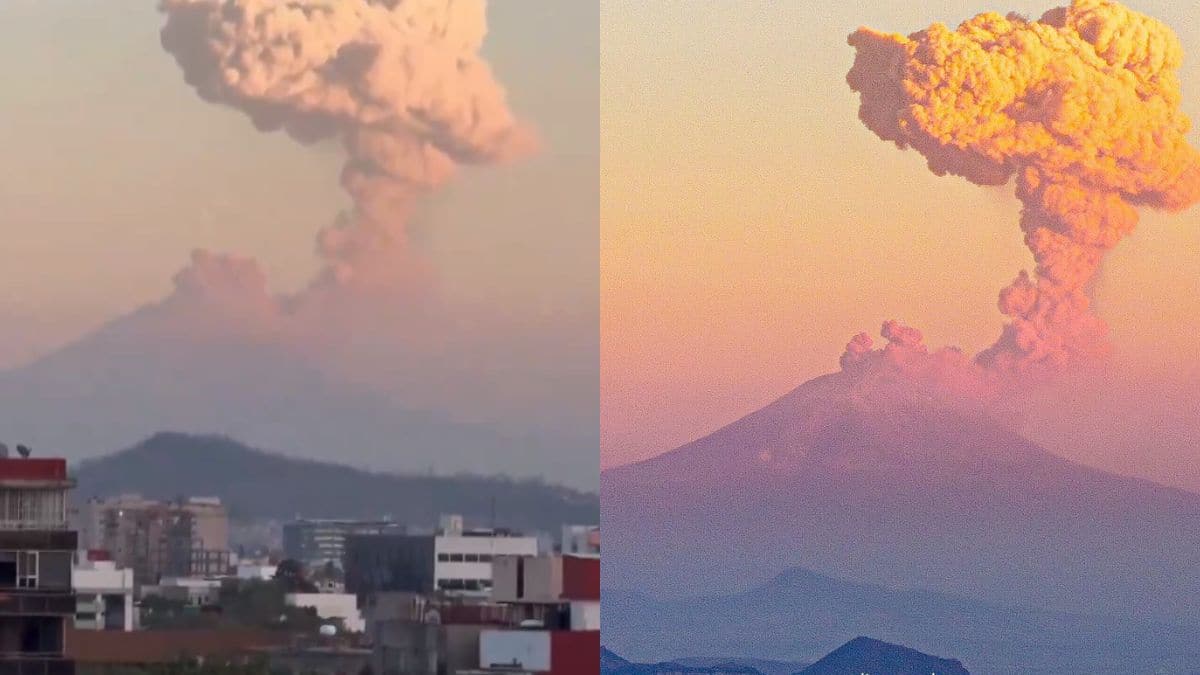
Volcanic gas emission in Mexico.
Aerial footage from drones captured the heightened activity of Mexico's Popocatepetl volcano on Thursday (Feb 22), as it emitted a dense plume of ash and gas.
The volcano had reactivated earlier in the week, prompting authorities to issue a yellow alert in the surrounding area.
In the nearby town of Santiago Xalitzintla, residents remained cautious but calm in response to the alert.
Situated approximately 45 miles southeast of Mexico City, the Popocatépetl volcano is surrounded by an estimated 25 million people living within a 60-mile radius of the composite volcano.
Given the recent uptick in activity, Mexico's National Disaster Prevention Center has issued a yellow alert, advising residents to refrain from approaching the crater for their safety.
A yellow alert signifies that volcanic emissions have begun and residents are advised to stay vigilant and prepare for possible evacuation from the affected zone.
The Mexican government said, "Avoid attempting to climb the volcano, as recent incidents have involved explosive eruptions projecting incandescent fragments. It is crucial to observe the exclusion radius of 12 kilometers from the crater, as being within this area is not safe."
"Additionally, during periods of heavy rain, it is advised to stay clear of the base of ravines due to the potential danger posed by mudslides and debris flows," it added.
Popocatepetl, affectionately known as "Popo" by locals, stands as Mexico's most active volcano.
With an elevation of 5,393 metres (17,693 feet), the mountain, whose name translates to ‘smoking mountain’ in the Nahuatl indigenous language, is situated just 70 km (43.5 miles) southeast of Mexico City.
Since 1994, Popocatépetl has been consistently active, undergoing periods of heightened activity that, in December 2000, resulted in the evacuation of 40,000 residents from their homes.
In May 2023, ash emissions prompted authorities to establish evacuation shelters, close nearby schools, and temporarily suspend operations at airfields, including Mexico City's Benito Juárez International Airport.
Highlighting the vulnerability of aircraft to volcanic material, the US Geological Survey (USGS) noted that ash particles can cause damage to the fuselage blades and significantly impede engine performance.
Despite intermittent increases in activity, the USGS cautioned that Popocatépetl has the potential for more severe consequences.
(With inputs from agencies)