WATCH | South Korea's Innospace’s Hanbit-Nano rocket crashes minutes after historic liftoff attempt

&imwidth=600&imheight=450&format=webp&quality=medium "WATCH | South Korea's Innospace’s Hanbit-Nano rocket crashes minutes after historic liftoff attempt")
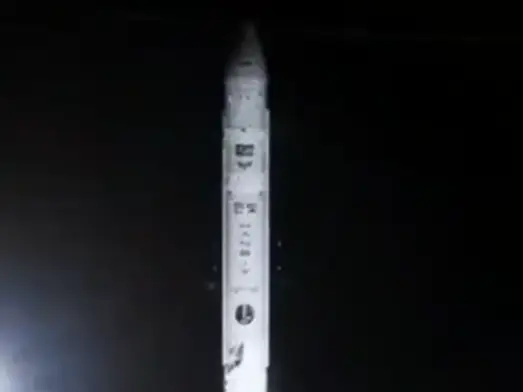
Screengrab from the video Photograph: (X)
Innospace’s Hanbit-Nano rocket crashed minutes after launch, ending South Korea’s first private orbital attempt but marking a key step in its space journey
South Korea’s push into private orbital launch suffered a blow on Monday (December 22) night after Innospace’s Hanbit-Nano rocket failed shortly after liftoff, ending its maiden flight prematurely. The launch, carried out from Brazil’s Alcantara Space Centre, was poised to be a historic moment, the first attempt by a South Korean private firm to reach orbit. Instead, the 17-metre rocket lost stability roughly a minute into the flight and crashed back to Earth, according to independent tracking data.
Hanbit-Nano lifted off at 8:13 pm EST, but soon encountered an unspecified anomaly. Innospace confirmed that the mission did not proceed as planned and abruptly ended its live broadcast, saying further details would be shared after an internal review. Developed for the booming small-satellite launch market, Hanbit-Nano is a two-stage vehicle. Its first stage uses liquid oxygen and paraffin, while the upper stage is designed to operate in two variants, one with the same propellants and another powered by liquid oxygen and liquid methane, a combination that is gaining traction due to its efficiency and lower environmental impact.
Also Read: Epstein Files: US Justice department releases 8,000+ new documents following legal pressure
The rocket is capable of deploying payloads of up to 90 kilograms into sun-synchronous orbit, a trajectory commonly used for Earth observation, environmental monitoring, and reconnaissance. On its debut mission, Hanbit-Nano was carrying five commercial small satellites from clients in India and Brazil, alongside three experimental payloads. The mix underlined the growing international appetite for affordable and adaptable launch services.
Watch the video here
The mission had already faced several delays, pushed back from its original December 17 window due to technical challenges and changing weather conditions. Such interruptions are routine in orbital launches, particularly from equatorial sites like Alcantara, where weather patterns can change rapidly. Industry analysts point out that first launches are notoriously unforgiving, even for companies that later become industry leaders. Many successful launch providers have faced early failures before refining their systems.
Despite the setback, Innospace’s long-term plans remain ambitious. The company is developing larger vehicles, Hanbit-Micro and Hanbit-Mini—to expand its launch capabilities and compete in a crowded global market. While Hanbit-Nano’s first flight ended unsuccessfully, it also marked South Korea’s arrival in the private launch arena. As demand for small satellite access to orbit continues to rise, the failed mission serves as a reminder that progress in spaceflight is often built on early losses.

