US Supreme Court looks to favour web designer's anti-gay marriage stance

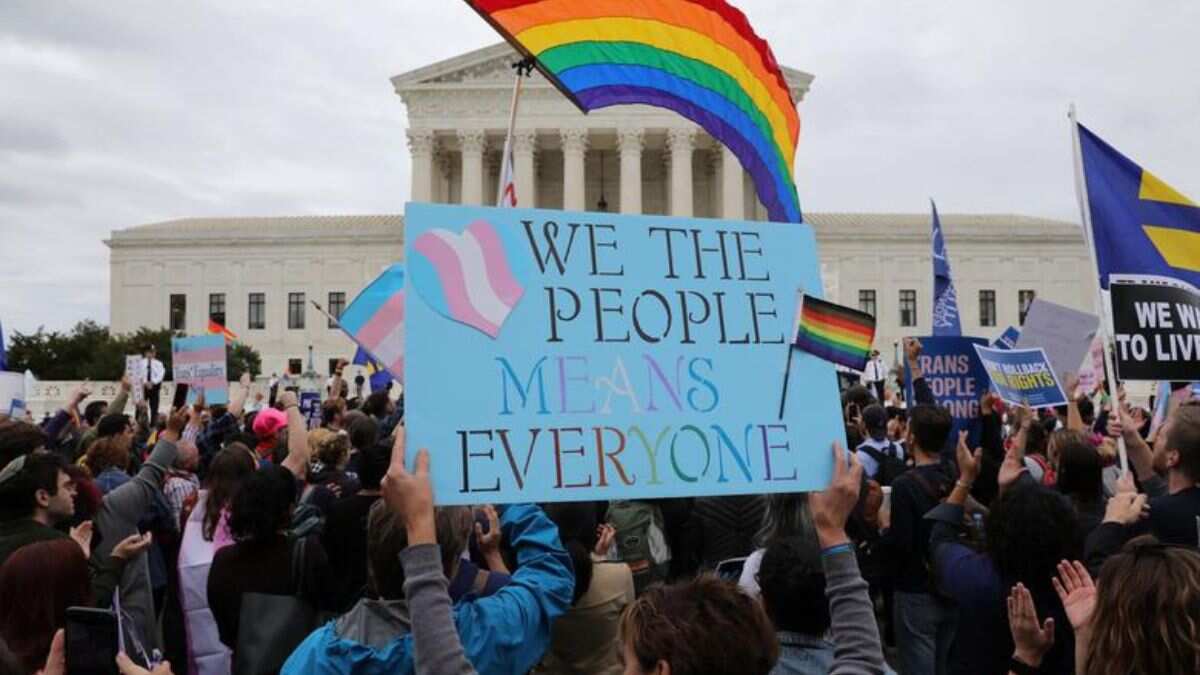
File photo of a pro-LGBTQ+ demonstration in front of the US Supreme Court
The US Supreme Court on Monday appeared to rule that a Colorado-based Christian web designer has right to refuse to provide services for same-sex marriages. The final decision in the matter is yet to be delivered after Monday’s fierce two and a half hour debate in the US Supreme Court.
Colorado's Anti-Discrimination Act bars businesses open to the public from denying goods or services to people because of race, gender, sexual orientation, religion and certain other characteristics.
Colorado’s Rights Vs Discrimination row:What is the matter all about?
The case, 303 Creative Vs. Elenis, is about a Colorado-based website designer named Lorie Smith asserting her right to deny her services to same-sex couples, citing allegiance to her Christian faith. However, Colorado’s public accommodations law forbids discrimination based on sexual orientation.
WATCH -US Supreme Court debates web designer's anti-gay marriage stance
Lower courts in the US have ruled in the state of Colorado’s favour so far. But the concerned website designer has put her case up in front of the US top court asking for the reversal of the binding observations of the lower courts. The US Supreme Court’s final decision is expected next year.
What did the Justices say?
Justice Ketanji Brown posed a hypothetical story to assert the tricky nature of the hearing.
Brown said that a photographer in a mall wants to take old time photos of Christmas scenes from the 1940s and 1950s and in those scenes, he only wants to take photos of white children and not kids of colour. “Would that photographer be allowed to do that?,” Justice Brown asked.
The second Justice Elena Kagan said that she had a hard time picturing how a state could require hypothetically, a web designer, like Smith, to create all kinds of wedding websites.
“A gay couple walks in and says, I’d like the standard website, everything standard, but I want something in addition to that, I want the homepage, the website, to say ‘God blesses this union,’ and Ms. Smith says this is a problem,” Kagan said, according to a US Supreme Court brief. “I don’t know, I think that is kind of different.”
What is the overall tilt of the US top court's opinion?
The conservative justices indicated support for Smith's view that businesses offering creative services like web design are protected by the USConstitution's First Amendment guarantee against government abridgment of free speech from being forced to express messages through their work that they oppose. The court has a 6-3 conservative majority.
Public accommodations laws exist in many states, banning discrimination in areas such as housing, hotels, retail businesses, restaurants and educational institutions.
The case gives the Supreme Court's conservatives another chance to exert their power following major recent rulings curbing abortion rights and expanding gun and religious rights.
WATCH WION LIVE HERE
You can now write for wionews.com and be a part of the community. Share your stories and opinions with us here.