Donald Trump urges NATO to act on Strait of Hormuz as ceasefire struggles hold

&imwidth=600&imheight=450&format=webp&quality=medium "Donald Trump urges NATO to act on Strait of Hormuz as ceasefire struggles hold")
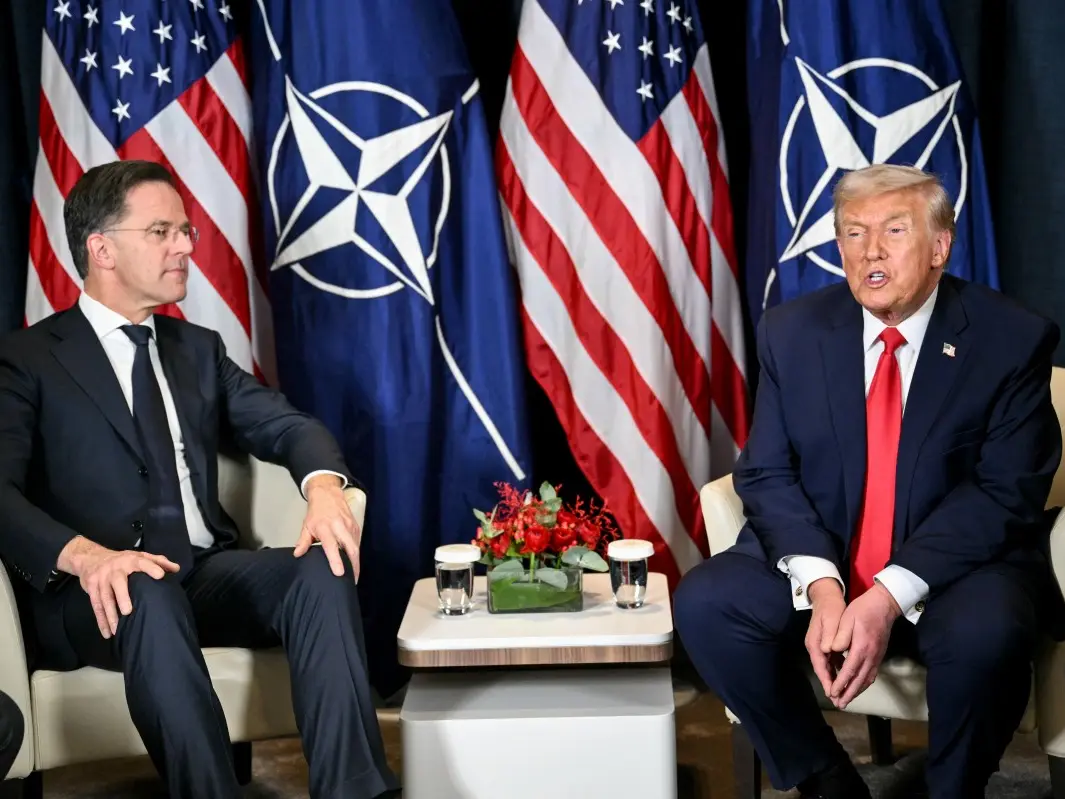
US President Donald Trump (R) speaks with NATO’s Secretary-General Mark Rutte during a bilateral meeting on the sidelines of the World Economic Forum (WEF) annual meeting in Davos on January 21, 2026. Photograph: (AFP)
The US is pressuring NATO allies to present concrete plans to reopen the Strait of Hormuz amid a fragile Iran ceasefire and ongoing Israel-Hezbollah tensions.
Following the 14-day fragile cease-fire agreement, the US is urgently pressuring its European allies for specific plans and commitments to open the Strait of Hormuz. According to a senior NATO official, the US wants its allies to move beyond rhetoric, act on its pledge and present concrete, actionable strategies to ensure navigation through the Strait of Hormuz. The request was reportedly presented during a discussion between US President Donald Trump, the Pentagon, the State Department and NATO chief Mark Rutte at the White House.
Despite the negotiations of a ceasefire, the Strait remains closed, with Iran signalling it requires coordination with its armed forces for safe passage through the Strait. A UK-led coalition of more than 40 countries, including European Nations, Japan and Canada, has pledged to reopen the Strait of Hormuz. Though a ceasefire has been agreed, Israel and Iran continue to bomb each other, turning the situation into an everlasting conflict, rather than a pause.
“NATO WASN’T THERE WHEN WE NEEDED THEM, AND THEY WON’T BE THERE IF WE NEED THEM AGAIN”, Trump wrote after meeting NATO chief Mark Rutte. The alliance is facing a desperate strain in the wake of the US war in Iran. NATO has delayed taking any substantial step towards opening the Strait, and at times has ignored the US concerns. Some of the members have refused to allow the use of their military bases, while some have openly opposed it. In such a situation US is pushing the NATO members to present a concrete plan to open the Strait. It is yet to be seen if the NATO members will take the situation seriously, as asserted by Trump.
Tehran has asserted that until the war between Hezbollah and Israel has ceased, it will continue its operation. Israeli Prime Minister Benjamin Netanyahu on Thursday said that Israel will keep targeting Hezbollah “wherever necessary”. Iran's Speaker of Parliament MB Ghalibaf, in an official statement, said that there is a deep “historical distrust” towards the US due to the repeated violation of the commitments made by the US. It had accused the US of violating the three key clauses in the framework: one refusal to end the conflict in Lebanon, two enemy drones entering Iranian airspace, and three refusals to acknowledge Iran's right to enrichment.