US launches fresh strikes against Yemen's Houthis as Biden says attacks to continue

US launches fresh strikes against Yemen's Houthis as Biden says attacks to continue
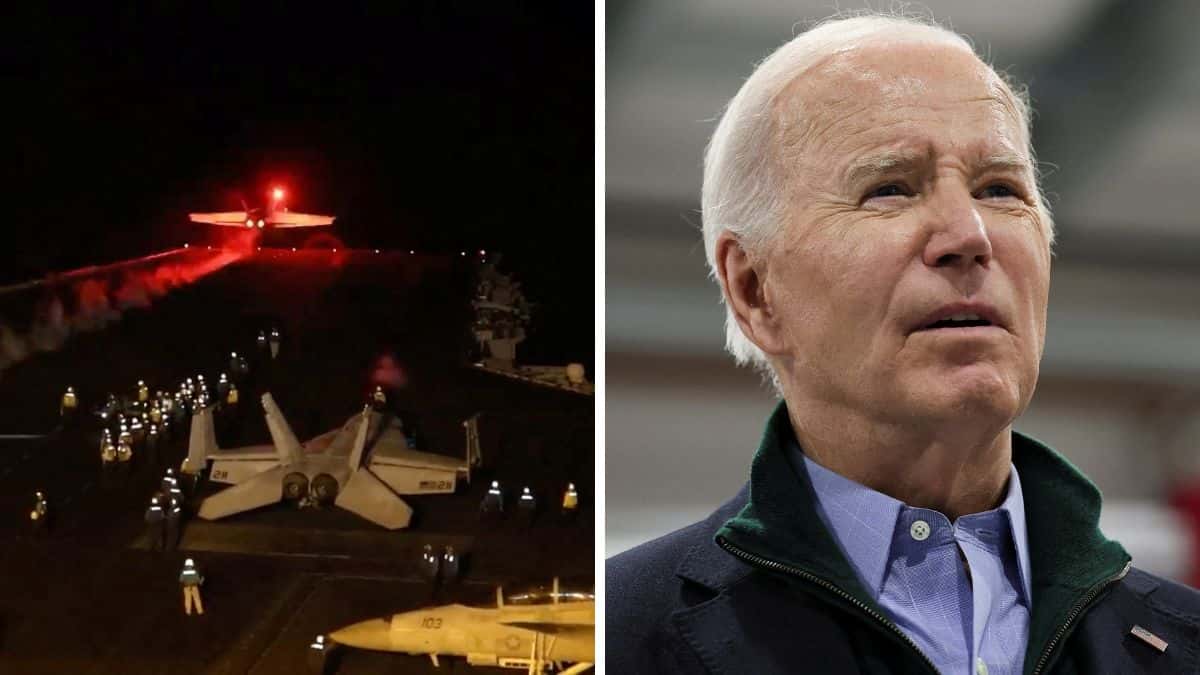
The United States on Thursday (Jan 18) launched fresh strikes against Yemen's Houthis.
Washington said that the attacks were targeted at the anti-ship missiles, which as per the White House, were prepared by the Iran-backed rebel group for its planned assault in the Red Sea.
"We did it again this morning, striking at... a couple of anti-ship missiles that we had reason to believe were being prepared for imminent fire into the southern Red Sea," National Security Council spokesman John Kirby told reporters.
'Strikes against Houthis to continue,' says Biden
The fresh strikes came following United States President Joe Biden's remark who said that the military strikes against the Houthis would continue as he said that the rebel group was still attacking vessels in the Red Sea.
"When you say 'working, are they stopping the Houthi?' No. Are they going to continue? Yes," Biden told reporters at the White House when asked if the strikes were working.
Washington on Wednesday (Jan 17) re-designated the Houthis as a "terrorist group" and hit 14 Houthi missiles laterthe same day.
Biden on Iran-Pakistan situation
Biden said that the clashes between Pakistan and Iran were clearly depicting that Tehran was not "well-liked" in the region.
"As you can see, Iran is not particularly well-liked in the region," Biden told reporters at the White House, adding that "we're working on" understanding how the situation will develop.
Watch | Houthi rebels target US vessel, Indian Navy warship moves to assist attacked vessel
He further said the United States was trying to understand where the Iran-Pakistan situation would go, adding, "Where that goes we're working on now -- I don't know where that goes."
The White House further urged Iran and Pakistan, after both countries launched air strikes on each other's territory, to avoid escalation.
"We're monitoring this very, very closely. We don't want to see an escalation, clearly in South and Central Asia, and we're in touch with our Pakistani counterparts as you'd expect," National Security Council spokesman John Kirby told reporters.
On Wednesday, Pakistan's foreign ministry claimed that two children were killed and three others injured in an "illegal" airstrike by Iran. Pakistan subsequently responded by expelling the Iranian ambassador in Islamabad and recalled its envoy from Tehran. Later, Islamabad retaliated with strikes at multiple locations inside Iran.
"Pakistan struck on Baloch terrorists in Iran through its airforce in the Saravan and Jalq areas deep inside Iran," a Pakistani military source claimed.
(With inputs from agencies)