US battles Putin by disclosing his next possible moves

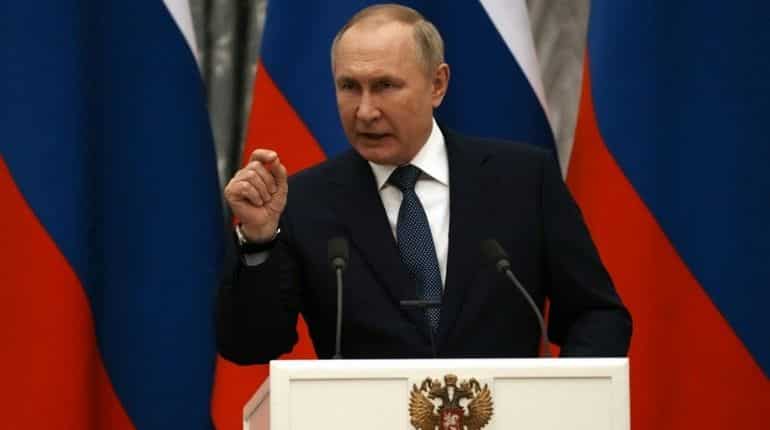
Vladimir Putin
After decades of getting schooled in information warfare by President Vladimir Putin of Russia, the United States is trying to beat the master at his own game.
The Biden administration has detailed the movement of Russian special operation forces to Ukraine’s borders, exposed a Russian plan to create a video of a faked atrocity as a pretext for an invasion, outlined Moscow’s war plans, warned that an invasion would result in possibly thousands of deaths and hinted that Russian officers had doubts about Putin.
Then, on Friday, Jake Sullivan, President Joe Biden’s national security adviser, told reporters that the United States was seeing signs of Russian escalation and that there was a “credible prospect” of immediate military action.
All told, the extraordinary series of disclosures has amounted to one of the most aggressive releases of intelligence by the United States since the Cuban missile crisis, current and former officials say.
It is an unusual gambit, in part because Biden has repeatedly made clear that he has no intention of sending UStroops to defend Ukraine. In effect, the administration is warning the world of an urgent threat — not to make the case for a war, but to try to prevent one.
The hope is that disclosing Putin’s plans will disrupt them, perhaps delaying an invasion and buying more time for diplomacy or even giving Putin a chance to reconsider the political, economic and human costs of an invasion.
At the same time, Biden administration officials said they had a narrower and more realistic goal: They want to make it more difficult for Putin to justify an invasion with lies, undercutting his standing on the global stage and building support for a tougher response.
Intelligence agencies, prodded by the White House, have declassified information, which in turn has been briefed to Congress, shared with reporters and discussed by Pentagon and State Department spokespeople.
The last time Russia moved against Ukraine, in 2014, intelligence officials blocked the Obama administration from sharing what they knew. But the Biden administration has studied those mistakes.
“We have learned a lot, especially since 2014, about how Russia uses the information space as part of its overall security and military apparatus,” said Emily Horne, spokesperson for the National Security Council. “And we have learned a lot about how to deny them some impact in that space.”