UK election heats up: Sunak and Starmer go head-to-head on immigration and taxes in first debate

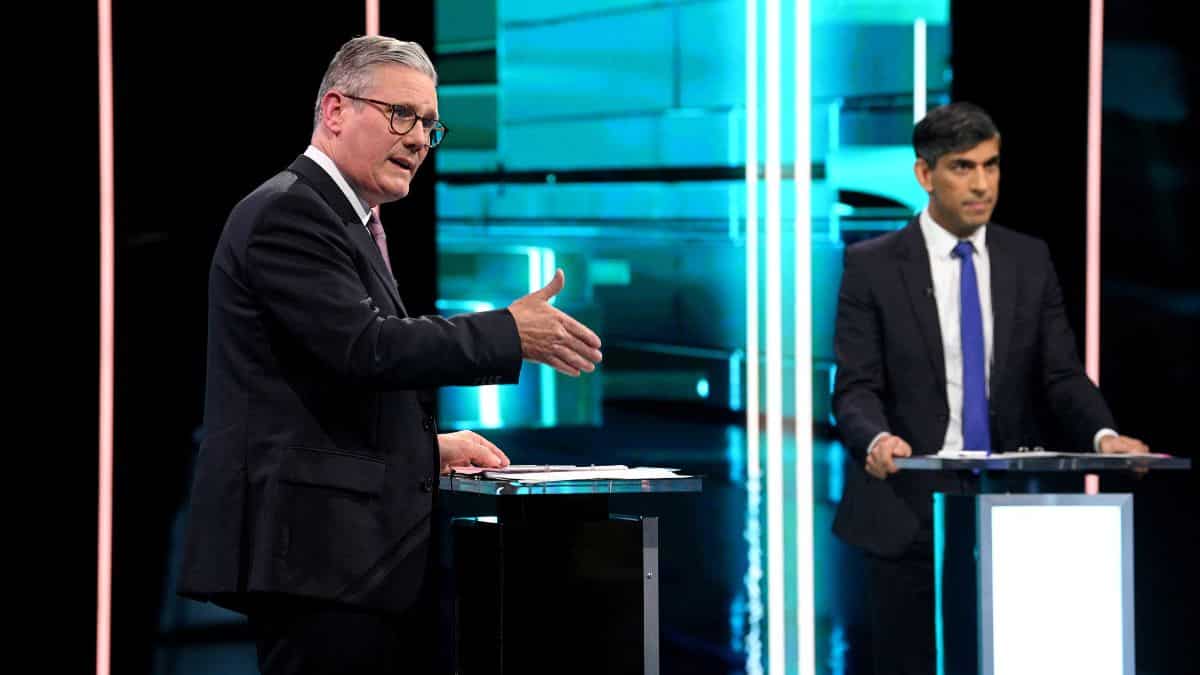
Prime Minister Rishi Sunak and hopeful Keir Starmer
Prime Minister Rishi Sunak and Labour challenger Keir Starmer on Tuesday (June 4) went head-to-head in their first debate ahead of July elections. The two leaders clashed over how to rejuvenate Britain's economy, with Sunak accusing the opposition of planning tax hikes if it wins the upcoming July 4 election.
First debate
Just weeks before Britain's General Elections, in their first debate, both leaders stuck to their campaign narratives.
Sunak, a Conservative, claimed only he had a viable strategy for boosting the economy, while Starmer portrayed the Conservatives as responsible for 14 years of economic chaos.
During the lively debate, a relatively recent feature in British politics that attracts significant voter attention, the leaders sparred over the cost-of-living crisis, public health service waiting lists, and immigration.
The questions highlighted common voter concerns: rising living costs, long health service waits, and declining education standards.
Although the debate yielded few new insights, an immediate opinion poll suggested Sunak emerged as the winner of the debate. This is contrary to wider opinion polls that predict a win for Labour in the July elections.
Labour, higher taxes, and Sunak on the offensive
Sunak reiterated the Conservative attack that Labour's only plan was to increase taxes by £2,000 (over $2,500) per person.
"Mark my words, Labour will raise your taxes. (It) is in their DNA. Your work, your car, your pension, you name it, Labour will tax it," he claimed.
Starmer did not immediately refute this, later dismissing the £2,000 figure as "nonsense." Labour has pledged not to raise income tax or National Insurance if it gains power.
Speaking to anaudience member, Starmer shared his working-class background, contrasting it with Sunak's wealth: "I do know the anguish of worrying when the postman comes with a bill, what bill is it, am I going to be able to I pay it? I don’t think the prime minister quite understands."
Starmer criticised the Conservatives for 14 years of chaos and opposed Sunak's mandatory national service plan. Sunak drew groans for blaming NHS waiting lists on strikes and was laughed at when he claimed the numbers were decreasing.
However, he regained some ground by discussing immigration. Sunak defended his plan to send illegal asylum seekers to Rwanda, contrasting it with Labour's lack of a similar deterrent. He promised to prioritise national security over any foreign court's decisions.
Starmer stated he would tackle immigration too, and that he would consider third-country asylum processing if it didn't breach international law.To this, Sunak, facing a 20-point deficit in polls, attacked the labour leader'slack of a clear plan.
In his closing remarks, Sunak criticised Starmer: "Keir Starmer is asking you to hand him a blank cheque without explaining its cost or what it will buy. In uncertain times, we simply cannot afford an uncertain prime minister."
WATCH |UK: Business leaders endorse Labour
Starmer countered, promising no "gimmicks or unfunded promises" like those he attributed to Sunak. He urged voters to reject "five more years of Conservative decline and division."
"Imagine how you would feel waking up on July 5 to five more years of the Conservatives, five more years of decline and division, the arsonists handed back the matches," he said.
"Now imagine turning the page with a Labour government that rolls up its sleeves and gets on with the job… The choice at this election is clear: more chaos with the Conservatives or the chance to rebuild Britain with a changed Labour Party."
(With inputs from agencies)

