To burst or not to burst: China's ban on fireworks sparks debate ahead of Lunar New Year

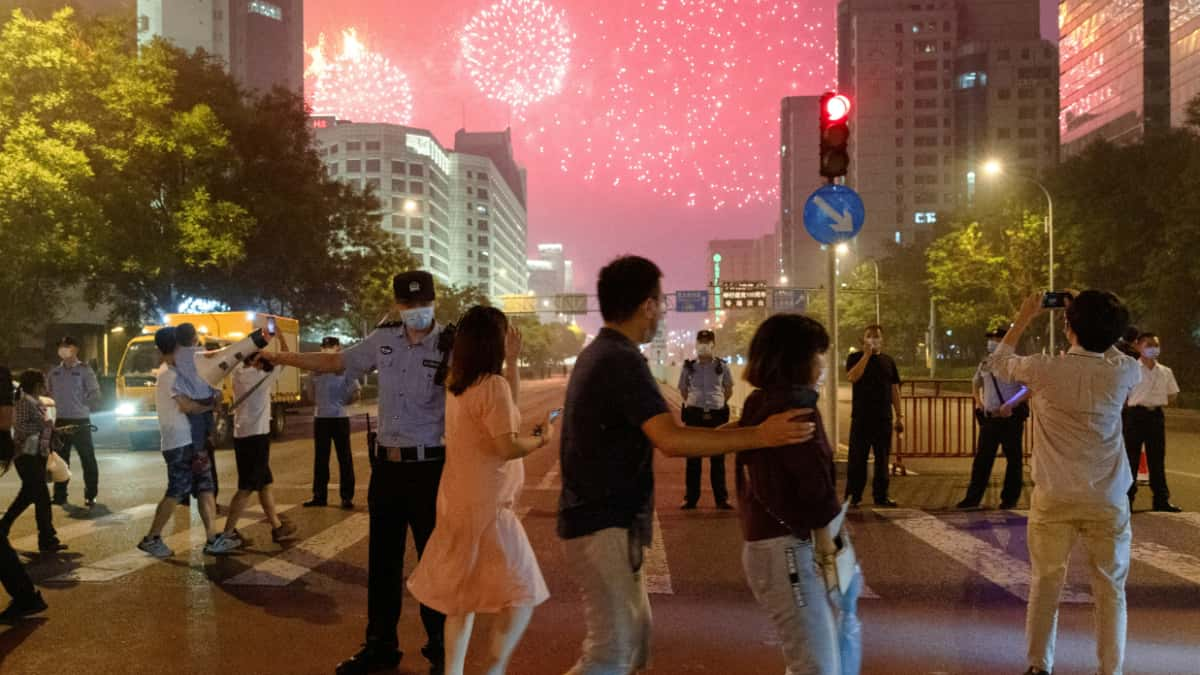
File photo.
It is just over a month before China celebrates the Lunar New Year on Feb 10, and lawmakers on Friday (Dec 29) weighed in on a fiery debate on whether fireworks should be used to ring in the new year. According to a report by the news agency Reuters, lawmakers said that a total ban on pyrotechnics in the country credited with inventing them would be hard to implement.
Lawmakers said that air pollution prevention laws and fire safety regulations led to differences in understanding of the ban on fireworks, which was never absolute. Folklore states that the earliest fireworks were invented 2,000 years ago to drive away the "nian", a mythical beast that preyed on people and livestock on Lunar New Year's Eve.
'We have the right to fireworks'
Citing official data, Reuters reported that in 2017, 444 cities in China had banned fireworks. But since then, some cities scaled back curbs, allowing fireworks at certain times of the year and designated venues. This year in December, many counties rolled out notices prohibiting fireworks, which reignited a debate on the ban.
"We have the right to fireworks," a person wrote on Weibo. Some citizens have argued that firework bans were necessary to protect the environment. "It should be regulated due to pollution and safety (fire) hazards," another person on Weibo said.
Earlier this week, an online poll by the official Beijing Youth Daily showed that more than 80 per cent of respondents expressed support for fireworks during the Spring Festival, which is the most important holiday on the Chinese calendar.
Some respondents said the ban was ironic after the United Nations (UN) last week adopted the Spring Festival as an official holiday, a move supported by Chinese authorities.
In 2022, Reuters reported that a ban on fireworks ahead of the Beijing Winter Olympics helped China's capital record its cleanest air ahead of the Lunar New Year.
Some Chinese netizens, however, were missing their fireworks.
Air pollution worsened in 2023, first time in 10 yrs
Last week, a study conducted by the Centre for Research on Energy and Clean Air (CREA) said that China's air pollution had worsened this year, for the first time in a decade.
The study said that 80 per cent of provincial capitals, including Beijing, saw an increase in Particulate Matter (PM2.5) this year.
"In 2023, 13 out of China’s 31 provincial capitals have not met the national standard for PM2.5, and 11 provincial capitals have not met the standard for ozone. They are concentrated in the northern key air pollution control regions and central China," it added.
(With inputs from agencies)