Tesla recalls hundreds of vehicles over delay in rearview image display

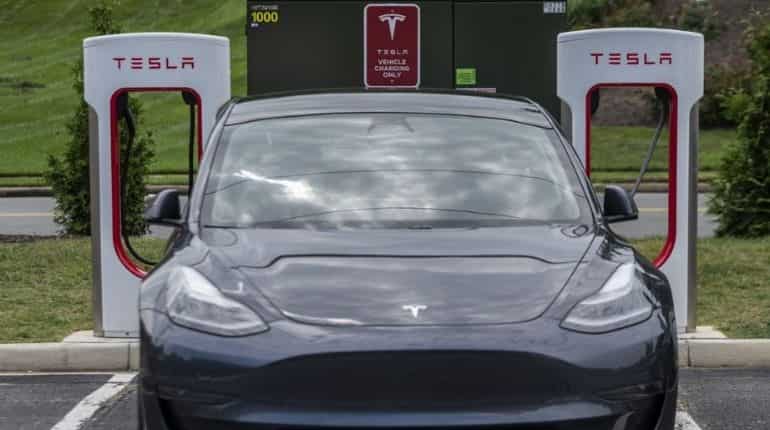
Cars charge at a Tesla super charging station in Arlington, Virginia
The National Highway Traffic Safety Administration (NHTSA) said Friday that Tesla is recalling 947 vehicles in the United States because the rearview image may not immediately display when they begin to reverse.
Tesla said "over the following week, an engineering investigation into the condition identified a software error as a potential cause for further assessment."
Tesla said that "despite not finding a noncompliance in the tests that Tesla conducted, a recall determination was made out of an abundance of caution to recognize the potential presence of a noncompliance in affected vehicles."
The models recalled by the US electric automaker include 2018-2019 Model S, Model X, and 2017-2020 Model 3 vehicles which are equipped with Autopilot Computer 2.5 and operating certain firmware releases.
Previously, NHTSA made Tesla recall nearly 579,000 vehicles in the US because a “Boombox” function can play sounds over an external speaker and obscure audible warnings for pedestrians of an approaching vehicle.
Tesla CEO Elon Musk, when asked on Twitter why the company agreed to the recall, responded: “The fun police made us do it (sigh).”
It comes after US auto safety regulators had launched investigation on Tesla as its cars stopped on roads for no apparent reason.
The vehicles were equipped with partially automated driver-assist features such as adaptive cruise control and “Autopilot,” which allows them to automatically brake and steer within their lanes.
“Complainants report that the rapid deceleration can occur without warning, and often repeatedly during a single drive cycle,” the agency said.
Musk has been fighting with US and California government agencies for years, sparring with NHTSA and most notably with the Securities and Exchange Commission.
He is trying to cancel an agreement he made in 2018 with the US stock market regulator (SEC) that requires some of his tweets to be approved by lawyers before they are posted.
The South Africa-born mogul and Tesla each agreed to pay $20 million in civil fines over Musk’s tweets about having the money to take the company private at $420 per share. The funding was far from secured and the company remains public. The settlement specified governance changes, including Musk’s ouster as board chairman, as well approval of Musk’s tweets.
(With inputs from agencies)