

&imwidth=800&imheight=600&format=webp&quality=medium "Taliban accuses Pakistan of ‘baseless allegations’ as cross-border clashes intensify")
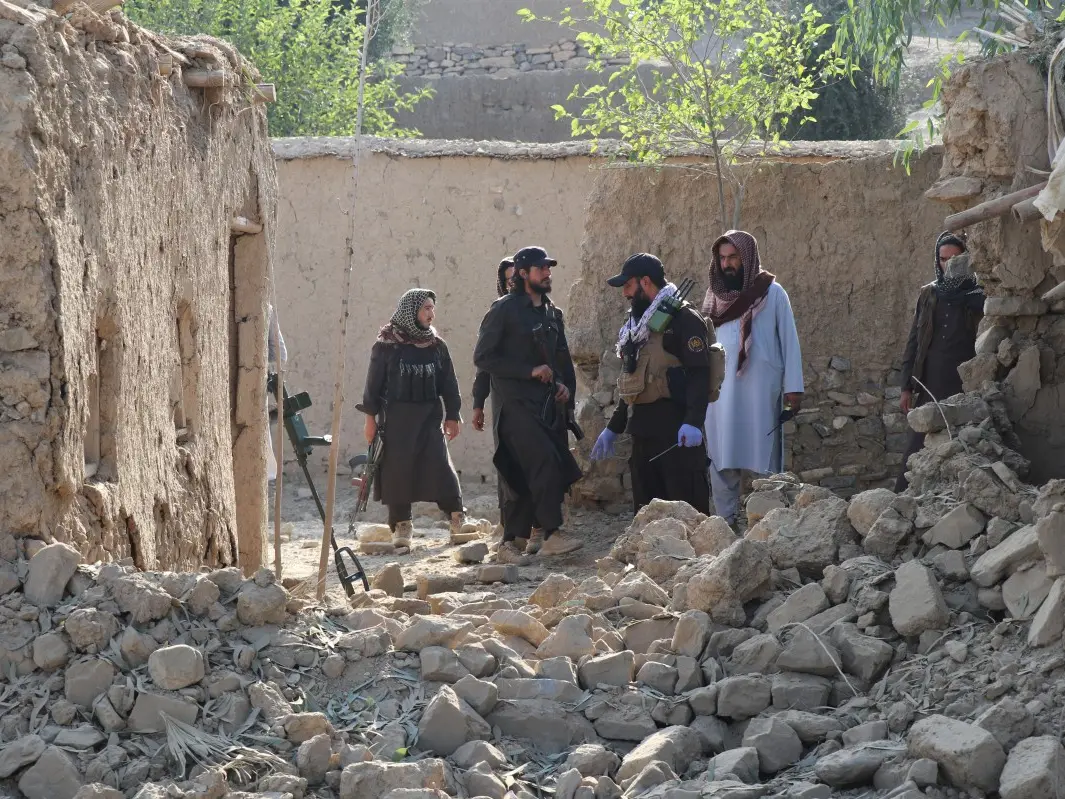
Amid rising tensions between Afghanistan and Pakistan, Afghan Taliban spokesperson Zabiullah Mujahid accused Islamabad of ‘baseless allegations’ against Kabul and claimed that their approach of using accusations and propaganda was undermining negotiations. Taliban urged urged Pakistan to address its domestic problems instead of blaming Afghanistan and called on the country to respect political rights and public opinion. His remarks come amid escalating cross-border clashes between Pakistani security forces and Afghan Taliban forces along the Durand Line.
Islamabad has blamed the Taliban authorities in Kabul for allegedly allowing militant groups to operate from Afghan territory following a series of attacks inside Pakistan. Pakistan subsequently launched a counter-offensive, Operation Ghazab lil-Haq, turning the border region into a volatile conflict zone. Last week, heavy fighting erupted along the Kurram-Paktia border after Afghan Taliban forces allegedly opened fire on Pakistani military checkpoints in the Kharlachi sector.
On October 10, Pakistani security forces intercepted a heavily armed group identified by Pakistan as Khwarij, or Tehreek-e-Taliban Pakistan (TTP) militants, attempting to cross into Kurram district from Afghanistan. According to the account provided by Pakistani security forces, Afghan Taliban border posts opened fire with mortars and heavy weapons to provide cover for the infiltrators.
How the conflict escalated
The conflict erupted on February 21, 2026, following extensive Pakistani precision airstrikes targeting Tehrik-i-Taliban Pakistan (TTP) and Islamic State Khorasan Province (ISKP) training camps located in eastern Afghanistan. The situation rapidly escalated into cross-border artillery duels, parallel insurgencies in Pakistan's frontier provinces, and high civilian displacement. In March 2026, ahead of the Islamic holiday Eid al-Fitr, Pakistan and Afghanistan agreed to a brief, temporary pause in fighting. This truce—and a subsequent one during Eid al-Adha—was brokered at the request of international mediators including Qatar, Saudi Arabia, and Turkey.

