After Assad's ouster, what changes will Syria’s interim government bring?

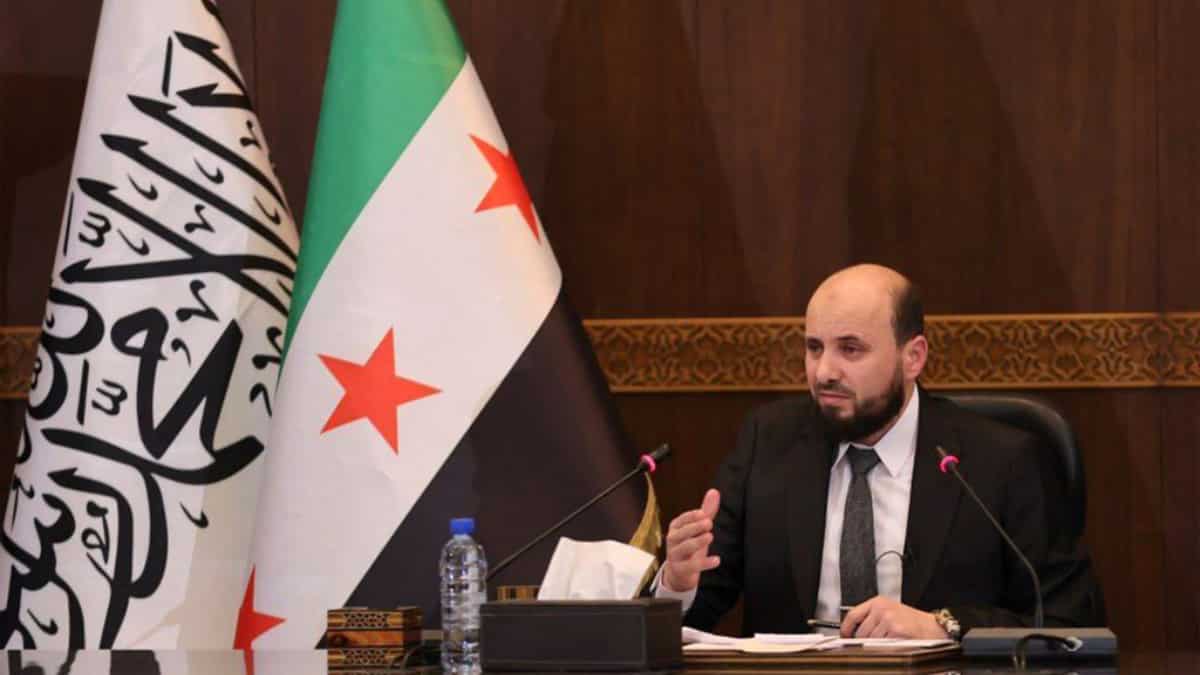
File image of Syria's caretaker prime minister Mohammed al-Bashir.
In a significant turn of events post-Bashar al-Assad's ouster from Syria a few days back, the interim government on Thursday (Dec 12) pledged to implement the "rule of law," as G7 powers pushed for an inclusive transition.
Assad fled the country after a rapid military push that ended five decades of autocratic rule by his family. His departure has been met with celebrations across Syria and among the global Syrian diaspora, many of whom endured years of oppression, including arbitrary arrests and executions.
he regime’s collapse came after a swift offensive led by the Islamist group Hayat Tahrir al-Sham (HTS) and its alliesbroughtan end to decades of brutal rule byAssad's family, marked by widespread human rights violations.
"We were living in oppression, we were unable to speak," said Ibtissam Kaab, a resident of Assad’s hometown of Qardaha. "Whenever we wanted to speak, they threatened to harm us and our children."
New government sets course for reforms
> The new government, led by Mohammad al-Bashir, has promised to overhaul Syria’s political and legal systems. In a statement, government spokesman Obaida Arnaout confirmed that the new authorities will suspend the constitution and parliament for three months.
> "A judicial and human rights committee will examine the constitution and propose necessary amendments," Arnaout said. "All those who committed crimes against the Syrian people will be held accountable."
> The government also assured that Syria’s religious and cultural diversity would be respected, maintaining freedoms for all communities.
> The G7 said on Thursday it was readyto support the transition to an "inclusive and non-sectarian" government in Syria.
> In a statement, leaders of the grouping called for protection of human rights, including those of women and minorities. The statement emphasised the importance of holding the previous Assad regime accountable for its crimes.
HTS and Kurdish support for transition
HTS, which led the offensive against Assad’s forces, has vowed to pursue justice for those responsible for human rights violations under the former regime and urged the international community to hand over war criminals. Meanwhile, the Kurdish administration in northern Syria has expressed support for the new government, adopting the three-star independence flag used by the rebels. The flag represents Syrians' aspirations for freedom, dignity, and unity.
Concerns over future stability
While many Syrians celebrate Assad’s removal, there are concerns about the future stability of the country, given its complex ethnic and sectarian makeup. Geir Pedersen, the UN envoy for Syria, cautioned that the transition must avoid creating new conflicts. "My biggest concern is that this transition could create contradictions that lead to further civil strife," Pedersen warned.
Watch:Who Is Mohammed Al-Bashir, The New Caretaker Prime Minister Of Syria? Explained
Israeli strikes escalate regional tensions
Regional tensions continue to rise as Syria adjusts to its new political reality. Israel has intensified air strikes on Syria in recent days, with explosions reported near Damascus. Israeli Prime Minister Benjamin Netanyahu stated that the strikes aimed to prevent "terrorist" attacks emanating from Syria.
The path forward
In cities like Aleppo, Syrians are hopeful for a safer future. “We are starting to feel safe,” said Ramadan Dali, a shopkeeper in Aleppo. "It won’t happen overnight, but we are hopeful for the future."
Meanwhile, the Baath Party, which played a key role in Assad’s regime, has suspended its activities and handed over assets to the new authorities. Assad is believed to have fled to Russia, which has called for Syria’s stabilization.
Disclaimer: WION takes utmost care to accurately and responsibly report conflicts in West Asia involving Israel, Iran, Syria, Iraq, and non-state actors like Islamic State, among others. In this context, claims and counter claims are being made online and offline. WION cannot independently verify the authenticity of all statements, social media posts, photos and videos.