Shipwreck found in Indian Ocean from the time of World War II

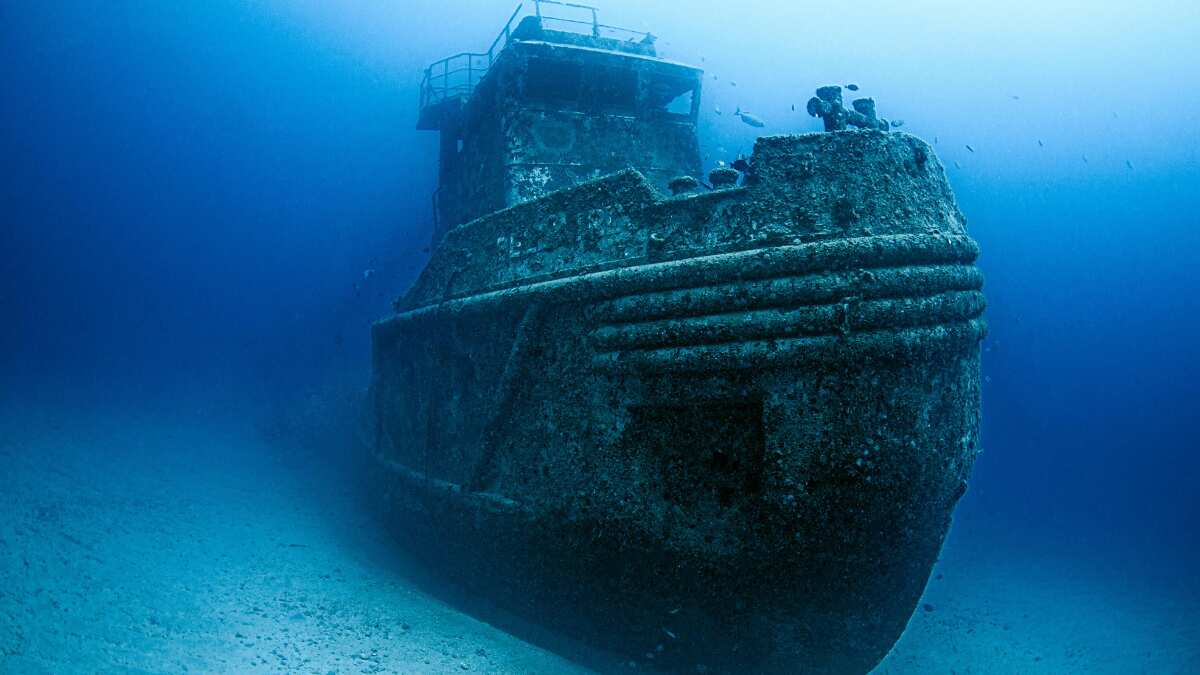
Representative image
A US Navy destroyer that went down in a battle with the Japanese forces during World War II has been found. The wreckage of USS Edsall was found at the bottom of the Indian Ocean by a Royal Australian Navy vessel.
The discovery was made south of Christmas Island and the announcement was made on Nov 11, a day marked as Veterans Day in the United States and Remembrance Day in Australia. The wreckage was first spotted by the Australian Navy in 2023, and since then had been working to confirm that it was the Edsall.
The vessel was sunk on March 1, 1942, and had 185 sailors and 31 US Army Air Force pilots aboard at the time.
"Captain Joshua Nix and his crew fought valiantly, evading 1,400 shells from Japanese battleships and cruisers before being attacked by 26 carrier dive bombers, taking only one fatal hit. There were no survivors," Caroline Kennedy, US ambassador to Australia said in a joint statement recorded with Vice Admiral Mark Hammond, head of the Australian Navy.
"This is part of our continuing efforts to honour those who made the ultimate sacrifice," she added.
Kenndey added that the discovery will help them "preserve this important memorial and hope that the families of the heroes who died there will know their loved ones rest in peace."
Edsall fought the Japanese forces but was eventually bombed
Commissioned in 1919, the USS Edsall went down tragically during one of its trips in the middle of World War II. The destroyer undertook several trips escorting convoys between Australia and Indonesia. On March 1, 1942, it was travelling alone south of Java when the much faster and more heavily armed Japanese battleships and cruisers surrounded it.
The Edsall fought for nearly two hours, laying smoke screens and trying to dodge the attack. However, the Japanese brought in more than two dozen aircraft to bomb the destroyer. It went down soon after.
Retired Navy Rear Adm. Samuel J. Cox, head of the Naval History and Heritage Command, wrote about the incident. He says the Japanese observers reportedly called the destroyer a "dancing mouse," for its erratic movements.
While most of the crew was believed to have died as the destroyer sank, it was later revealed that the Japanese forces took some of them who were later executed.

