Quebec, the epicentre of Canadian wildfires, awaits reinforcement as thousands flee

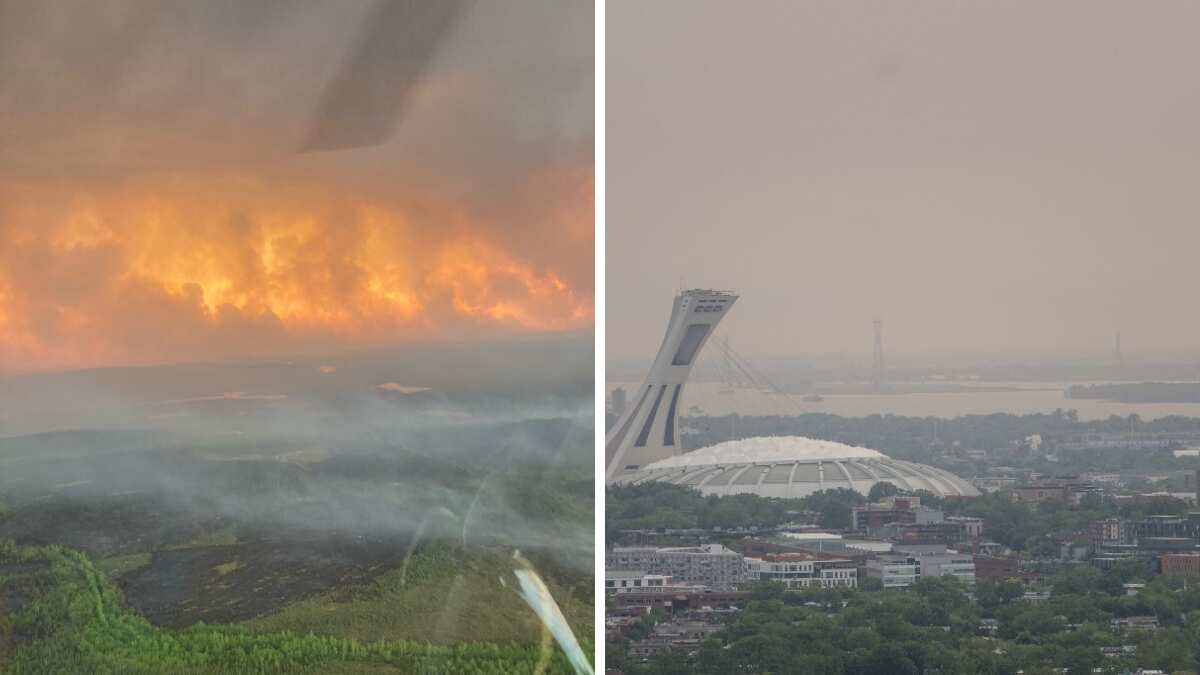
Canada wildifres
Thousands of people are being evacuated from their homes across northern and western regions of Quebec in Canada, which has emerged to be theepicentre of wildfires, even as the province awaits the arrival of reinforcements from abroad to help tackle the ‘out of control’ blaze.
According to CBC News, about 11,400 people have had to leave their homes so far.
The major fires that began in May in the country’s west gradually shifted to Nova Scotia on the Atlantic coast, before this week moving to the French-speaking Canadian province.
Armed forces and firefighters from other provinces have been on the ground in Quebec to tame the wildfires, but local fire authorities have said they only have the capacity to fight about 40fires at a time for now.
So far, 460,000 hectares of land hasbeen burnt in Quebec, Forestry Minister Maïté Blanchette Vézina said, noting that it has already surpassed the 1991 total of about 350,000 hectares.
"We have never seen these many hectares [burn]," she said.
Watch | Canada wildfire smoke shrouds US' states, New York becomes most polluted city
There are currently 670 people fighting the fires on the ground, excluding the pilots of waterbombing aircrafts, said Legault.
The province, which is struggling to put out 150 fires, most of them listed as out of control, is hoping extra personnel, along with rain, may provide some relief.
Prime Minister Justin Trudeau on Wednesday tweeted that reinforcements had started to arrive from the US, with more on the way.
So far, the United States has deployed more than 600 US firefighters and support personnel,and other firefighting assetsto respond to the fires, an official statement from Washington stated.
3.8 million hectares scorched
As many as 3.8 million hectares havebeen scorched and more than 20,000 people remained displaced across Canada as of Wednesday, and the officials estimate that the figure is expected to rise.
Since May, more than 100,000 people have been forced from their homes as wildfires hit all regions of the country, including in places like Nova Scotia, where large, destructive wildfires are relatively uncommon.
To combat the blazes, Canada has called on other countries to help. At the moment, there are nearly 1,000 international firefighters helping Canadian crews, coming from the US, Australia, New Zealand and South Africa.
Spring, a dangerous time in Canada
A potent combination of dry vegetation, record temperatures and powerful winds have fuelled the massive forest fires that initially began in western Canada's Alberta province.
Scientists say that the extent of the fires and their appearance so early in the year illustrate the impacts of climate change.
Also, springtime is considered risky in the region as no snow remains on the ground and it's before plants turn green.
"We end up with very dry undergrowth and trees that are also very flammable, because they have no leaves," Yan Boulanger, a specialist inforest firesat the Canadian ministry for natural resources, told AFP in May.
(With inputs from agencies)
WATCH WION LIVE HERE