Following protests over fuel prices, Peruvian president imposes curfew in Lima, Callao

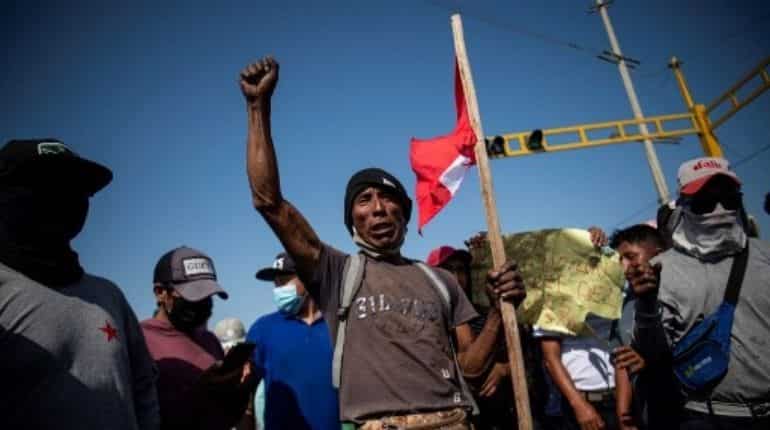
peru protest
PeruvianPresidentPedro Castillo announced acurfewfor Tuesday in the capitalLimaand neighboring port city Callao, after demonstrations across the country over fuel prices caused roadblocks and "acts of violence".
Protestshad erupted acrossPeruin recent days due to a hike in fuel prices and tolls, during a time of rising food prices.
In an attempt to appease protesters, the government eliminated the fuel tax over the weekend.
But truckers and other transport workers took to the streets again Monday inLima, as well as several regions in the north -- from the coastal city Piura to the densely forested Amazonas.
Castillo announced late Monday thatPeru's Council of Ministers had approved acurfewfor the following day.
"In view of the acts of violence that some groups have wanted to create... and in order to reestablish peace... the Council of Ministers has approved the declaration of citizen immobility (curfew) from 2:00 am to 11:59 pm on Tuesday, April 5," he said in a televised message.
There have been several violent incidents during recentprotests, including the burning of toll booths on highways, looting and clashes with police.
Protesters had also set fire to tires and blocked the Pan-American highway, the country's most important transport and traffic artery snaking north to south, and school was suspended.
"I call for calm and serenity," the leftistpresidentsaid during his brief appearance on television.
"Social protest is a constitutional right, but it must be done within the law."
Watch |Peru Water Crisis: Two million people lack access to water
Lack of direction
The 52-year-old former teacher announced thecurfewa weekafterhe was saved from being impeached by Congress, where opponents accused his administration of having a "lack of direction" and for allegedly allowing corruption in his entourage.
The impeachment attempt last week was the second during Castillo's eight-month administration in a country with a recent history of ousting presidents.
Castillo's action to impose movement restrictions -- which will cover more than 10 million residents inLimaandCallao-- was met with immediate repudiation.
"Acurfewto reestablish order -- (this is) an authoritarian measure of Pedro Castillo's government that shows ineptitude, incapacity to govern," political analyst Luis Benavente toldAFP.
"It is like putting an end to traffic accidents by taking vehicles off the roads."
Tuesday'scurfewmeasures coincide with the 30th anniversary of a coup staged by ex-presidentAlberto Fujimori, a controversial figure now jailedaftera regime marked by a bloody campaign against insurgents.
"The measure dictated byPresidentPedro Castillo is openly unconstitutional, disproportionate and violates people's right to individual freedom," tweeted lawyer Carlos Rivera, one of the defenders of the victims of Fujimori's government.
Watch |Peruvian President Pedro Castillo survives the impeachment vote in Congress
Fuel and wage woes
Like much of the rest of the world,Peru's economy is still recovering from the damages wrought by the coronavirus pandemic.
The country's Consumer Price Index in March saw its highest monthly increase in 26 years, driven by soaring food, transport and education prices, according to the national statistics institute.
The multi-region demonstration was largely organized by the Union of Multimodal Transport Guilds ofPeru.
To appease them the government eliminated the fuel tax over the weekend, and Castillo decreed a 10 percent increase in the monthly minimum wage -- which would rise to 1,025 soles ($277) beginning in May.
But the General Confederation of Peruvian Workers, the country's main trade union confederation, rejected the wage hike, stating it was insufficient and called on its affiliates to march on Thursday.
Influential journalist Rosa Maria Palacios said on Twitter that Castillo's 11th-hour announcement of acurfewonly revealed how the government had "lost all control of public order".
"By denying them the right to work, without any real cause, Castillo has put himself in a situation of absolute vulnerability," she warned.

