Paradoxical? Japanese Prime Minister Yoshihide Suga declares war on ink stamp 'hanko'

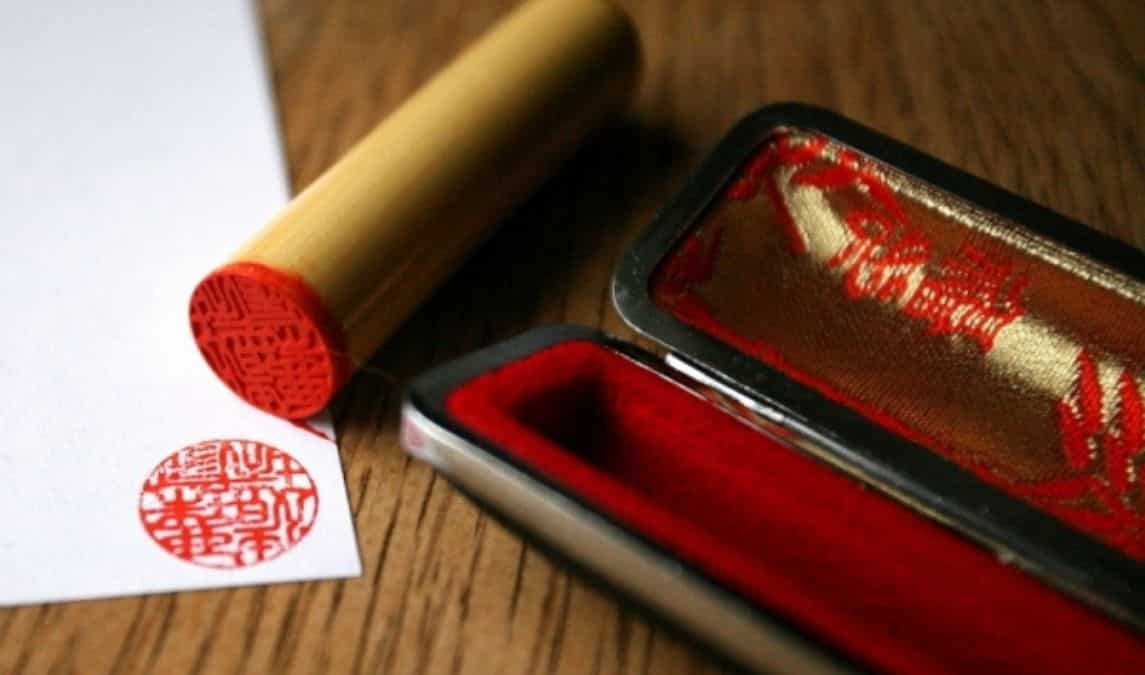
Ink stamp known as Hanko
Japanese Prime Minister Yoshihide Suga on Tuesday declared war against anink stamp known as Hanko.
Hanko seals are used on administrative documents, a custom that has been reprimanded as obsolete and necessitating face-to-face interaction that risks spreading the coronavirus.
It might seem paradoxical in a country often assumed to be a futuristic tech-savvy paradise, but Japan's business world and bureaucracy remain heavily dependent on paper documents, hand-stamped with approval.
Now, Prime Minister Yoshihide Suga is on a push to digitise the nation, but he faces an uphill struggle when it comes to the stamps, which range from mass-produced plastic ones to hand-carved wooden versions used on special occasions.
"I need all services to accumulate a thorough survey of their authoritative strategies sooner rather than later," Suga told a gathering of the Council for Promotion of Regulatory Reform, a warning board of individuals from the private area and scholastics.
It might seem paradoxical in a country often assumed to be a futuristic tech-savvy paradise, but Japan's business world and bureaucracy remain heavily dependent on paper documents, hand-stamped with approval.
Stamp it out
As the seals should be squeezed onto actual duplicates of records, they are viewed as preventing endeavors to keep up social separating in the midst of the COVID-19 emergency.
Of the in excess of 10,000 kinds of authoritative techniques that require Hanko, beyond what 90% can be disentangled, as indicated by Taro Kono, the administrative reform minister.
Kono has said he plans to submit enactment to deliver the issue to the following year's common Diet meeting, and that he likewise needs to lessen the utilization of fax machines.
At Wednesday's gathering, Suga focused on the requirement for online clinical meetings, which have been liberated as an uncommon measure against the Covid, to turn into a lasting choice.
The PM, who got down to business in mid-September, likewise emphasized his push for separation figuring out how to be made all the more broadly accessible, saying such innovation "should be exploited in the advanced age."
Seal of approval
Having the whole team's stamps shows a collective decision has been made, Watanabe said.
"It's like, 'I stamped my seal to approve it but you did it before me, so you should be held liable'," explained accountant Tetsuya Katayama.
"No one wants to take responsibility in Japan," he said.
Watanabe warned that the government's anti-hanko campaign will founder unless Japanese workers can break out of that mentality.
"Even if they digitise paperwork, they will end up pressing computer buttons as many times (as they stamped)," he said.
"People have to steel themselves to take certain responsibility."
At the All Japan Hanko Industry Association, senior official Keiichi Fukushima is a perhaps unlikely advocate for scaling back stamping.
"People have used hanko stamps just for the sake of stamping," he concedes.
Insisting they are used only when necessary will clarify when they're actually needed and "may be a good chance to prove how important the custom of hanko is".