Pakistan praises Bhutan’s Lingzhi Dzong project, oblivious to India’s major financial support behind it

&imwidth=600&imheight=450&format=webp&quality=medium "Pakistan praises Bhutan’s Lingzhi Dzong project, oblivious to India’s major financial support behind it")
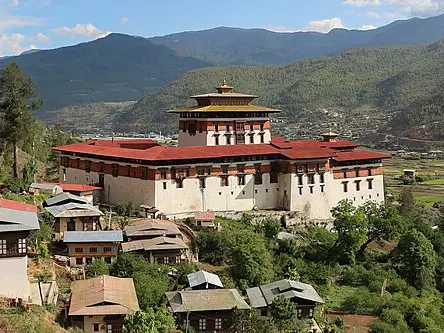
Rinpung Dzong Photograph: (File image)
The historic Lingzhi Dzong in Bhutan, rebuilt with Indian funding, reopens after seven years, symbolising the country's resilience and cultural heritage
In a rather ironic turn of events, Pakistan recently lauded the renovation of Lingzhi Dzong, a historic fortress in Bhutan, without knowing the key role of India in funding the project. The renovation, which took nearly seven years to complete, was part of India’s financial support to Bhutan, as outlined in the 12th Five-Year Plan, with a budget of Nu 400 million.
The tweet from Pakistan's foreign office praised the completion of the Dzong’s restoration. Lingzhi Dzong, built in the late 1600s to commemorate Bhutan’s victory over Tibetan invasions, has been a symbol of Bhutanese resilience for centuries. The latest renovation, which began in 2018, aimed to preserve this important piece of cultural heritage for future generations. The post on X read, “On the occasion of National Day of the Kingdom of #Bhutan, we extend our heartiest felicitations to its people and Government.”
Interestingly, the renovation was carried out with the help of open-air prisoners (OAPs), who worked at an altitude of 4,150 meters (13,615 feet) to reconstruct the Dzong, facing challenges like difficult terrain and harsh weather conditions. Yet, the crucial fact that the entire project was funded by India seems to have slipped under the radar in the official praise.
This diplomatic misstep is an embarrassment for Pakistan, who failed to mention the true source of funding behind such a significant project. While the renovation is a proud moment for Bhutan, it also underscores the complex and sometimes overlooked role India plays in supporting Bhutan's cultural and infrastructural development. The irony here lies in the fact that the very project being celebrated was made possible because of Indian help, yet the praise continues without any reference to this fact.

