

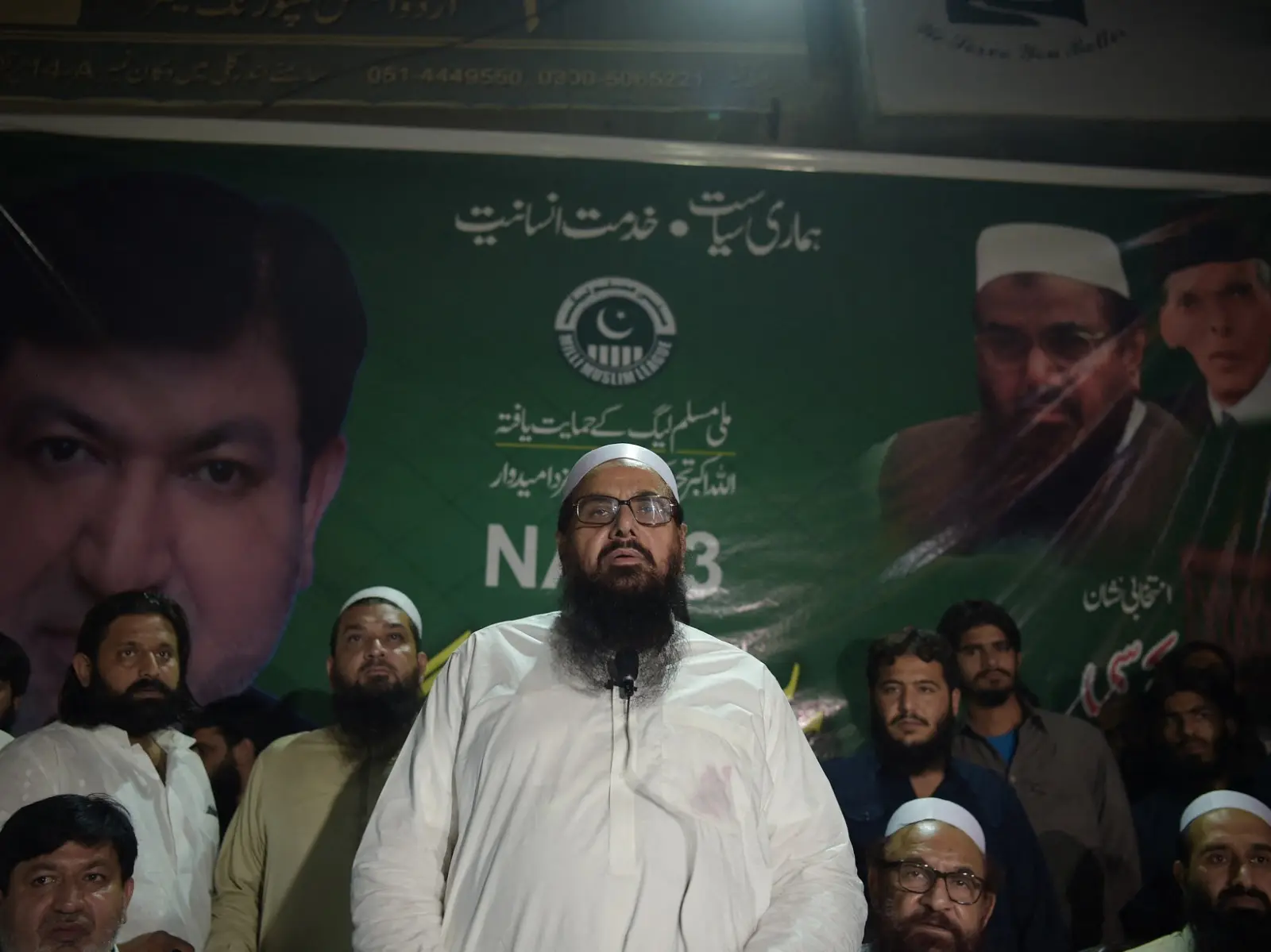
&imwidth=800&imheight=600&format=webp&quality=medium "Pakistan backs Hafiz Saeed after India names LeT chief in Pahalgam terror attack chargesheet")
Pakistan have mounted a diplomatic defence of the India and US-designated terrorist Hafiz Saeed. This comes just as a special court in India has filed a chargesheet for the Lashkar-e-Taiba (LeT) chief. The Pakistan Ministry of Foreign Affairs spokesperson, Tahir Andrabi, has defended Saeed, calling these allegations baseless and a politically motivated attempt by India to malign Pakistan. He said that Pakistan had repeatedly called for an "independent, transparent and credible" investigation into the incident.
“And the fact is that Pakistan had repeatedly called for an independent, transparent and credible investigation into the incident. Despite these calls, India has yet to present any credible or verifiable evidence to substantiate its allegations. India's reluctance to subject its claims to impartial scrutiny only raises questions about the credibility of its narrative,” said Tahir Andrabi.
India has issued a non-bailable warrant against the LeT and its proxy, the TRF mastermind Hafiz Saeed, who has been residing in Pakistan. The warrant is tied to the ongoing probe into the Pahalgam terror attack, which resulted in the death of 26 individuals.
Separately, India also filed a chargesheet against six All-Party Hurriyet conference leaders, including late Sayyed Ali Gilani, in connection with the 1996 mob violence case on July 10.
Also Read: Who is Sergii Koretskyi? Engineer and energy executive appointed Ukraine's new Prime Minister
Responding to these developments, Pakistan's Foreign Ministry spokesperson called it part of the “typical” Indian playbook. He called it an attempt to discredit the “indigenous political leadership” of Kashmir using “sham legal processes”.
“This action, a clear afterthought, is yet another manifestation of India's continuing policy of using sham legal processes to target the Kashmiri political leadership and discredit a legitimate indigenous struggle for their inalienable right to self-determination as enshrined in the UN Security Council resolutions. The decision to revive a case relating to events three decades old lays bare the extent to which India's investigative and judicial institutions are being employed to advance a political agenda. The inclusion of the deceased Huriyat leader further exposes the exercise as a politically motivated attempt to reinforce a predetermined narrative,” said Tahir Andrabi.
This diplomatic defence of Hurriyat leaders is consistent with Pakistan's narrative. India previously acknowledged the indigenous ethnicity of these leaders, but their political movement has been part of the external operational apparatus, with financial and logistical support from Pakistan's ISI. Consequently, the rejection of the charges against Hafiz Saeed shows Pakistan's attempt to insulate terror networks which operate within its borders from international scrutiny.

