Organised crime groups now fifth-largest employer in Mexico: Report

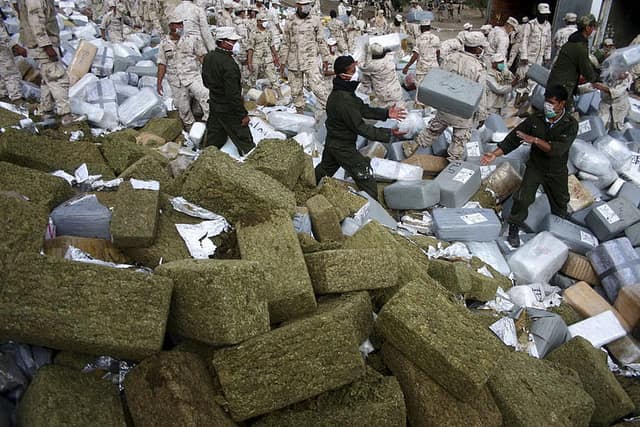
Organised crime groups in Mexico, file photo
Organised crime groups in Mexico have become the fifth-largest employer in the country, a shocking report has revealed.
According to a new study published in the journal Science, more than 175,000 people could be employed by Mexican cartels in total, with recruitment numbers going drastically up to make up for the losses caused by the incarceration of members or their deaths.
Researchers created a mathematical model using homicide, missing persons and incarceration data to track cartel recruitment, reported the Guardian.
The research aims to help the government devise a better strategy to tackle the cartel menace by understanding their recruitment patterns and operational designs.
Why recruitment numbers are up?
Over the last ten years, 37 per cent of the members employed by these Mexican cartels have either been killed or jailed by different countries.
This has driven the recruitment numbers up in Latin American nations, especially Mexico. A US Drug Enforcement Administration report in July claimed that the two largest cartels, Sinaloa and Jalisco New Generation, employed more than 44,800 people.
However, the report revealed on Thursday that the numbers didn’t fully represent the gravity of the situation.
“The model only accounts for those directly involved in work that puts them at risk of violence, and not members—such as bankers—who help move and launder cartels’ money,” it stated.
Victoria Dittmar, a researcher for Insight Crime who did not take part in the study, told The Guardian that the numbers depend on the definition of a cartel and what constitutes membership.
Watch:Gravitas: 'It was alive', Scientists say after analysing Mexico's alien corpses
“It can be very difficult to say who is a member of a criminal organisation and who isn’t,” Dittmar said, adding, “What about a politician that receives money? Or someone who cooperates with the group just once?”
How to tackle the cartel challenge?
The study explores different options that can be used to tackle these organised crimes while shedding light on starkly different approaches taken by Mexico and El Salvador.
The study stresses that young people should be given more opportunities and economic incentives to discourage them from joining the cartels, much like Mexico’s president Andrés Manuel Lopéz Obrador’s “hugs, not bullets” policy.
But this approach has failed to rein in the menace in Mexico.
On the other hand, President Nayib Bukele of El Salvador has drastically reduced violence by doing precisely the opposite of what the paper prescribes: around 2 per cent of the country’s population has been jailed in a mass incarceration spree that has prompted accusations of systematic human rights violations.
WATCH WION LIVE HERE