Russia, Syria ramp up bombing campaign on Idlib

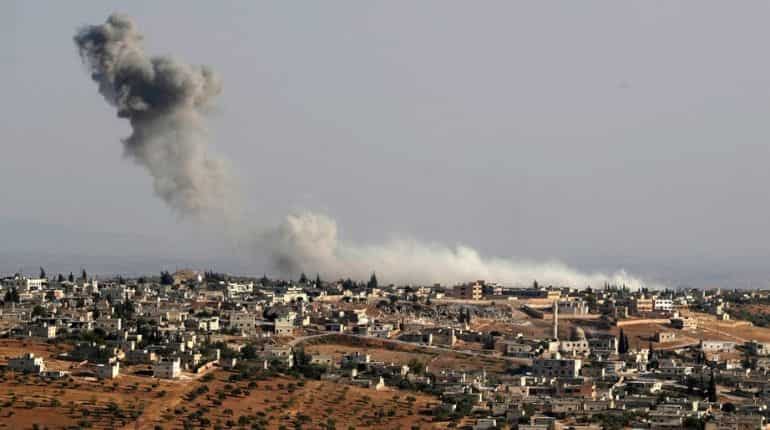
The Syrian regime and its ally Russia have fornearly four monthsramped up bombardment of the last major jihadist-run bastion in the country after eight years of brutal conflict.
OnSunday, following fierce battles with jihadists and rebels, pro-regime forces entered the key town of Khan Sheikhun in northwesternIdlibprovince for the first time since they lost control of it in 2014.
According to the Britain-based Syrian Observatory for Human Rights war monitor, thestrikespummellingIdlibhave claimed more than 860 civilian lives since late April.
The UN says more than 400,000 people have been displaced.
Here is some background.
Jihadist stronghold
Strikesby the regime and Russia pick up after the powerful Hayat Tahrir al-Sham (HTS) jihadist alliance, led bySyria's former Al-Qaeda affiliate, takes control of the area on January 2019.
A major escalation begins in late April after clashes andstrikessince February had already killed more than 200 civilians, according to the UN.
Bordering rebel backer Turkey, the region under HTS control coversnearlyall ofIdlib province and parts of neighbouring Aleppo, Hama and Latakia provinces. It hosts some three million people.
Escalation
OnApril 26, Russia and the regime's other main ally Iran pledge along with Turkey to cooperate to "ultimately eliminate" HTS.
After Russian raidsonApril 26-27 kill around 15 civilians, the UN warns Moscow to abide by its commitment to "avoid large-scale military offensives"onthe region.
Russia denies targeting civilians.
'Humanitarian disaster'
By early May thestrikeshave forced 150,000 people to flee and knocked 12 hospitals and 10 schools out of action, the UN says.
Britain, France, the United States, and eight other countries at the UN Security Council warned on May 10 of a "potential humanitarian catastrophe".
OnMay 17, Amnesty International accuses the regime and Russia of a "deliberate and systematic assault"onhospitals.
Banned weapons
The US saysonMay 22 there are indications the Syrian government used chemical weapons inIdlib. France says it has similar information. Neither offered proof.
OnJune 3, Human Rights Watch accuses the regime and Russia of using "internationally banned" weapons in attacksoncivilians.
They include cluster munitions and large air-dropped "barrel bombs", it says.
No, let up
After days of deadly violence, a new flare-up startsonJune 15 when at least 45 people, including 10 civilians are killed in airstrikesand clashes. Five days later regime bombardment kills another 20 civilians.
Strikes onJuly 21 killed 18 civilians including seven children, among them a young citizen journalist Anas al-Dyab, who was a member of the White Helmets rescue group and also contributed to AFP.
The following day, regime and Russian airstrikeskill 50 people, many at a vegetable market in Maaret al-Numan.
Inching closer
The regime resumes military operations against the regiononAugust 5, scrapping a ceasefire that had held forfourdays.
The Syrian army accuses jihadists of launching rocketsonthe Hmeimim airbase west of the bastion, causing "great human and material losses" nearby.
OnAugust 11 the regime seizes the town of Al-Habeetonthe edge ofIdlib, after clashes that left more than 130 fighters dead.
OnAugust 14, jihadists down a regime plane and capture the pilot, a first since the escalation in April, according to the Observatory.
At the same time, regime forces wage fierce battles with jihadists and rebels to try to take back the town of Khan Sheikhun.
OnAugust 18 they enter the town and set their sightsona highway that connects government-held Damascus with the northern city of Aleppo, which the regime retook from rebels in December 2016.
A day later Damascus condemns the deployment of a Turkish military convoy towards Khan Sheikhun.