Nearly 91% of households in Gaza go to bed hungry: UN report

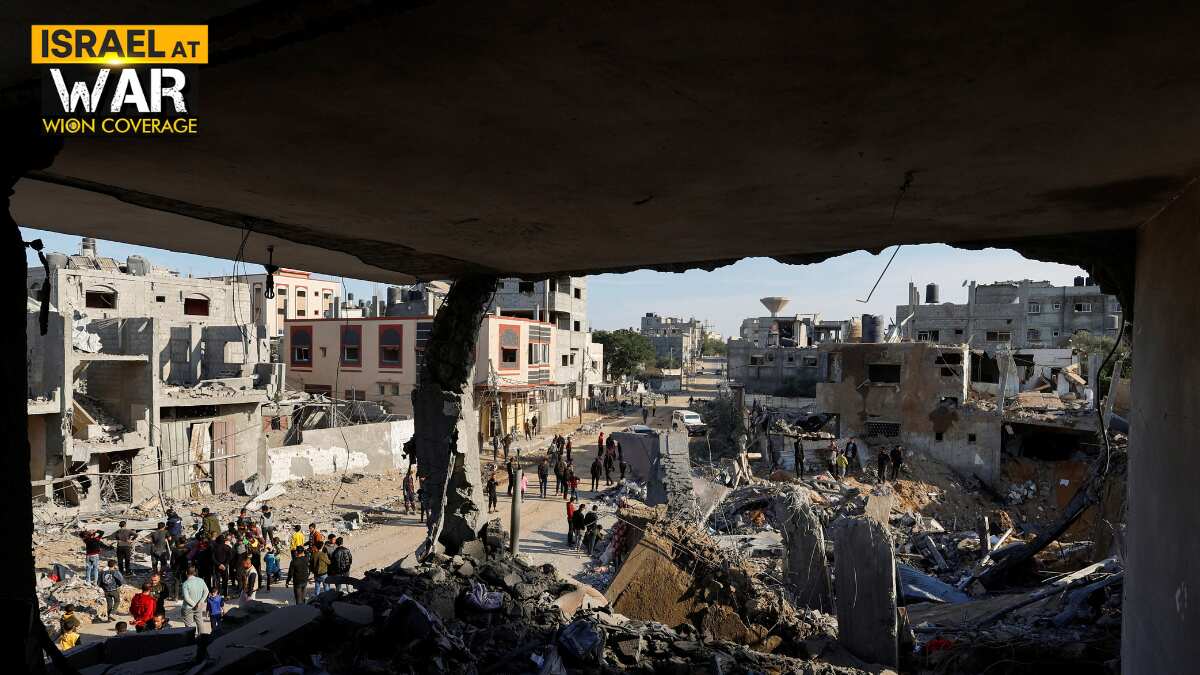
Rafah, in the southern Gaza Strip
A new report published by the World Food Programme (WFP) has revealed that 91 per cent of households in Gaza reported going to bed hungry while 63 per cent reported enduring entire days without food. The rapid food security assessment was carried out during the humanitarian pause (November 24-30) and the findings were published last week.
As the war between Israel and Hamas escalates, the agencies are having a tough time providing food and related assistance to the Palestinians in Gaza. Since the conflict started after the events of October 7, the Gaza Strip has remained under siege with only one border crossing open for humanitarian aid.
The report stated that "42 per cent of the households in the Northern governorates(Gaza and North Gaza) and 35 per cent of households in the Southern governorates (Deir Al Balah, Khan Younis and Rafah) reported knowing of people who were compelled to consume wild or raw food to cope with hunger".
The food scarcity situation is significantly worse in the north than in the south, according to the report. The aid is concentrated in the south of the strip where it is received through the border with Egypt at the Rafah crossing. However, since the second truce deal expired on December 1 and the fight intensified, the aid delivery has slowed down significantly.
The acute shortage of cooking gas has also led to heavy dependence on less clean sources such as firewood, wood residues, and waste burning, raising the risk of respiratory diseases.
Additionaly, the people in north Gaza have only 1.8 litre of clean water per person/per day while the volume comes down to 1.5 litre per person/per day in south Gaza.
UN agency staff feels abandoned
While ordinary Palestinians are scurrying around for food, the agencies serving them are faring no better. United Nations Relief and Works Agency for Palestine Refugees (UNRWA) chief Philippe Lazzarini said the agency feels abandoned in Gaza after the US vetoed a resolution calling for an immediate ceasefire.
“It's beyond disappointment. They feel abandoned by the international community,” Lazzarini told CNN.
“They still cannot understand why, after 17,000 people have been killed, after the almost entire population has been displaced, we still cannot agree on a ceasefire.”
“Too many people haven't eaten now for two, three days in the Gaza Strip,” Lazzarini continued. “The more [that] we will see breakdown of civil order, the more [UNRWA] will be at risk not to be able to operate anymore.”
According to the Hamas-run Palestinian health ministry, nearly 18,000 people have been killed since Israel launched its retaliatory operations following the militant group’s attack on October 7 in southern Israel.
Disclaimer: WION takes utmost care to accurately and responsibly report ongoing developments on the Israel-Palestine conflict after the Hamas attacks. However, we cannot independently verify the authenticity of all statements, photos and videos.
(With inputs from agencies)