

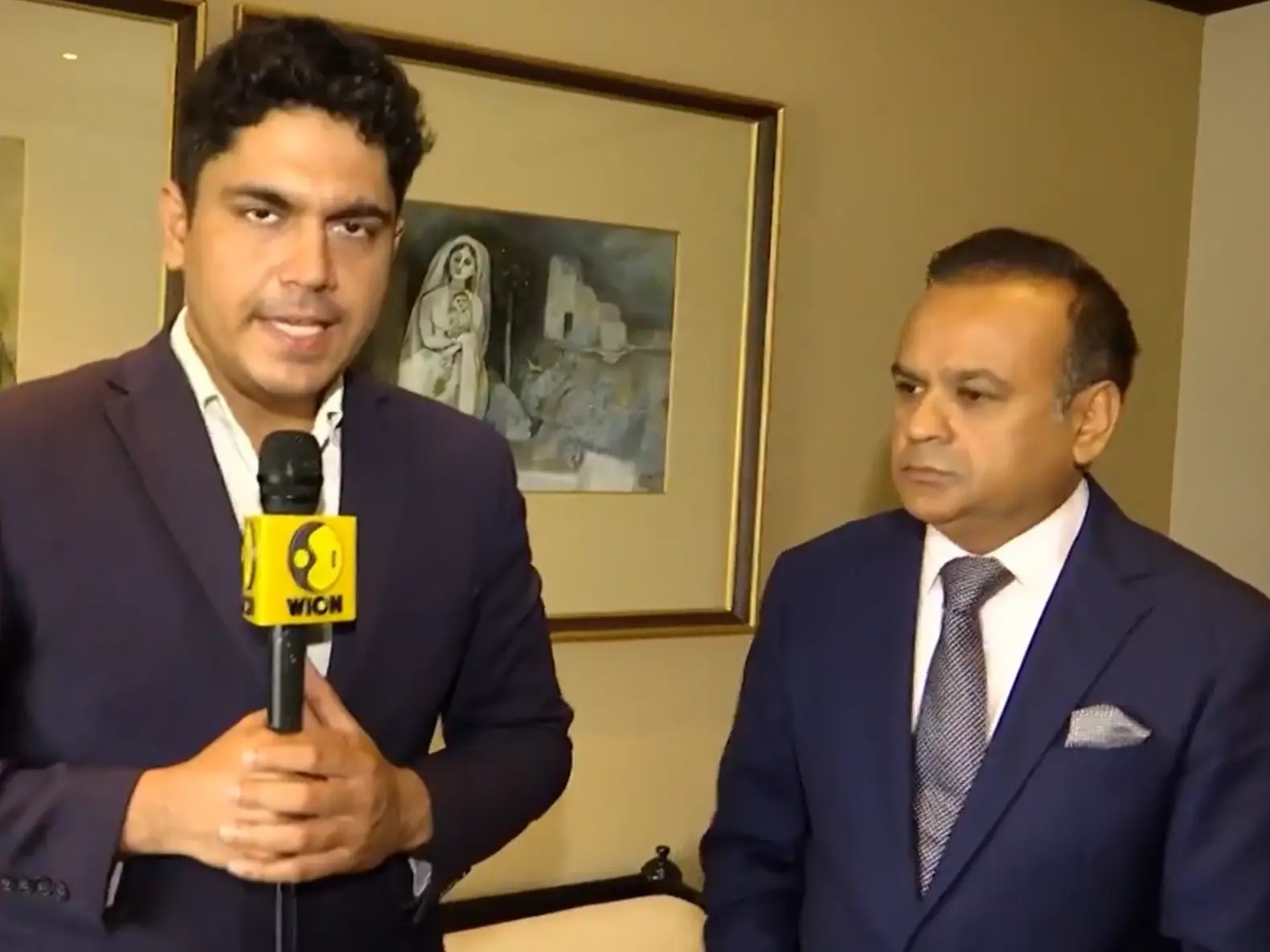
&imwidth=800&imheight=600&format=webp&quality=medium "Mauritius FM Dhananjay Ramful: West Asia war could disrupt energy, food and tourism")
Mauritius' Foreign Minister Dhananjay Ramful has warned that the escalating conflict in West Asia has evolved into a regional crisis with far-reaching global consequences, severely affecting nations in the Indian ocean region. In an interview with WION's Sidhant Sibal, Mr. Ramful highlighted the broad economic and security impacts stemming from the hostilities, particularly disruptions to energy supplies, food security, and tourism, a key pillar of Mauritius' economy.
"The Indian Ocean region is important for the economic survival of all the coastal states bordering the Indian Ocean," he said. "Especially for a small island developing state like Mauritius, which is highly dependent on the marine resources from the ocean, and also, definitely that's going to have an impact on the supply of energy".
The minister stressed Mauritius' call for de-escalation, noting that the government had issued an official statement since the crisis began. He also spoke on suspending ties with Maldives, and Chagos issue. Interview:
Sidhant Sibal: How do you see India, Mauritius ties?
Dr Dhananjay Ramful: Well, as you are well aware that you know, Indian Mauritius have long standing relationship since 1948 and since then, this relationship has been growing intensely, and we have also very culturally attached, not to forget that we have quite a large amount of our ancestors come from India. As far as economic partnership is concerned, we have the Comprehensive Economic Partnership Agreement under which we are dealing with India. There are a number of trade exchanges with India. India has always been very forthcoming when it comes to assistance. The Prime Minister of India was in Mauritiuslast year, and we were given quite a big financial package in terms of lines of credit and also grants for our infrastructural development. So, as it has always been, India and Mauritius are very closely linked together.
Sidhant Sibal: What can one expect in the relationship? Further, you pointed out that the Prime Minister was here for the AI Summit
Dr Dhananjay Ramful: So the prime minister Mauritius was here a few weeks back in February for the AI Summit, and where he had a bilateral meeting with his Excellency, the Prime Minister Modi, and where there were discussions about India, America cable submarine. Our own cable submarine has now reached its expired date. So there was a request for that submarine to be extended to Mauritius. So this is under process. There were also talks, and this comes at the right moment, because there were talks about trying to get a G2G with India for the supply of petroleum products. So, as you know, we get our supply of products from, mainly Oman and the Middle East. So we were thinking of getting a G2G from one of the oil refineries here in India. And so that's an upcoming project that we'll be discussing about.
Sidhant Sibal: So if you can perhaps talk about your assessment, your view about the West Asia war?
Dr Dhananjay Ramful: Indian Ocean region is important for the economic survival of all the coastal statesbordering the Indian Ocean. Especially for a small island developing state like Mauritius, which is highly dependent on the marine resources from the ocean, and also, definitely that's going to have an impact on the supply of energy. Also the food security issue might crop up because we import most of our food from abroad, and also being a tourist destination. We are expecting that this Middle East crisis is going to have an impact on tourism sector because of airline's disruptions.
Watch the full interview here
Sidhant Sibal:Mauritius has suspended its relationship with Maldives. What's the reason for it?
Dr Dhananjay Ramful: It was quite an exceptional decision, but then we had reached a point where we couldn't do otherwise, because Mauritius has been claiming its sovereignty over the Chagos archipelago for many years now. We have aligned our claim for sovereignty with international law. We've gone to the International Court of Justice, where we have obtained an advisory opinion from the highest court of justice saying that continued administration of the Chagos island by the British was unlawful, and we even had UN resolution backed by all the countries except Six, and amongst them, the Maldives were voted against, and where the UN said that the Chagos should be handed over to Mauritius in six months. So then there were negotiations. The British offered to negotiate the ceding back of the Chagos to Mauritius. We started negotiations, then we signed an agreement, where the British accepted that Mauritius has full sovereignty of the Chagos, but there were certain modalities that were put in the agreement.
Now it's a question of waiting for ratification of the treaty, because, from the British point of view, this treaty needs to be ratified in the parliament. We are waiting for ratification of the treaty. But in the meantime, we see Maldives coming out from nowhere, and for the first time, claiming that they have a claim over the Chagos. In August 2022 the previous government, representing the government of Maldives, wrote to our previous Prime Minister, saying that, following the UN resolution, they will back Mauritius on any resolution concerning our claim for sovereignty over the Chagos Island.
Now, all of a sudden, you see the present president coming up with all sorts of arguments and inventions saying that apparently there were, in the past, fishermen from the Maldives who were going on the one of the islands in the Chagos Archipelago, therefore, historically, they have claims to the Chagos island. But that would apply to Mauritius as well. You know, in 1500-1400 the Arabs came to Mauritius to get fresh water. Therefore, do we say that the Arabs now own Mauritius.So these kinds of arguments are provocation and, but as far as Mauritius is concerned, we are very serious about this issue, and we are not going to let ourselves be provoked in any way when it comes to our sovereignty and territorial integrity.
Sidhant Sibal: But it looks like Donald Trump is vetoing this agreement, which was an outcome of long conversation negotiations. There is a kind of a slowdown in the British Parliament as well. When it comes to this negotiation, it looks like, what's your assessment like?
Dr Dhananjay Ramful:It should be highlighted that, you know, the US, definitely, they have a base on the one of the islands calledDiego Garcia, and in the agreement that we've signed with the British, there are all the conditions and modalities to preserve the security of that base. This was agreeable by the British and was ratified by the US, from what the British told us, but we have all along been dealing with the British because it was the British who are administering the island. So we don't want to get involved in the conversations or whatever discussions there are between the British and the US. Our claim is against the British. The British have promised for the ceding back of the island to Mauritius. They have put it on paper. It's a question of ratification of the treaty. We do understand that there are some domestic politics that are, in a way, delaying the ratification process. Even the British Prime Minister said publicly that he is for the ceding back of Chagos to Mauritius.
Sidhant Sibal: Diego Garcia, Donald Trump is keen that the British side supports his plans when it comes to fighter jets going from Diogo Garcia and making strikes in West Asia, in Iran. What's your assessment like when it comes to the Indian Ocean Island being used with the American and the UK base are situated for conflict in West Asia. We've already seen the expansion of the conflict
Dr Dhananjay Ramful:Mauritius has since the start of the Middle East crisis, issued an official statement asking for all parties to put a halt to the fight and come to the table and use the diplomatic channel to resolve their differences. When it comes to using Diego Garcia, that's for the British to decide, because, for the time being it's the British that are administering the island pending the ratification of the agreement in their parliament. So that's a question internal to the British government.
