1988 Lockerbie plane bombing: What happened and what we know so far

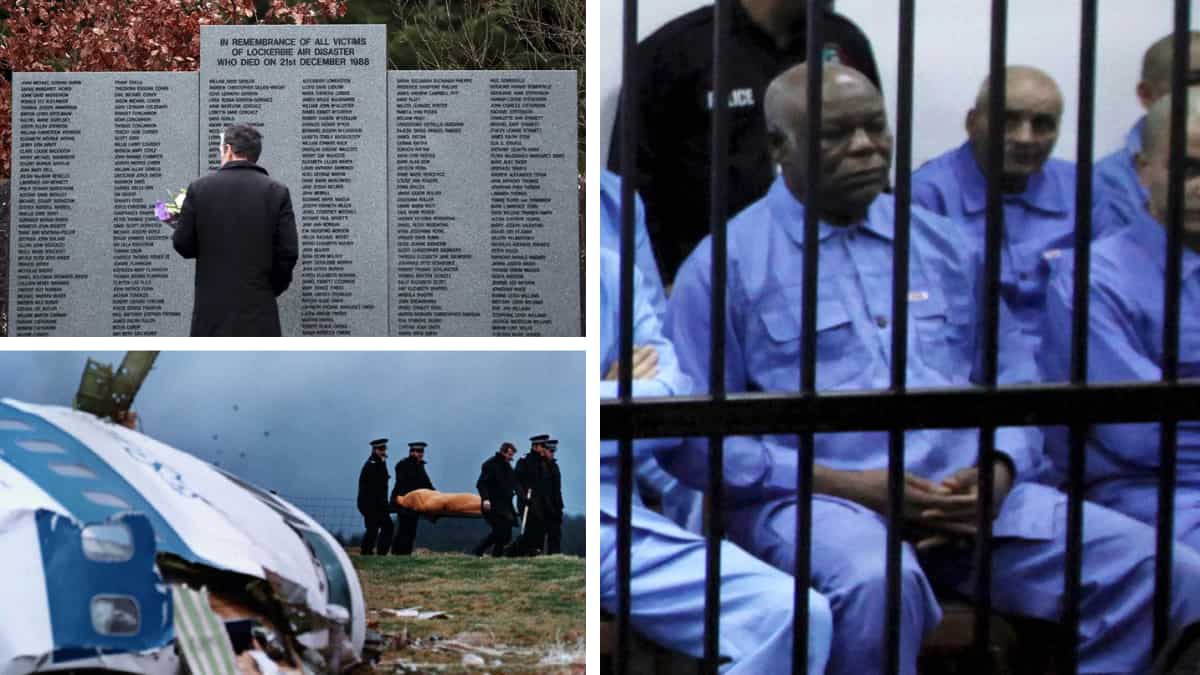
Lockerbie plane crash
Officials in the United States, on Sunday, announced that they have detained a suspected third conspirator for allegedly making the bomb which blew up the Pan Am flight 103 and killed 270 people over Scotland’s Lockerbie in 1988. The arrested has once again brought the over-three-decade-old terrorist attack into the spotlight as the officials continue to pursue those responsible for the attack.
How did the Lockerbie attack happen?
On December 21, 1988, a bomb which was planted on Pam Am Flight 103 which was a Boeing 747 exploded less than an hour after the flight took off which destroyed the plane carrying passengers from nearly 21 countries. The plane departed from London’s Heathrow airport and was headed to New York.
The attack killed 259 people in the air and 11 on the ground and remains the deadliest terror attack on British soil, to date. Subsequently, the terrorists were connected to Libya, whose government had engaged in several hostilities with the United States and other Western countries, at the time.
What happened next?
Investigation into the attack has been going on for decades but it was not until at least three years after the incident that two Libyans were charged by US and British officials. On November 13, 1991, Abdelbaset al-Megrahi (48) and Al Amin Khalifa Fhimah (44) were charged with 270 counts of murder, conspiracy to murder and violating Britain's 1982 Aviation Security Act. The duo was also accused of being Libyan intelligence agents.
However, at the time, the country’s leader Colonel Muammar Gaddafi refused to turn them over, leading to long negotiations which concluded in 1999 after the US and Britain proposed to try the suspects in the Netherlands under Scottish law. The trial began in May 2000, before a court at Camp Zeist in the Netherlands, where the two accused had pleaded not guilty to murder.
On January 31, 2001, Megrahi was found guilty of murder after the historic trial. The judge had recommended a minimum of two decades in jail, given the “horrendous nature of this crime”, and was later sentenced to life. However, the co-accused, Fhimah, was not found guilty and was free to return home. A year later, Megrahi, had appealed against the conviction which was later rejected.
Furthermore, in 2003, his sentence was increasedto life in prisonafter a Scottish law was changed and he was ordered to appear beforethe courts so that his punishment period could be set. Subsequently, the accused was granted a second appeal against the conviction. Five years later, Megrahi's lawyer reveals that the former Libyan intelligence agent has been diagnosed with “advanced stage” prostate cancer.
In July 2009, Megrahi asked the court to be released on humanitarian grounds due to his illness. The next month the Scottish court let him go and he returned home to Libya aboard a jet belonging to Libyan leader Muammar Gaddafi. Justice Secretary Kenny MacAskill, who let the Lockerbie bomber go was questioned in the Scottish Parliament about his decision where he asserted that he stands by his decision and will live with the consequences.
ALSO READ |There's a long road to peace in Libya
In 2011, Megrahi died at his home in Tripoli, aged 60. Meanwhile, the families of those killed filed a lawsuit against the Libyan government demanding that they be held accountable and in 2003 the regime formally accepted the responsibility for the bombing and renounced terrorism. Additionally, they also paid $2.7 billion in compensation to the families following negotiations in London.
In 2014, Scotland's top prosecutor, Lord Advocate Frank Mulholland pledged that he will continue to track down Megrahi's accomplices. However, until Gaddafi’s ouster, the investigation and pursuit of others responsible for the bombing largely stalled.
What led to Mas’ud’s arrest?
The Libyan man accused of making the bomb that killed 270 people, Abu Agila Mohammad Mas'ud Kheir Al-Marimi, is now in custody two years after the former US Attorney General Bill Barr first announced the charges filed against him. The alleged former senior Libyan intelligence official was in Libyan custody and was charged by the US with two criminal counts related to the bombing.
Even though he will be the third Libyan official charged by the US he will be the first one to be tried in an American court. The court documents in the US described Mas'ud as an expert bombmaker who joined Libya's External Security Organization intelligence service in the 1970s. The accused was working approximately from 1973 to 2011 for the country’s intelligence service and was taken into custody by Libyan law enforcement after Gaddafi’s ouster.
According to the US justice department, he had worked for Libyan intelligence in various capacities and was also allegedly involved in the bombing of the LaBelle Discotheque, Germany, in 1986 which killed two US service members. The breakthrough in the case was marked by the US officials receiving a copy of Mas’ud’s interview conducted, on September 12, 2012, by the Libyan authorities soon after his arrest.
During the interview, the accused admitted that he had built the bomb used in the Pan Am attack and also to working with the aforementioned duo who planted the bomb. According to the FBI affidavit, the accused said that the attack was ordered by Libyan intelligence and that country’s leader Ghadafi had, “thanked him and other members of the team for their successful attack on the United States.”
The arrest, which was first reported by BBC, has reportedly prompted infighting among Libyan politicians which include the parliament on the east side of the country and the Government of National Unity in Tripoli. The former has accused the Libyan Prime Minister Abdulhamd al-Dbeibah of taking Washington’s side due to the lack of an extradition treaty.
However, there is no clarity on how the accused was taken into custody by the US but reportedly he was flown in from the Libyan city of Misrata. A Justice Department spokesperson, told Reuters, that the US has custody of the accused and that he is expected to make an initial court appearance in a federal court in Washington, the details of which trial will be released soon.
(With inputs from agencies)