'Like writing a fictional story': NASA's telescopic data from Milky Way played by musicians | WATCH

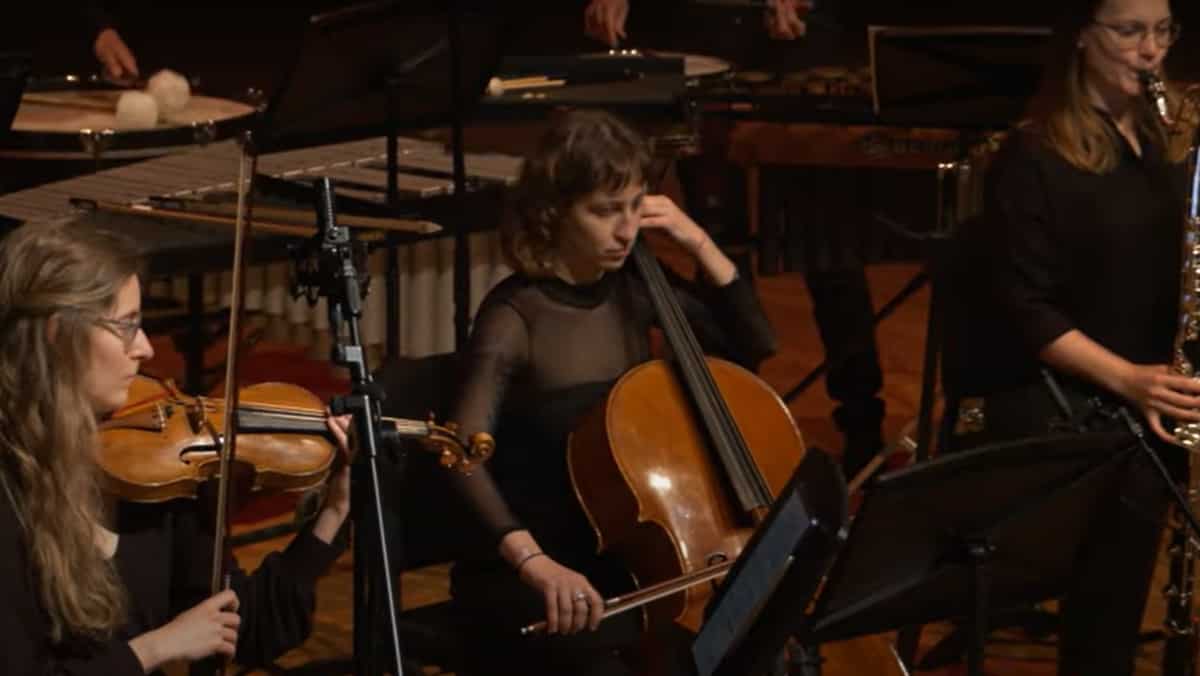
Musical ensemble performed created by composer Sophie Katsner using data sonifications from NASA’s telescopes
For someone outside the scientific community, the data collected from NASA telescopes can get super-complicated and hard to comprehend when seen on images. But what if the data is used for creating original music that can be played by musicians?
Giving out the details of a new phase of the “sonification” project, NASA said that since 2020 the project at its Chandra X-ray Center has "translated the digital data taken by telescopes into notes and sounds."
The project is enchanting and with its help, anyone can "experience the data through the sense of hearing instead of seeing it as images, a more common way to present astronomical data."
However, a new stride has been made in the project and an earlier unchartered territory has been explored.
A team in collaboration with composer Sophie Kastner has converted the data into music that can now be played by musicians. “It’s like writing a fictional story that is largely based on real facts,” said composer Sophie Kastner and added, “We are taking the data from space that has been translated into sound and putting a new and human twist on it."
What is the data related?
This is a pilot programme and the data which is converted into playable music is taken from a small region at the centre of our Milky Way galaxy. This is the region where a supermassive black hole is present.The intriguing region is spread in about 400 light-years.
The telescopes that have delved deep into this region areNASA’s Chandra X-ray Observatory, Hubble Space Telescope, and retired Spitzer Space Telescope.
Chandra visualisation and emerging technology scientist Kimberly Arcand said,"We’ve been working with these data, taken in X-ray, visible, and infrared light, for years."
“Translating these data into sound was a big step, and now with Sophie we are again trying something completely new for us,"Arcand added.
How is the music created?
With the help of various kinds of algorithms, the computer first helps in mapping the data to sounds that humans can understand.While working on this project, Kastner zoomed in on small sections of the data image.
She created "spotlights on certain parts of the image that are easily overlooked when the full sonification is played."
“In some ways, this is just another way for humans to interact with the night sky just as they have throughout recorded history,” says Arcand adding, “We are using different tools but the concept of being inspired by the heavens to make art remains the same.”
(With inputs from agencies)