Japan’s Okinawa rejects transfer of US military base in a referendum

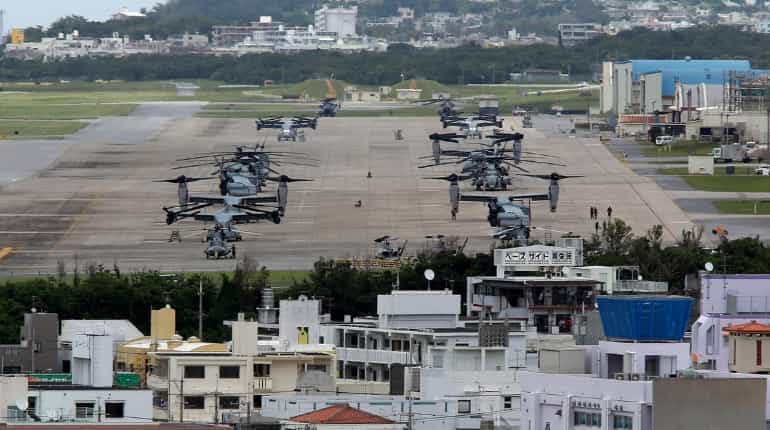
US Marine Corps MV-22 Osprey aircrafts
More than 70 per cent of voters in Japan’s Okinawa islands objected in a referendum to the relocation of a US military base within the region, according to the results announced on Monday.
The referendum had been called the day before by the local government to consult the local population on the relocation of the US Navy's Futenma airbase, and its result once again highlights the majority rejecting the US military presence in Okinawa.
Despite the clear opposition to the transfer of the base, Prime Minister Shinzo Abe said on Monday that he will go ahead with the project, saying “we cannot delay this any further” in statements to the media.
The Futenma base is currently located in the urban centre of Ginowan, on the main island of Okinawa, and Japan and the US agreed in 1996 to move it to the more remote Henoko Bay after a series of incidents.
However, the relocation has been delayed due to opposition from residents and local politicians who argue that the project would have a high environmental impact and say that both this base and other US bases should be moved out of their territory.
In the referendum, 72.2 per cent of voters rejected the move while 19.1 per cent supported the plan amidst a 52.48 per cent turnout.
"This is the first time that opposition specifically to the plan… was clearly shown so it bears significant meaning," said Okinawa prefecture Governor Danny Tamaki, who called on the central government to consider the resolution of the people and “stop the relocation work," in statements to the local media.
The ordinance approved by the regional authorities stipulated that if the most-voted option obtained a quarter of the votes, the local government should communicate it to the Japanese leader and United States President Donald Trump.
However, because of the referendum’s symbolic and non-binding nature, Abe is unlikely to withdraw a plan around which the central and regional governments are engaged in long political and court battles.
"We have spent many years holding dialogue with people in the prefecture," Abe said on Tuesday, adding that he will continue his “utmost efforts towards a reduction of the burden" of the US military presence on the inhabitants of the subtropical archipelago.
Okinawan authorities took the case to several courts to try to overturn the project with legal arguments based on the base's environmental impact, but Japan's Supreme Court ruled in Tokyo's favour in 2016.
About one-fifth of Okinawa's main island is US military land.
The region is also home to more than half of the nearly 47,000 US military personnel in Japan and 74 per cent of its military installations in the country.