Japanese government's decision to fund Shinzo Abe's funeral sparks protests

Shinzo Abe
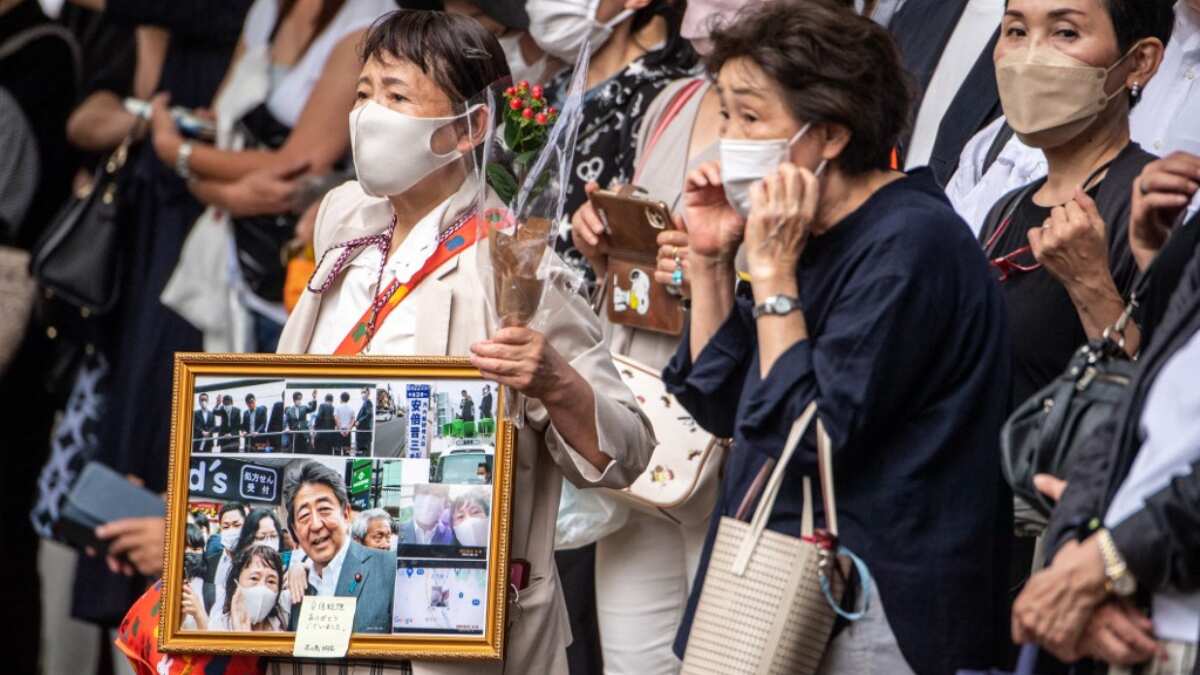
Amid street and social media protests that the state should not fund ceremonies for Japan's longest-serving leader, the Japanese government said on Friday it would hold a state funeral for former Prime Minister Shinzo Abe on September 27.
In an incident that deeply shocked Japan, the country's longest-serving leader was gunned down two weeks ago at a campaign rally.
The ruling Liberal Democratic Party (LDP) announced that a state funeral will be held for Abe at the Nippon Budokan in central Tokyo even though his funeral was held after his death.
Kyodo News agency quoted chief cabinet secretary Hirokazu Matsuno as saying, "We made this decision, as has been said before, due to Abe's record as the longest-serving prime minister, during which he exerted leadership skills distinctive from others and bore heavy responsibility for dealing with a number of serious domestic and international issues."
The news agency reported approximately 200 people gathered near the PM's office in Tokyo to protest the decision.
From the use of taxpayer funds to complaints the government may seek to make political capital of Abe's death, the Japanese people raised several objections.
With successive funerals paid for partly by the state and partly by the LDP, the last state funeral for an ex-prime minister paid for fully by state funds was in 1967.
Saying there should have been more discussion before making a decision, 50 people filed for an injunction in a Tokyo court seeking a halt to the use of public funds for the event.
In a recent public opinion poll by public broadcaster NHK, only 49 per cent supported the idea of a state funeral.
(With inputs from agencies)
Watch WION's live TV here: