
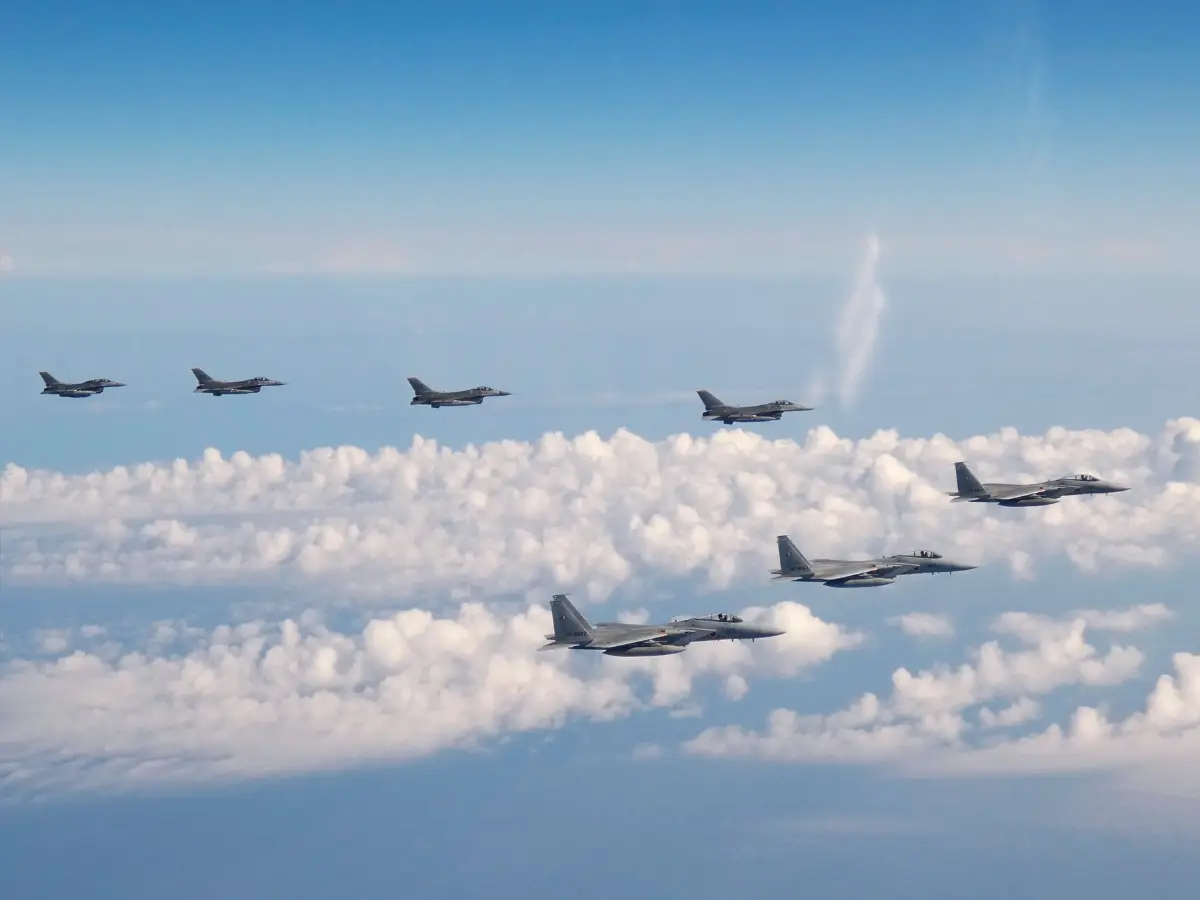
&imwidth=800&imheight=600&format=webp&quality=medium "Japan accuses Chinese jets of locking radar on its aircraft; diplomatic fallout reignite - What's happening")
The tensions between Japan and China after Japanese PM's comment on Taiwan last month has escalated once again with Tokyo now accusing Beijing of aiming the Chinese fighter jets radar at Japanese military aircraft in two "dangerous" incidents near Japan's Okinawa islands. Japanese Prime Minister Sanae Takaichi said that J-15 jets from China's Liaoning aircraft carrier twice locked radar on Japanese aircraft. Takaichi lodged a protest with China over "extremely regrettable" incident and summoned Beijing's ambassador. Takaichi also called radar illuminations a “dangerous act”, adding that these act that went beyond what is necessary for the safe flight of aircraft.
China's response
China has rejected Japan's claims and continuing with counter claims, a Chinese navy spokesperson, Colonel Wang Xuemeng, said that Japanese aircraft had repeatedly approached and disrupted the Chinese navy as it was conducting previously announced carrier-based flight training east of the Miyako Strait. It rejected the claims made by Japanese PM Takaichi, accusing Japan of threatening its aircraft and calling the allegations "slandering and smearing." China also issued travel warnings to its citizens and paused plans to resume Japanese seafood imports amid strained ties.

Meanwhile, Taiwan observed Chinese maritime exercises near the median line but noted conditions remained “normal.” China described the drills as search-and-rescue operations, while Taiwan accused Beijing of psychological warfare and misleading language.
International response and support
Even as US ambassador showed support for Japan on social media, US President Trump and senior officials have remained silent on the issue despite Trump claiming to be the global “peacemaker.” Several reports suggested that Trump privately urged Japan to avoid escalation following a conversation with China’s Xi Jinping. Australia expressed support for Japan, condemning China’s actions and vowing to uphold a rules-based order. Japanese Defence Minister Shinjiro Koizumi met Australian counterpart Richard Marles in Tokyo and said that Japan would respond "resolutely and calmly" to China's conduct in order to maintain regional peace and stability.
What triggered China-Japan tensions?
On Nov 14, Takaichi was asked by an opposition lawmaker in parliament about “survival-threatening situations.” In response, Takaichi gave an example that an attempt to bring Taiwan completely under the control of Beijing using battleships and military force could constitute such a situation. The term ‘survival-threatening situation’ used by Japanese Prime Minister Takaichi refers to a specific legal term in Japanese law that was made under the 2015 security legislation. It describes a situation where an armed attack on a foreign country closely related to Japan poses a threat to Japan's survival and clearly endangers the fundamental rights of the Japanese people. Beijing reacted sharply to Takaichi's remark, and termed it as direct challenge to its sovereignty over Taiwan.

