Israel's top general warns of new plans to strike Iran

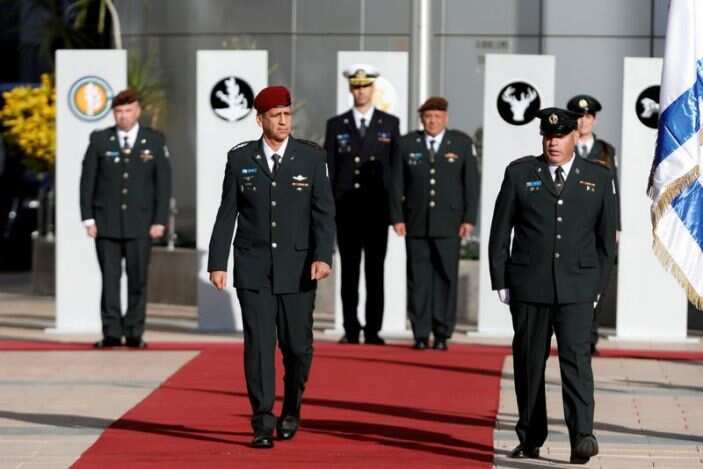
Israeli Chief of Staff Aviv Kohavi
Israel’s top general said on Tuesday that its military was refreshing its operational plans against Iran and that any USreturn to a 2015 nuclear accord with Tehran would be “wrong.”
The comments by Lt. Gen. Aviv Kochavi came as Israel and Iran both seek to put pressure on President Joe Biden ahead of his expected announcement on his approach for dealing with the Iranian nuclear programme. In Iran, leaders said they would not wait indefinitely for Biden to act.
Such comments by Israel’s military chief of staff on USpolicymaking are rare and likely would have been pre-approved by the Israeli government.
“A return to the 2015 nuclear agreement, or even if it is a similar accord with several improvements, is bad and wrong from an operational and strategic point of view,” Lieutenant-General Aviv Kohavi said in an address to Tel Aviv University’s Institute for National Security Studies.
Biden’s predecessor, Donald Trump, abandoned the nuclear agreement in 2018, a move that was welcomed by Israeli Prime Minister Benjamin Netanyahu, who criticised the sanctions relief it offered and warned of the likelihood of Iranian nuclear arms development after its expiration.
Biden has said he will seek to revive the deal, with some changes.
The 2015 deal put curbs on Iran's nuclear programme in exchange for the easing of crippling economic sanctions. Israel strongly opposed the deal, saying it did not include sufficient safeguards to prevent Iran from developing a nuclear weapon.
Antony Blinken confirmed on Tuesday as Biden’s secretary of state, said last week the United States was “a long way” from deciding whether to rejoin the deal and it would need to see what Iran actually did to resume complying with the pact.
Since Washington pulled out of the deal, Iran has gradually breached its key limits, building up its stockpile of low enriched uranium, enriching uranium to higher levels of purity, and installing centrifuges in ways barred by the accord.
Kohavi said those actions by Iran, which denies it is seeking atomic arms, showed it could ultimately decide to push forward rapidly towards building a nuclear weapon.
“In light of this fundamental analysis, I have instructed the Israel Defense Forces to prepare a number of operational plans, in addition to those already in place,” Kohavi said.
“It will be up to the political leadership, of course, to decide on implementation, but these plans need to be on the table.”
Netanyahu had threatened possible Israeli strikes against Iran in the run-up to the accord. But a senior Israeli officer, who spoke to reporters in 2015 on condition of anonymity, underscored differences in Israel over the issue by saying a deal had potential security benefits.
Tensions around Iran have steadily increased. During Trump's final days as president, Tehran seized a South Korean oil tanker and begun enriching uranium closer to weapons-grade levels, while the USHas sent B-52 bombers, the USS Nimitz aircraft carrier and a nuclear submarine into the region.
Iran has also increased its military drills, including firing cruise missiles as part of a naval drill in the Gulf of Oman this month.
Iran has missile capability of up to 2,000 kilometres (1,250 miles), far enough to reach Israel and USMilitary bases in the region.