G20 agrees two-state solution the only way to resolve Israel-Palestine conflict, says Brazil

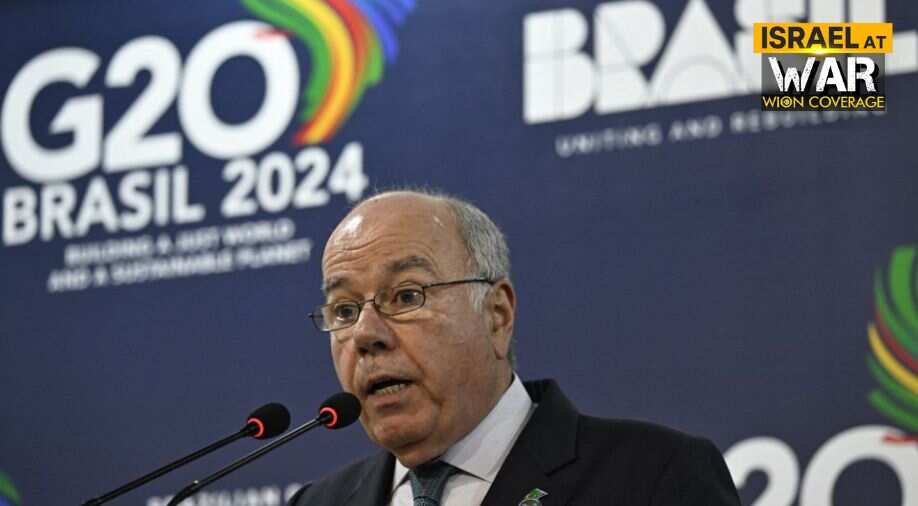
Brazilian Foreign Minister Mauro Vieira said on Thursday (Feb 22) that foreign ministers of G20 countries were nearly unanimous in supporting a two-state solution to resolve the Israeli-Palestinian conflict. Vieira was speaking at the end of the two-day meeting of the foreign ministers.
"There was virtual unanimity in the two-state solution as the only solution to the conflict," said Mauro Vieira as quoted by Reuters. He further said that leaders of the world's largest economies expressed concerns about the ongoing Gaza conflict and the risk of the spread of hostilities into the wider Middle East region.
Vieira said that there were calls for a ceasefire and humanitarian aid for Gazans. He also added that 'many' countries were critical of Israel's military offensive in Rafah.
Rafah is a city in southern Gaza where people from the northern part of the Palestinian enclave were coming in order to escape fighting in the north. But now, Israel has launched strikes on Rafah, drawing condemnation from the global community.
The meeting, which set the agenda for the G20 group presided over by Brazil this year, discussed current tensions in the world, mainly focused on the fighting in Gaza and Ukraine.
European Union foreign policy chief Josep Borrell said earlier that there was consensus on the need for a two-state solution in Israel, supported by every speaker who addressed the conflict.
Also Read | Israel-Hamas war: Tel Aviv seeking Palestinians to manage civilian affairs in Gaza Strip
"Everybody here, everybody, I haven't heard anyone against it. There was a strong request for a two-state solution," Borrell told reporters. "It is consensus among us."
"There is not going to be peace ... not going to be sustainable security for Israel unless the Palestinians have a clear political prospect to build their own state," he said.
Israel Prime Minister Benjamin Netanyahu largely rejects the creation of a Palestinian state. The United States, Israel's biggest international backer, also maintains that a two-state solution is the feasible way to bring sustainable peace to the region.
(With inputs from agencies)