Iran's Raisi set to focus on economy and nuclear deal

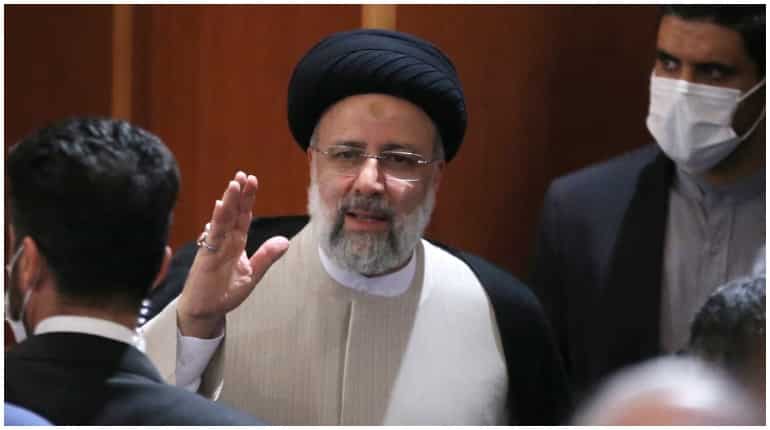
Ebrahim Raisi
Iran's ultraconservative EbrahimRaisiwill be inauguratedonTuesday as the new president of the Islamic republic, a country mired in deepeconomic crisisand hit by crippling US sanctions.
He replaces moderate president Hassan Rouhani, whose landmark achievement was the 2015nucleardealbetweenIranand six world powers.
Raisi, 60, will have to tackle thenucleartalks aimed at reviving thedealfrom which the US unilaterally withdrew.
Two days after Tuesday's inauguration by the Islamic republic's supreme leader Ayatollah Ali Khamenei,Raisiwill take the oath before parliament.
He won June's election when more than half the voters stayed away after many political heavyweights were barred from standing.
A former judiciary chief,Raisihas been criticised by the West for his human rights record.
Iran's economic problems, exacerbated by the American sanctions, will be the new president's greatest challenge, according to Clement Therme, a researcher at the European University Institute in Italy.
"His main objective will be to improve the economic situation by reinforcing the Islamic republic's economic relations with neighbouring countries," Therme told AFP.
"The goal would be to build a business model that would protectIran's economic growth from American policies and decisions."
Therme believesRaisi's main priority will be to "remove US sanctions" soIrancan bolster trade with its neighbours and non-Western countries such as China and Russia.
The 2015dealsawIranaccept curbsonitsnuclearcapabilities in return for an easing of sanctions.
But former US president Donald Trump unilaterally withdrew from the accord three years later and ramped up sanctions again, prompting Tehran to pull back from most of itsnuclearcommitments.
Trump's successor Joe Biden has signalled his readiness to return to thedealand engaged in indirect negotiations withIranalongside formal talks with the agreement's remaining parties -- Britain, China, France, Germany and Russia.
Economic malaise
The US sanctions chokedIran, including by seeking to stop its oil exports, and theeconomycontracted by more than six percent in both 2018 and 2019.
This was a blow to Rouhani who had hoped to liberalise theeconomyand develop the private sector.
In the winter of 2017-2018, and again in 2019, street protests sparked by economic woes rocked the country.
And in July this year, demonstrators in the oil-rich Khuzestan province, which has been hit by drought, took to the streets to vent their anger.
The economic malaise has been exacerbated by the coronavirus pandemic, which has left many Iranians struggling to get by.
Iranian reformist economist Saeed Laylaz said that the outgoing president was an "idealist" in his approach to the West.
"Rouhani believed he would be able to solve all the country's problems quickly," said Laylaz, who has acted as an adviser to Iranian presidents.
Laylaz believes thatRaisiwill choose a different path.
After his election,Raisimade clear that his key foreign policy would be to improve ties with regional countries.
In mid-July, Rouhani said he hoped his successor can clinch adealto lift US sanctions and concludenucleartalks.
But Khamenei, who will preside overRaisi's inaugurationonTuesday and whose word is final in policy matters, has warned against trusting the West.
Nucleartalks
Raisihimself has already said he will not negotiate with the other parties to thenucleardeal, and indirectly with the US, just for the sake of negotiations.
His government will support talks that "guarantee national interests", he has said.
Six rounds ofnucleartalks betweenIranand world powers were held in Vienna between April and June. The last round concludedonJune 20, and no date has beensetfor another.
Officials in Tehran said there would be no new talks untilRaisiassumed office.
According to Therme, the new administration in Tehran, where the ultra-conservative camp deeply distrusts the United States, has no wish to press things.
There is a will in Tehran "to show the American side there is no urgency for a quick compromise", he said.
The new government also wants to show "it can clinch a betterdealthan the previous one", Therme added.
According to Laylaz, the future of thenucleardealwill be one of the factors that will affect the fate of theeconomy.
"IfIrandeclares its intention not to pursue the negotiations, the sanctions will remain," he said.
But he also expects Washington and Tehran to reach a compromise. "Iranand the United States cannot continue with the status quo," Laylaz said.