Iran publicly executes two protesters in Isfahan over January unrest

&imwidth=600&imheight=450&format=webp&quality=medium "Iran publicly executes two protesters in Isfahan over January unrest")
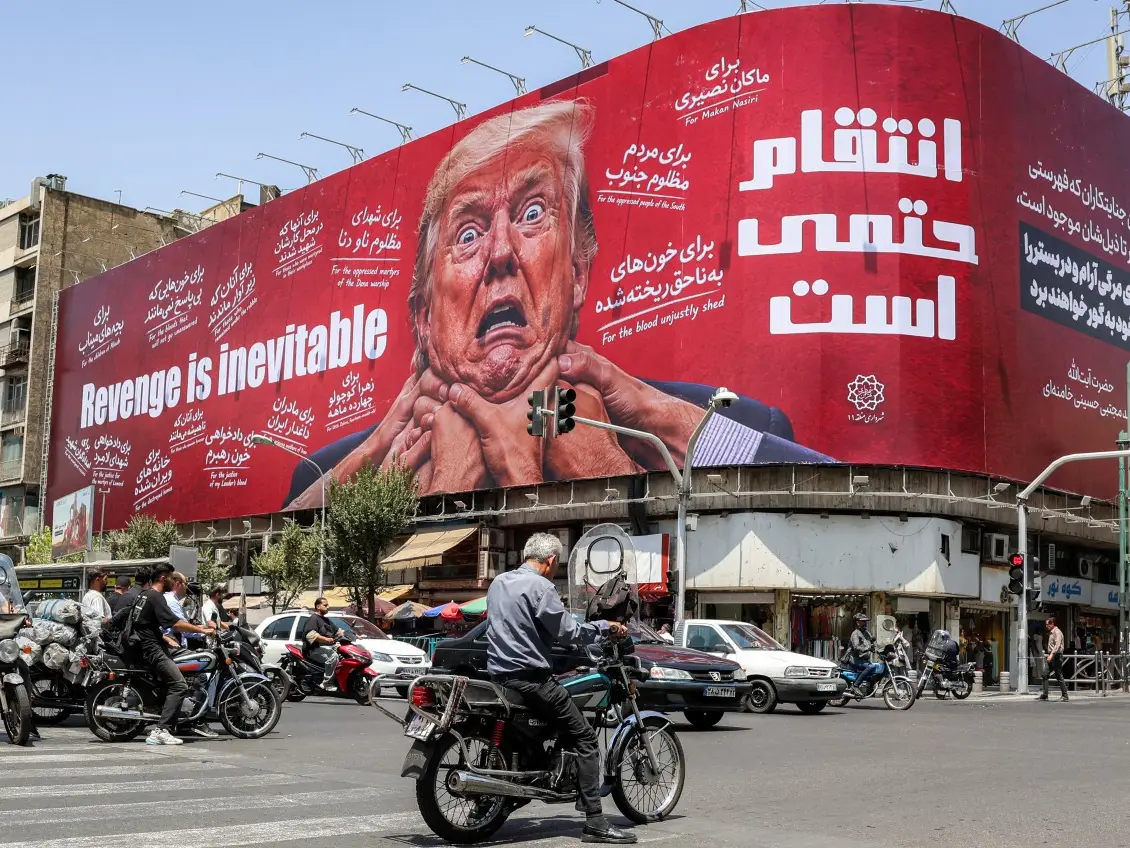
Motorists drive past a large billboard pledging revenge against US President Donald Trump along Jomhouri Street in central Tehran on July 27, 2026. Photograph: (AFP)
Iran publicly executed two men in Isfahan over the January 2026 protests. The UN criticised the mass death sentences, citing fair trial concerns.
Two anti-government protestors were publicly executed in Isfahan, Iran, on July 28 (Tuesday) morning. The execution took place in Isfahan’s Shahid Alikhani Square, amidst heavy security deployment. The two individuals were found guilty of attacking police officers with “machetes and knives”, and tying them to "road signs, pulling them on the ground, dousing them with gasoline, and setting them on fire.” These incidents happened on January 8, when protests peaked in Iran.
“The death sentences of Abolfazl Sepahi and Amir-Hossein Safari were carried out this morning,” the judiciary’s Mizan Online website said. It further added that they were facing charges, “moharebeh (waging war against God) by drawing weapons and creating fear and terror” and “corruption on earth for committing acts that severely disrupted public order and security in the country,” among others. On July 19, two other men were hanged on similar charges in Isfahan province. The most recent two were among the 12 young men sentenced to death in a case linked to the protest that erupted in late December 2025 and continued through January 2026.
“Sentencing 12 people to death in one hearing, in a closed courtroom and without clarity as to each defendant’s individual responsibility violates established fair trial standards,” said UN experts led by Mai Sato, the UN Special Rapporteur on the situation of human rights in Iran. The UN said that the defendants were arbitrarily arrested. According to the UN, at least 24 people have been executed in connection with the January protests so far.
The protest reported roughly 3000 deaths according to Iranian authorities, while blaming them on the colour revolution orchestrated by the United States and Israel. Rights groups have said that security forces fired at protesters and killed several times of the official numbers provided by the Iranian authorities.