

&imwidth=800&imheight=600&format=webp&quality=medium "India teams up with Germany to build its own helicopter safety system")
India has taken a big step toward joining an exclusive club of countries that can build their own advanced helicopter safety technology, signing a landmark deal Wednesday with German sensor giant HENSOLDT at the Dubai Airshow 2025. The agreement will let India’s state-owned Hindustan Aeronautics Limited (HAL) co-develop and eventually manufacture a LiDAR-based Obstacle Avoidance System (OAS) and Degraded Visual Environment (DVE) suite that can spot thin power lines, poles, and towers, even in blinding dust, snow, or fog. Until now, only a few nations have mastered this kind of helicopter protection. The new partnership changes that.
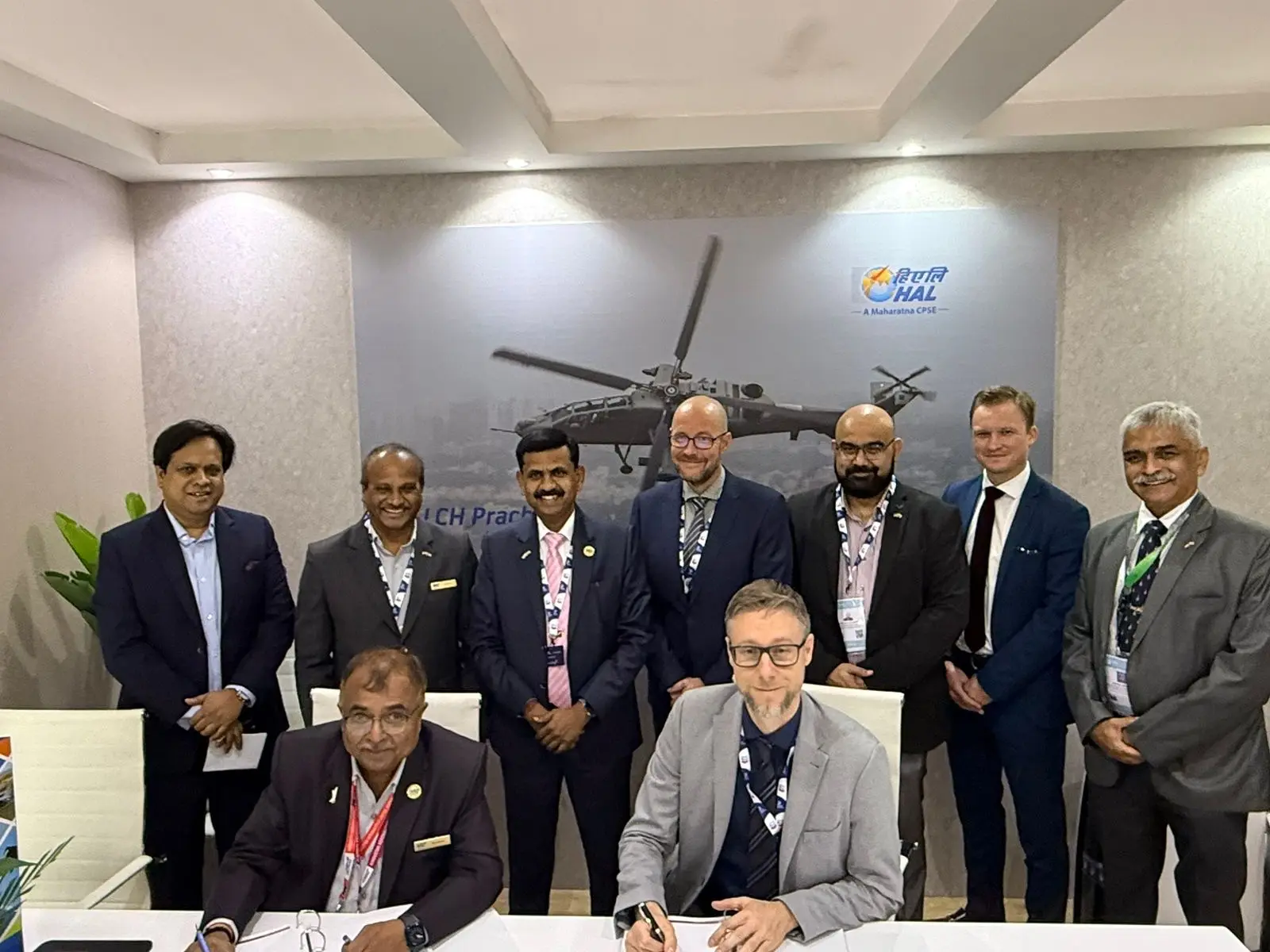
“This partnership will augment the indigenous ecosystem for the development of technology for obstacle collision avoidance systems, including Degraded Visual Environment (DVE) systems in India,” said Dr D. K. Sunil, chairman and managing director of HAL. “This agreement will ensure that India develops and owns a LiDAR-based helicopter Obstacle Avoidance System—an advanced capability that only a few countries have mastered. HAL and HENSOLDT will collaborate on the design, manufacture, integration, and testing of this system, with the potential for export of OAS and DVE.” The contract was signed by HAL’s Executive Director Ravi Prakash and HENSOLDT’s Head of Sales Eugen Maier in front of senior officials from both sides.
The German system, built around HENSOLDT’s SferiSense LiDAR sensor, uses laser light to paint a precise 3D picture of everything in front of the helicopter. Unlike radar, it easily catches thin wires even when the aircraft flies parallel to them. A powerful onboard computer then turns that data into clear symbols on the pilot’s helmet display, allowing safe flight in whiteouts or heavy fog.
The technology could be key for operations in the Himalayas, northeastern jungles, and western deserts, where dust, snow, and hidden cables can be the cause of accidents. The first Indian helicopters to get the new system could be the home-grown Light Combat Helicopter (LCH) Prachand, and the widely used Dhruv Advanced Light Helicopters. With this deal, India is no longer just buying foreign safety kits. It is building and soon selling one of the world’s most advanced ones.

