In first move since FX crackdown, Iran lowers rial vs dollar

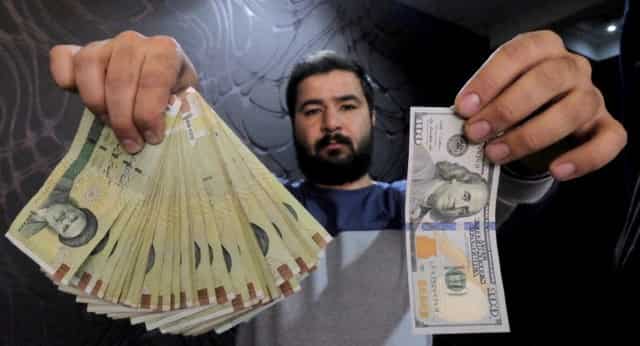
Iran lowers rial vs dollar
In early April, with the rial sinking to record lows before US President Donald Trump's decision to exit the Iran nuclear deal, Tehran said it was unifying official and free-market rates for the currency at a single value of 42,000 to the dollar
In a sign that it will allow some flexibility in exchange rates under threatened USsanctions,Iranhas lowered the official value of therialversus thedollarfor thefirsttime sinceit tried to stamp out a free currency market last month.
In early April, with therialsinking to record lows before USPresident Donald Trump's decision to exit theIrannuclear deal, Tehran said it was unifying official and free-market rates for the currency at a single value of 42,000 to thedollar.
Authorities threatened anyone trading therialat other rates with arrest, and sent police to patrol money exchange shops in big cities.
This week, however, the central bank has begun engineering a very slow decline of therial, suggesting it will let the currencymovegradually in response to supply and demand, as long as a fresh free-fall can be avoided.
The central bank set the rate at 42,050 on Monday and 42,060 on Tuesday, its website showed. Central bank chief Valiollah Seif hinted at the possibility of further falls, saying therialcouldmove as much as 5 or 6 percent during the fiscal year to March 20, 2019, the Financial Tribune newspaper reported.
Seif was quoted as telling a meeting of the banks' chief executives that the central bank would decide foreign exchange rates based on inflation inIran, which is now running slightly above 8 percent.
By letting therialdepreciate,Iranmay be able to boost its export sector and make it easier to attract flows of hard currency into the country, partly offsetting economic damage from the sanctions that Trump is threatening to impose.
But at the same time, authorities are desperate to prevent a sharprialdrop that could cause inflation to jump. Rising consumer prices were partly responsible for public protests that were crushed in January with the deaths of at least 25 people.
Residents of Tehran told Reuters that trade in therialat values other than the official rate had largely halted because of the danger of arrest. But some deals were still being done byIranians who wanted to trade or travel abroad and could not obtain enoughdollars through official channels.
Tehran Prosecutor Abbas Jafari Dolatabadi said in mid-May that 180 people had been arrested over foreign exchange-related offences, according to theIranian daily Financial Tribune.
Foreigners in Tehran said they were exchanging currency with dealers in the basements of buildings or petrol stations in order to escape notice. “It is more dangerous than buying drugs,” said one.
In early May, after Trump's decision to pull out of theIrannuclear deal, therialtraded in the black market at record lows of about 75,000.
It hassincerecovered to around 64,000. AnIranian analyst in Tehran said authorities had been pumpingdollars into the market in order to stabilise it but added that given heavy demand for hard currency and investors' jitters over Trump's decision, it was not clear how long a price of 64,000 could be sustained.