Huge megalithic complex comprising over 500 standing stones discovered in Spain

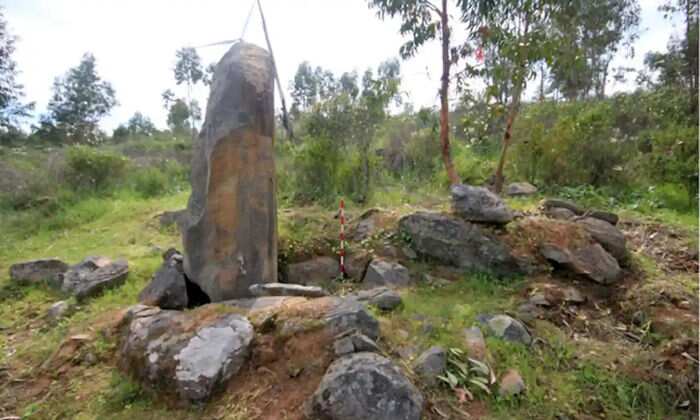
Megalithic complex in Spain
A huge megalithic complex of more than 500 standing stones has been discovered in southern Spain which could be one of the largest in Europe, archaeologists said Thursday. The stones were discovered on a plot of land in Huelva which was supposed to be used for avocado plantation. Considering the land's archaeological significance, the regional authorities requested to undertake a survey before granting the permit, leading to the finding.
“This is the biggest and most diverse collection of standing stones grouped together in the Iberian peninsula,” said José Antonio Linares, a researcher at Huelva University and one of the project’s three directors. The stones are between one and three metres in height.
A large number of different megaliths, including standing stones, dolmens, mounds, coffin-like stone boxes called cists, and enclosures were found at the site. Linares added that it is highly likely that the oldest standing stones at the La Torre-La Janera site were erected during the second half of the sixth or fifth millennium BC.
“Standing stones were the most common finding, with 526 of them still standing or lying on the ground,” said the researchers in an article published in Trabajos de Prehistoria, a prehistoric archaeology journal.
Meanwhile, at Carnac in northwestern France, which is one of the most famous megalithic sites in the world, there are some 3,000 standing stones. One of the most striking things was finding such diverse megalithic elements grouped together in one location and how well preserved they were, said Primitiva Bueno, co-director of the project and a prehistory professor at Alcala University near Madrid told AFP.
Many of the stones are buried deep in the earth. They will need to be carefully excavated with the work scheduled to run until 2026.
(With inputs from agencies)

