Hot and dry: The noodles that kick-started the economy of Wuhan!

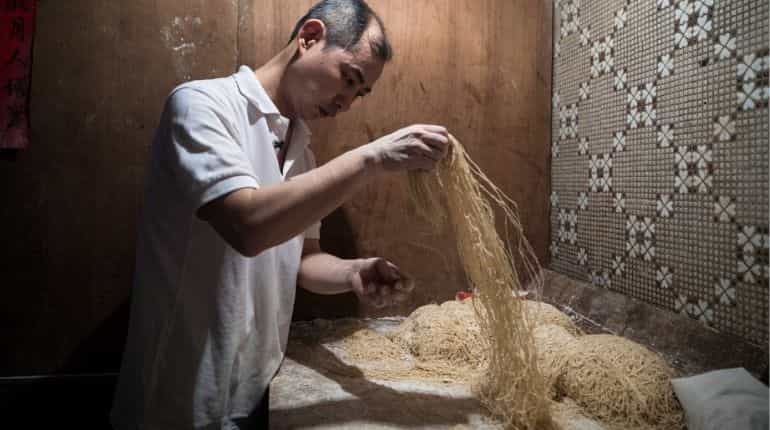
This picture taken on July 25, 2017 shows Lau Fat-cheong making a batch of noodles in Hong Kong. From decades-old holes in the wall to multi-million dollar businesses, Hong Kong's noodle scene is a sprawling moneyspinner in the city
Wuhan, once the epicentre of the deadly coronavirus and home to over 11 million people is now teeming with life. As shops start to reopen, people are out and about again. The first case of coronavirus was reported in Wuhan, which was then sealed off from the rest of the country.
One thing the Chinese love is their street food! And Wuhan is famous for one such delicacy which is not found elsewhere - noodles.
But these are notsimple noodles. The alkaline noodles are made with sesame sauce, spring onions, turnips, and a variety of spices. The South China Morning Post reported that over half of the city’s population consumes these noodles everyday.
The noodles, though mostly found in Wuhan, are also accessible across Hubei province.The noodles are soft and chewy, and rich in carbohydrates.
These hot dry noodles are one of the most highly revelled food dishes in China. Others include Beijing zhajiangmian (soybean paste noodles), Shanxi sliced noodles, Lanzhou hand-pulled noodles and Sichuan dan dan noodles.
Cailinji is the the most famous hot dry noodle brand in Wuhan. After being cooked, the noodles are swivelled around in cold water, and then the delicacy is greeted with a coating of oil. This particular style was introduced by the Cai family of Wuhan.
The unique ingredient in these noodles is the sesame paste.
As the South China Morning reported,these noodles were sold by Cai Mingwei in 1928, who saw that most shops were discarding sesame paste after pressing the oil.
Until 1950, the noodles were called “sesame sauce noodles”. Cai registered the name “hot dry noodles” in that year.
Owing to the noodles’ popularity, the Hubei government came up with a set of rules that must be followed while making such noodles. According to the decree, sesame must make up 50 per cent of the sauce, which also mandatorily must include peanut sauce, soybean flour, and vegetable oil.
The alkaline value of the noodles is set by the government between pH value of 7.2 to 9.2.