Hong Kong medical workers strike to urge closure of China border to block virus


Coronavirus strikes and lockdown imposed
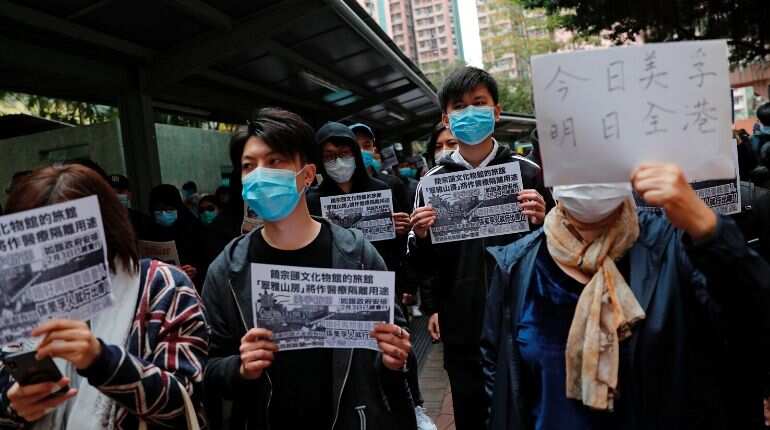
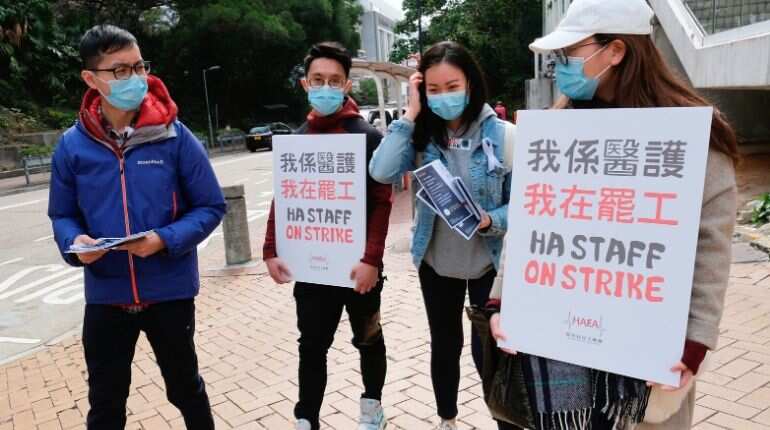
Hundreds ofmedicalworkerswent onstrikeinHongKongon Monday to demand the government shuts theborderwith mainlandChinato prevent the spread of a coronavirusand ease pressure on a stretched health sector.
The Hospital Authority Employees Alliance (HAEA), which has about 18,000 members, said 2,400workerstook part in thestrike, despite calls by the government formedicalworkersnot to.
HongKonghas 15 confirmed cases of the new coronavirus, which emerged in centralChinain December and has killed more than 360 people there and sent jitters through global markets.
"(We) hope that thesestrikes will make the government respond to our five demands, most importantly to stop the spread of the coronavirusinHongKong," saidmedicalworker Tracy Pui, who queued up with colleagues to sign a petition in support of the HAEA.
The demands are for the government to close theborderwith the mainland, facilitate the distribution of masks to the public, ensure that front-linemedicalworkershave adequate supplies and protection, provide enough isolation wards for patients, and guarantee no reprisals for strikingmedicalstaff.
About 100 people rallied in the heart ofHongKong's financial district in support of the healthworkers' union, with some holding banners saying: "CloseBorders, Contain Epidemics."
The scare over theviruscomes after months of anti-government protests inHongKong, triggered by what many residents see as unnecessary interference by Beijing in city affairs.
HongKongleader Carrie Lam has suspended high-speed rail services to the mainland and cross-borderferries, but she has stopped short of closing the entireborder, saying it would be "inappropriate and impractical".
Panic-stricken residents have emptied shelves in major supermarkets inHongKong, stockpiling meat, rice and cleaning products as fears escalate over the coronavirus.
About 90 percent of the city's food is imported, with the bulk coming from the mainland, according to official data.
The coronavirusis expected to pile pressure on the city's economy, which sank into recession in the third quarter as the often violent protests scared away tourists and took a heavy toll on retailers.
Toy shop owner Lam Wa-yin, 45, said closing theborderwould intensify worries about supplies of staples.
"They've started rushing to buy supplies even before they fully close theborders," Lam said.
"It'll get worse if it is fully closed. Especially food, people have been rushing to buy oil, salt and rice, not to mention the face masks."