
&imwidth=800&imheight=600&format=webp&quality=medium "From Johannesburg, PM Modi pitches new initiatives to deal with drug-funded terror, health, and Africa’s future")
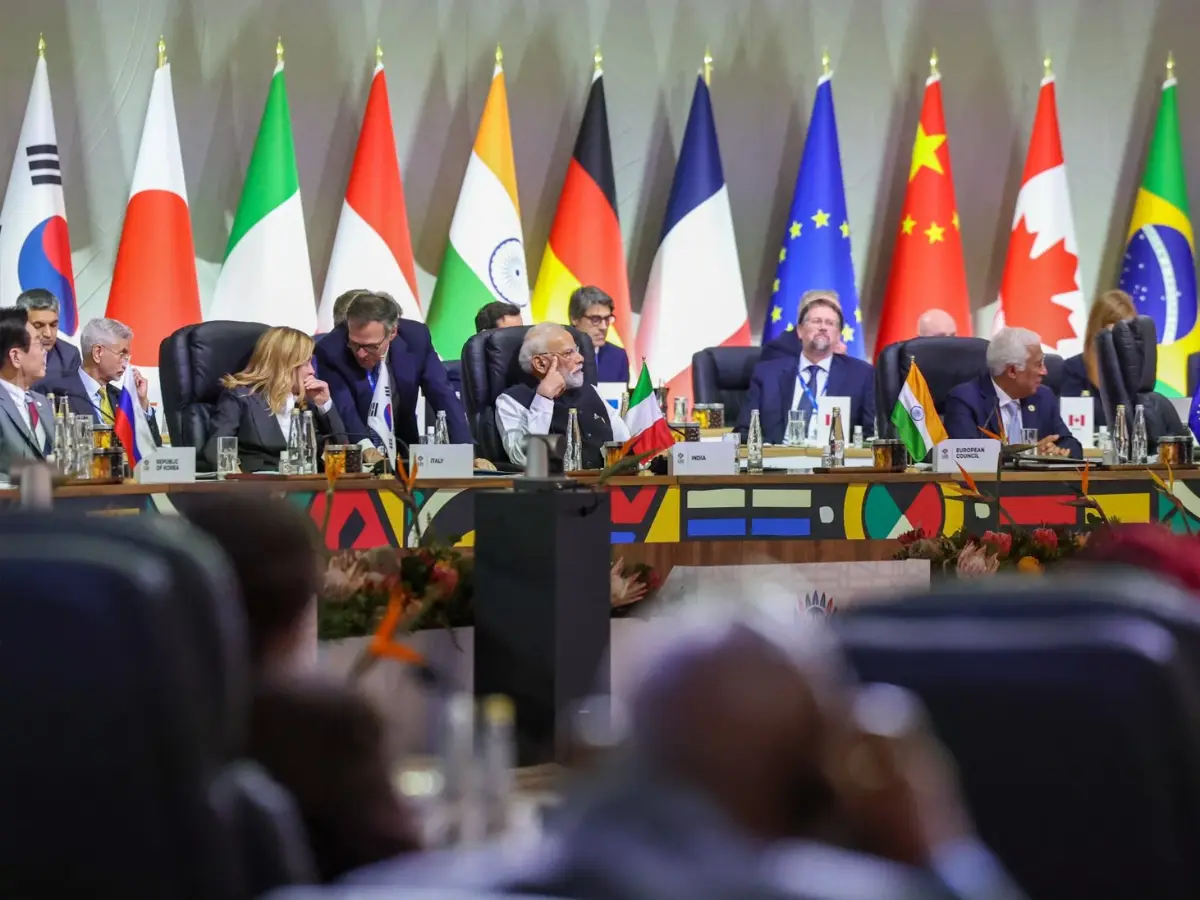
At the G20 Johannesburg summit, the first G20 summit ever to be hosted on African soil, Indian Prime Minister Narendra Modi proposed a slew of initiatives to tackle some of the world’s most pressing threats, from the fentanyl crisis and terrorist financing to health emergencies and Africa’s skills deficit. Speaking at the opening session, PM Modi warned that the explosion of synthetic drugs like fentanyl now poses an existential danger not just to public health but to global security itself, because drug profits have become a primary funding pipeline for terrorist groups.
“To overcome the challenge of drug trafficking, especially the spread of extremely dangerous substances like fentanyl, India proposes a G20 Initiative on Countering the Drug–Terror Nexus,” the Indian PM declared. “Let us weaken the wretched drug-terror economy!” The proposed initiative would fuse financial-intelligence tools, law-enforcement cooperation, and security measures to dismantle trafficking networks and choke off illicit flows that underwrite terrorism. The call comes as the United States and several Latin American countries grapple with the fentanyl-driven overdose crisis, while India itself has seen rising seizures of precursor chemicals and finished synthetic opioids along its western borders.
On global health security, the Indian head of govt urged the G20 to move beyond rhetoric and create standing rapid-response capacity. “We are stronger when we work together in the face of health emergencies and natural disasters,” he said. He proposed a G20 Global Healthcare Response Team composed of pre-positioned medical experts from member nations who could deploy within hours of a pandemic outbreak or natural calamity.

Turning to the continent hosting the summit, the PM Modi suggested the G20-Africa Skills Multiplier Initiative, a decade-long program that would train one million African “master trainers” using a train-the-trainer model financed collectively by all G20 members. “Africa’s progress is vital for global progress,” he said. “India has always stood in solidarity with Africa. I am proud of the fact that it was during India’s G20 Presidency that the African Union became a permanent G20 member.”
He also proposed a Global Traditional Knowledge Repository under G20 auspices, with India’s own Indian Knowledge Systems initiative as the foundational platform. The digital archive would preserve indigenous and traditional practices that promote sustainable living and public health. “This will help us pass on our collective wisdom to further good health and wellbeing,” he said. The four initiatives, spanning counter-narcotics and counter-terrorism, disaster medicine, African human capital, and traditional knowledge, represent an ambitious attempt to place India at the center of global agenda-setting as the G20 presidency passes from Brazil to South Africa and, next year, to the United States.

