From intermittent alerts to blaring air raid sirens: Russian pressure keeps Kyiv on edge

Russia-Ukraine crisis
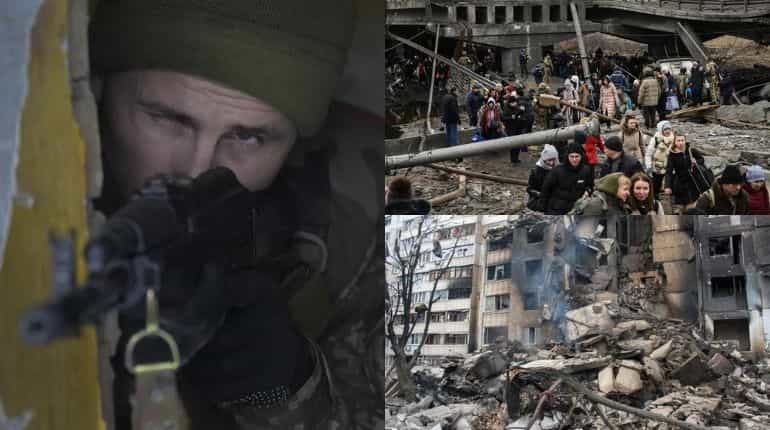
Russia announced a new ceasefire in Ukraine on Wednesday to let civilians flee besieged cities, after days of mostly failed promises that have left hundreds of thousands trapped without access to medicine or fresh water.
After air-raid sirens rang out again in Kyiv overnight, the plan was to open safe routes out of five Ukrainian areas including two suburbs of the capital that have been devastated by Russian shelling.
But previous ceasefire efforts have been bedevilled by violations, with Moscow apparently determined to push forward a 14-day-old invasion of its neighbour that has shocked the world.
The greatest alarm has been sounded over Mariupol, a southern port totally surrounded by Russian troops for more than a week, where the Red Cross has described the situation faced by civilians as "apocalyptic".
Residents there have been sheltering underground from relentless bombardment, unable to evacuate their wounded, and with no access to food, water, power or heat.
In Kyiv, back-to-back air alerts Wednesday morning urged residents to get to bomb shelters as quickly as possible over fears of incoming Russian missiles. An all-clear was given for each alert soon afterward.
Such alerts are intermittent, keeping people on edge. Kyiv has been relatively quiet in recent days, though Russian artillery has pounded the outskirts.
Kyiv regional administration head Oleksiy Kuleba said the crisis for civilians was growing in the capital, with the situation particularly critical in the city’s suburbs.
“Russia is artificially creating a humanitarian crisis in the Kyiv region, frustrating the evacuation of people and continuing shelling and bombing small communities,” he said.
The UNestimates that more than 2 million people have fled the country. Many more have become trapped inside cities bombarded and encircled by Russian forces, who have seen their advance slowed by fiercer than expected Ukrainian resistance.
Moscow calls its action a "special military operation" to disarm its neighbour and dislodge leaders it calls "neo-Nazis."
Kyiv and its Western allies dismiss that as a baseless pretext for an unprovoked war against a democratic country of 44 million people.
Talks aimed at ending the fighting have so far yielded little, but the foreign ministers from Russia and Ukraine are expected to meet in Turkey on Thursday, according to Turkish Foreign Minister Mevlut Cavusoglu.
As Russian forces press their offensive in the south, Ukrainians fear the next big target will be Odessa, Ukraine's main Black Sea port. Residents are preparing to defend the historic city of 1 million, a polyglot centre of culture with wide resonance for Ukrainians and Russians alike.
(With inputs from agencies)