Famous snake expert dies after rattlesnake bite

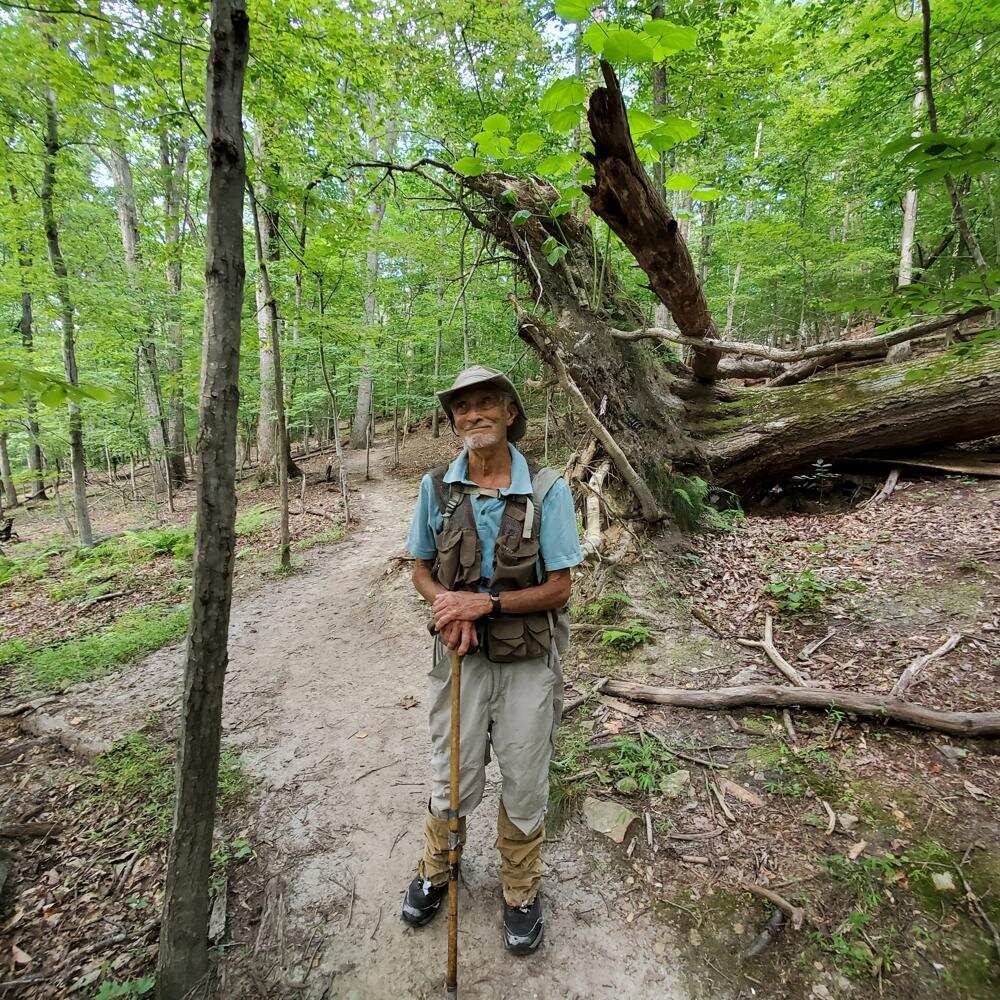
William H. “Marty” Martin poses for a picture at the Bull Run Mountains Preserve in 2021
After being bitten by a timber rattler, William H. "Marty" Martin, a renowned snakeresearcher, who had been making important findings about the species since childhood, passed away.
According to his wife Renee Martin, William H. "Marty" Martin passed away on August 3 after being bitten by a pet snake on their farmin Harpers Ferry, West Virginia.
Joe Villari, who oversees the Bull Run Mountains Preserve in northern Virginia and would accompany Martin on his expeditions there, said Martin, who was 80 years old, continued to make strenuous mountain hikes to record and count snake populations in isolated locations.
“He was in his 80s, and he was hard to keep up with,” said Villari, who made it a point to join Martin on his semiannual treks to remote mountain dens where the snakes would live.
Martin was perhaps the foremost expert on timber rattlers, a species that John Sealy, a rattlesnake researcher from Stokesdale, North Carolina, who has known Martin for more than 30 years, studied since he was a young boy.
When he was a little boy, Martin discovered a previously undiscovered population of timber rattlers in the Bull Run Mountains. He then persuaded a herpetologist to visit the area and confirm the discovery.
According to Sealy, Martin is well-known among snake experts for his fieldwork, research, and aptitude for finding and documenting elusive species.
“They’re extremely secretive animals,” he said.
The Centers for Disease Control estimates that there are only about five snakebites-related deaths in the United States per year.
A second snakebite can be more dangerous than a first one for some people, according to Dan Keyler, a toxicology professor at the University of Minnesota and a specialist on snakebites.
Rattlesnakes can also be more dangerous if they get big enough to inject more venom. A person's susceptibility may also depend on their age.
In his professional life, Martin had previously been bitten but survived.
(With inputs from agencies)