Explained | What is Iron Sting, the system that can put Israel ahead of Hamas in the war?

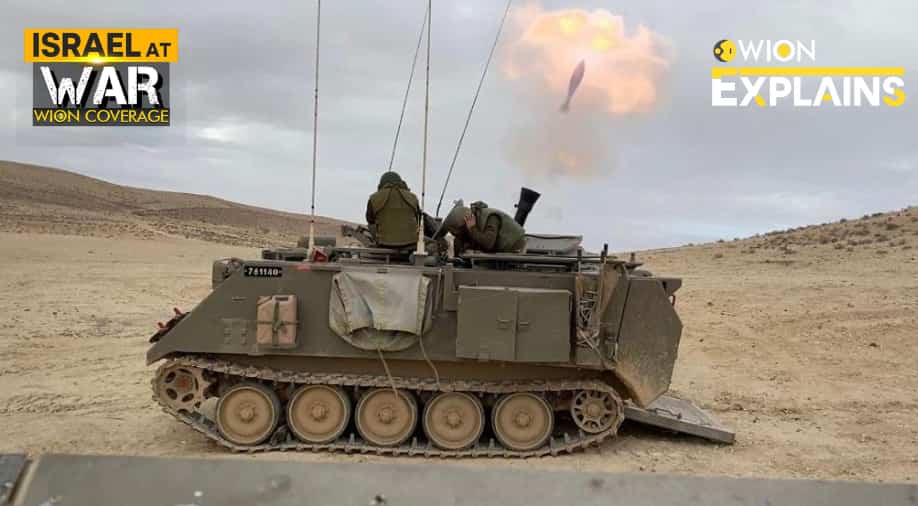
Iron Sting
The Israeli Defence Forces (IDF) recently made use ofthe 'Iron Sting' precision munition system for the first time in a military operation.The IDF's elite Maglan Unit used this innovative technology to target Hamas rocket launchers in the Gaza Strip, demonstrating a new level of precision and effectiveness.
This deployment comes at a crucial time when Israel faces allegations of civilian casualties in Gaza following abarbaric Hamas attack in southern Israel on October 7.
The 'Iron Sting' system was born out of collaborative efforts between the Israeli military and the renowned defence firm, Elbit Systems.
Within the Israeli military, it was the Directorate of Defence Research and Development in the Ministry of Defence and the Israel Defence Force's Ground Forces that spearheaded its development.
Elbit Systems, a key player in the Israeli defence industry, played a vital role in shaping the 'Iron Sting' into a reality.
What are its features?
The 'Iron Sting' stands out as a precision laser and GPS-guided mortar munition. Its primary ammunition is 120mm mortar rounds, and it boasts remarkable accuracy.
This munition system is designed to target a wide range of distances, with an impeccable range spanning from 1 to 12 kilometres, contingent on the ammunition used. The most impressive feature is that the 'Iron Sting' is suitable for deployment in both urban environments and open terrains, rendering it a versatile solution.
Anotherfeatureis the ability to penetrate double-reinforced concrete, making it a formidable force in urban warfare. This capability gives Israeli forces a significant advantage in operations that demand precision and minimal collateral damage.
A decade in the making
Yaniv Rotem, the head of the Defence Ministry's Administration for the Development of Weapons and Technological Infrastructure, told the Times of Israel,that the 'Iron Sting' had been in development for a decade.
He described it as "groundbreaking" and explained that it empowers infantry units with a level of accuracy that was previously achievable only through missiles and airborne weaponry.
The testing phase of this groundbreaking system concluded in March 2021, setting the stage for its operational debut.
During IDF's intense bombing in Gaza,the 'Iron Sting' was showcased as an "innovative and accurate mortar bomb." The IDF even shared a video showingthe 120mm mortar in action, accurately targeting and neutralising an enemy rocket launcher, thereby minimising the risk to civilians.
The FederalquotedMajor General Omer Cohen, commander of the Maglan unit, praising the 'Iron Sting' and its precision, lethality, and expertise of the fighters.
He revealed that the Maglan unit, in cooperation with the Air Force, had successfully thwarted numerous terrorists using various means, with the 'Iron Sting' being a crucial component. This munition system played a significant role in eliminating over 100 operatives within Gaza since the conflict's outset.
Transforming the battlefield
Colonel Assaf Shatzkin, head of the land systems department in the ministry's research division, said in a statementthat the 'Iron Sting' would greatly benefit the Israeli army in confrontations with adversaries like Hamas and Hezbollah.
He highlighted its precision in striking short-range targets within several kilometres, with an accuracy level of a few metres.
Then-defence minister Benny Gantz, speaking in March, acknowledged the transformative potential of the 'Iron Sting.' He stated that this system "changes the battlefield" by equipping Israeli forces with more accurate and effective means, ushering in a new era of precision warfare.
The Israeli military has faced the complex challenge of battling Palestinian militants in the densely populated Gaza Strip while simultaneously preparing for potential conflicts with Hezbollah militants in Lebanon.
This dual threat landscape necessitates innovative solutions that minimise civilian casualties and collateral damage, making the 'Iron Sting' system all the more relevant.
Controversial history
The use of precision munitions and advanced weaponry by Israel has often stirred controversy. The chief prosecutor of the International Criminal Court launched a preliminary investigation into possible war crimes by Israel during its 2014 conflict in Gaza, where hundreds of civilians lost their lives. This ongoing scrutiny highlights the importance of developing and usingtechnologies that can differentiate between combatants and non-combatants, minimising the risk to innocent lives.
Amid escalating tensions and violence, it is widely anticipated that Israel will launch a ground offensive in Gaza in response to Hamas's October 7attackinto southern Israeli communities.
The massing of tanks and troops at the Gaza border, along with increased airstrikes, is indicative of Israel's readiness to engage in the next stages of the conflict.
Also watch |Israel demands UN chief, Antonio Guterres resignation
Human toll
The ongoing violence has resulted in a significant loss of life on both sides. In Israel, over 1,400 people have been killed, primarily civilians who were victims of the initial Hamas attack. Additionally, over 222 individuals were captured and taken back to Gaza, including foreign nationals. Two Americans were released in a recent development.
On the Palestinian side, more than 5,000 individuals, including around 2,000 minors and 1,100 women, have lost their lives. These casualties underscore the urgency of finding ways to mitigate the human toll of conflicts in the region.
This current war marks the deadliest of five wars fought between Israel and Hamas in the last 15 years.
Disclaimer: WION takes utmost care to accurately and responsibly report ongoing developments on the Israel-Palestine conflict after the Hamas attacks. However, we cannot independently verify the authenticity of all statements, photos and videos.